Keeping greenery alive at a desk or in a shared conference room does not require a botany degree, but it does require moving past home garden habits. Workplace environments feature artificial lighting, constant climate control, and long weekends where no one is around to monitor moisture levels. If you want to know how to care for office plants effectively, the secret lies in matching your maintenance routine to the realities of a commercial building rather than treating your workspace like a greenhouse.
By understanding soil drainage, lighting thresholds, and watering frequency tailored to fluorescent or LED setups, you can maintain vibrant foliage that improves indoor air quality and workspace morale without creating extra daily chores. Mastering office plant care means understanding that commercial spaces operate under different environmental laws than residential living rooms, where ambient light fluctuates wildly and air vents constantly sap moisture from delicate leaves.
What This Means
Your immediate next step is to assess your office environment’s actual light and HVAC exposure, then adjust your watering schedule to prevent root rot rather than sticking to a rigid calendar routine. By observing how your chosen desk plant reacts to Monday-through-Friday climate cycles, you can intervene early before minor leaf drop or tip browning turns into irreversible structural decline.
Before You Start
Before bringing a new specimen into your workspace or attempting to revive a struggling desk plant, take stock of the environmental conditions in your specific area. Office buildings operate under vastly different atmospheric rules than residential homes. HVAC systems push dry, moving air through vents all day, which rapidly dehydrates foliage even when the soil feels damp on top. Conversely, interior rooms rely entirely on fluorescent tube fixtures or overhead LEDs, meaning photosynthetic energy is much lower than what a plant would receive near a south-facing home window.
A common mistake is assuming that a plant labeled as low light requires zero light. While species like snake plants and ZZ plants tolerate dim corners, they still need basic illumination to process nutrients and survive. Another frequent pitfall is overwatering during the transition from a retail nursery to a climate-controlled office. Nurseries often keep plants in highly saturated soils under high humidity, and moving them directly into dry office air slows down transpiration dramatically. Check whether your pot has proper drainage holes before doing anything else. A decorative ceramic container without a drainage hole is a root rot trap that makes precise watering almost impossible.
Furthermore, workspace decision-makers must evaluate how weekend building operations affect plant hydration. Many modern commercial structures dial back heating and cooling systems from Friday evening until early Monday morning. This creates sudden temperature drops and humidity spikes that can shock tropical specimens if their soil moisture is mismanaged right before the weekend begins. Recognizing these structural variables ensures your indoor plant watering strategy accounts for building automation schedules rather than just personal convenience.
Tools and Context for Workplace Maintenance
You do not need an extensive collection of gardening tools to keep workspace greenery healthy. In fact, keeping your maintenance kit simple encourages consistency. A few purposeful items will cover all your basic upkeep needs.
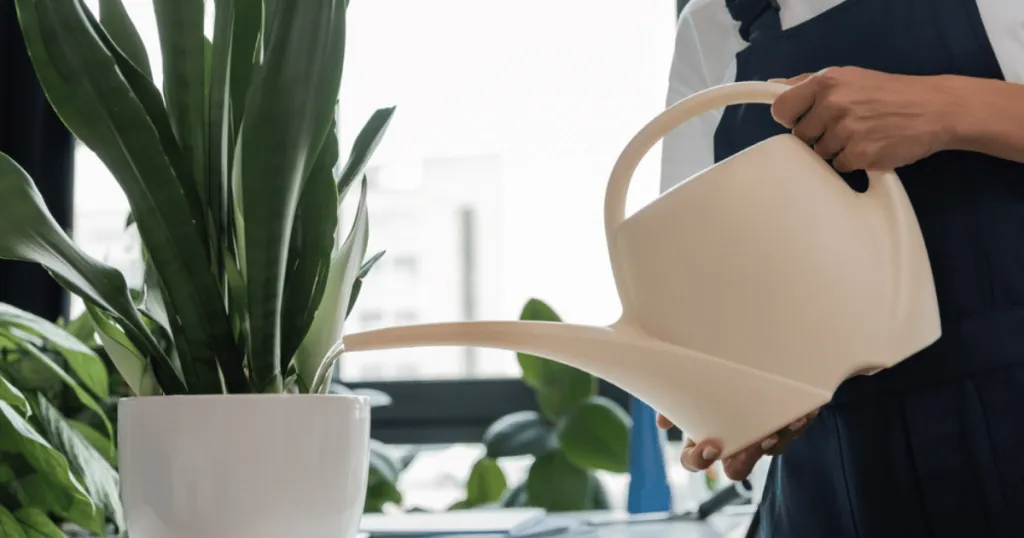
- Long-spout watering can: Allows you to reach soil level underneath dense foliage without spilling water across desk surfaces, keyboards, or conference tables.
- Moisture meter or wooden dowel: Helps you test soil moisture deep in the root zone rather than guessing based on the dry top layer.
- Microfiber cloth: Essential for removing dust buildup from broad leaves, which blocks artificial light and reduces photosynthetic efficiency.
- Balanced liquid foliage fertilizer: Formulated for indoor use to replenish nutrients during active growing seasons without burning roots.
Context matters significantly when arranging your desk setup. Keep plants away from direct blasts of air conditioning vents or heating ducts, which cause leaf tip browning and rapid moisture stress. Similarly, avoid placing delicate tropicals directly against cold window glass during winter months.
When selecting your utility tools, prioritize practicality over aesthetic appeal. A long-spout watering can prevents water from pooling in the decorative collar of your pot, which can cause stem rot. Similarly, keeping a microfiber cloth handy right inside your desk drawer ensures that foliage cleaning becomes an effortless weekly habit rather than an overwhelming chore delayed for months. Office managers coordinating multiple conference rooms can centralize these tools in a designated supply closet to streamline team-wide upkeep.
Step-by-Step Instructions On How to Care for Office Plants
Follow these structured steps to establish a reliable maintenance routine that keeps your workspace vegetation thriving year-round.
1. Assess Light and Placement
Evaluate the actual light reaching your desk or conference area. If you rely entirely on overhead fluorescent lighting, choose shade-tolerant species such as pothos, cast iron plants, or peace lilies. Position plants where they receive ambient light from windows if possible, but ensure they are protected from scorching direct sunlight that magnifies through glass. Low light office plants require careful positioning to maximize every lumen of available artificial and natural radiance.
2. Master the Moisture Check
Never water on a strict calendar schedule like every Monday morning. Instead, test the soil depth. Insert your finger or a wooden dowel about two inches into the soil. If soil particles cling to it or the wood feels damp, hold off on watering. When the soil is dry at that depth, it is time for a thorough watering session. Conducting a reliable soil moisture check prevents the chronic saturation that invites fungal pathogens into the root zone.
3. Water Thoroughly and Drain Completely
When watering, apply moisture evenly across the soil surface until water begins to run out of the bottom drainage holes. Let the pot drain entirely in a sink or saucer before placing it back in its decorative container. Never let a pot sit in standing water for hours, as this cuts off oxygen to the roots and invites fungal issues. Ensuring proper pot drainage is the single most critical safeguard against fatal root decay.
4. Clean Foliage Regularly
Indoor office dust settles quickly on broad leaves, obstructing the limited light available in workspace environments. Wipe leaves gently with a damp microfiber cloth every few weeks. This simple maintenance task keeps pores clear, improves light absorption, and discourages common pests like spider mites. Routine foliage cleaning also allows you to inspect the underside of leaves for early signs of insect activity.
5. Adjust Care for Weekends and Holidays
Office buildings often turn down HVAC systems over the weekend, altering indoor humidity and temperature. Ensure plants are sufficiently watered late in the work week before extended breaks. For longer holidays, consider grouping plants together to create a localized microclimate or utilizing self-watering bulbs to maintain consistent moisture.
Common Mistakes to Avoid
Workspace horticulture fails most often due to well-intentioned habits that actually harm plant health. The single most destructive mistake is chronic overwatering. Giving a plant a small splash of water every single day keeps the topsoil wet while starving the deeper roots of oxygen. This leads to root decay, yellowing leaves, and a musty soil odor.
Another frequent error is ignoring seasonal shifts. Even though office buildings maintain climate control, shorter daylight hours during winter reduce the metabolic rate of indoor plants. Continuing to fertilize and water at peak summer levels during winter forces weak, leggy growth. Stop fertilizing between late autumn and early spring, and let the soil dry out slightly more between waterings during these cooler months.
Finally, do not place coffee mugs, leftover soda, or tea dregs into plant pots. Sugar, dairy, and artificial additives disrupt soil chemistry, attract fungus gnats, and sour the potting medium. Office workers rushing through morning routines occasionally dump leftover beverages into nearby desk pots, assuming the soil acts like a drain. In practice, this introduces organic matter that breaks down anaerobically, scorching roots and drawing swarms of frustrating insects into open-plan workspaces.
Troubleshooting Common Indoor Plant Issues
When problems arise in your office environment, use these diagnostic clues to identify the underlying cause and apply the correct fix.
Yellowing Lower Leaves
If older leaves near the base turn yellow and drop off, the plant is usually receiving too much water or sitting in poorly draining soil. Check the root zone for soggy conditions. If the soil is compacted, aerate it gently with a chopstick and scale back watering frequency until new growth appears.
Crisp, Brown Leaf Tips
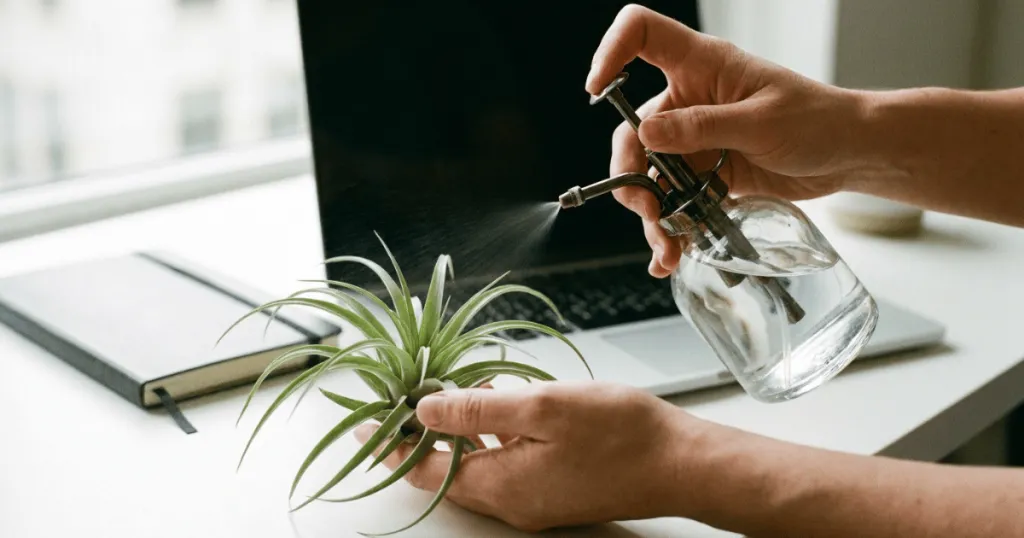
Dry, brown tips indicate low humidity caused by continuous HVAC operation, or mineral buildup from hard tap water. Mist the surrounding air occasionally, or flush the soil thoroughly with distilled water once a season to wash away accumulated mineral salts.
Leggy Stems and Sparse Foliage
If a plant stretches out with long gaps between leaves, it is starving for light. Move the container closer to a window or supplement with a full-spectrum LED desk lamp designed for indoor horticulture.
Understanding these symptoms prevents knee-jerk overreactions. For instance, trimming brown tips with clean shears restores immediate visual neatness in a formal meeting room, but unless you address the underlying HVAC draft or heavy mineral content in your water supply, the browning will simply return within weeks. Focus on correcting the environmental stressor first, then groom the damaged foliage.
When to Seek Professional Plant Care Assistance
While routine maintenance is easy to handle independently, certain situations require stepping back. If a large specimen in a reception area exhibits widespread fungal disease, severe scale infestations, or complete root rot that has spread throughout the main stem, DIY remedies rarely succeed. Corporate office managers often partner with interior landscaping services for large-scale installations, high-ceiling atrium maintenance, or complex irrigation systems. Knowing when to call in professional plant technicians protects your facility investment and ensures your workplace presentation remains pristine.
Professional interior landscapers bring specialized tools and diagnostic capabilities that go beyond standard desk-level care. If your organization manages an extensive corporate campus or a multi-floor open office layout with integrated green walls, outsourcing routine health checks prevents localized pest outbreaks from jumping between decorative partitions. Balancing internal employee wellness initiatives with outsourced technical expertise guarantees long-term botanical success without diverting internal staff from their core business duties.
FAQ
How often should office plants be watered?
Watering frequency depends on pot size, ambient humidity, and light levels rather than a fixed calendar schedule. Always check the soil moisture two inches deep before watering. Most office plants need attention every one to three weeks.
Can office plants survive over the weekend without water?
Yes, healthy indoor plants easily tolerate standard weekends without water. Ensure they receive a thorough watering late in the work week if their soil is dry, and keep them away from direct HVAC vents that could dehydrate them while the building system cycles down.
What are the best plants for windowless offices with only artificial light?
Species like ZZ plants, snake plants, pothos, and cast iron plants tolerate fluorescent and LED office lighting exceptionally well. They thrive in low-light conditions and require minimal maintenance compared to sun-loving tropicals.
How do I get rid of tiny flying bugs around my office plants?
Those are typically fungus gnats, which thrive in consistently damp topsoil. Allow the top two inches of soil to dry out completely between waterings to break their reproductive cycle, and consider using yellow sticky traps near the base of the plant.