When outfitting an office desk, meeting room, or reception area with greenery, finding a species that handles erratic attention without dropping leaves is a major priority. Chlorophytum comosum, commonly known as the spider plant, stands out as one of the most reliable and resilient choices for workplace environments. It tolerates missed waterings, adapts readily to artificial fluorescent or LED lighting, and bounces back from minor neglect far better than many finicky tropical foliage specimens. At the same time, mastering spider plant care involves understanding a few specific quirks, such as its sensitivity to certain minerals in tap water and its tendency to develop brown leaf tips when humidity drops too low.
From a practical standpoint, keeping this plant thriving does not require an advanced degree in indoor horticulture. Office managers and desk workers can easily maintain vibrant, arching foliage by establishing a straightforward routine based on the plant’s actual biological tolerances. Whether you are placing a potted specimen on a filing cabinet or hanging a container near an east-facing window, getting the fundamentals right ensures steady growth and the iconic production of arching runner stems loaded with tiny plantlets.
Quick Facts
- Light: Tolerates low light; grows best in medium to bright indirect light.
- Watering: Let top inch of soil dry between waterings.
- Humidity: Average room humidity is fine.
- Difficulty: Easy.
- Toxicity: Non-toxic to cats and dogs.
Light and Placement Strategies for Office Interiors
Light is the primary engine driving indoor plant growth, yet office spaces present unique illumination challenges. While modern workspaces rely heavily on overhead fluorescent tubes or LED panels, these artificial sources rarely match the intensity of natural sunlight. Fortunately, spider plant care is remarkably flexible regarding illumination. This species tolerates low light conditions found in interior core offices or windowless hallways, though growth slows down noticeably and variegation on striped cultivars may fade toward a solid green.
For the most vibrant appearance, position your container within a few feet of an east-facing window or a shaded south-facing window where it receives bright, indirect sunlight. Direct, harsh sunbeams hitting the foliage through untreated glass during peak afternoon hours can scorch the delicate leaf tips, leaving bleached or brown patches. If your workspace lacks windows entirely, standard desk task lighting or overhead office fixtures kept on for regular business hours will keep the specimen alive, though supplementing with a dedicated full-spectrum LED grow bulb for a few hours daily can prevent stretching and weak growth.
Placement also involves protecting the plant from environmental extremes generated by workplace climate control systems. Avoid setting containers directly beneath supply vents that blast cold air conditioning in the summer or dry, heated air in the winter. Rapid temperature fluctuations and constant drafts sap moisture from the leaves faster than the roots can replenish it, triggering crisp brown tips that detract from the clean aesthetic of a professional office. In open-plan offices, consider the proximity to high-traffic walkways; while the plant is resilient, the arching leaves are prone to mechanical damage if brushed against repeatedly by employees or cleaning carts.
Watering Protocols and Soil Requirements
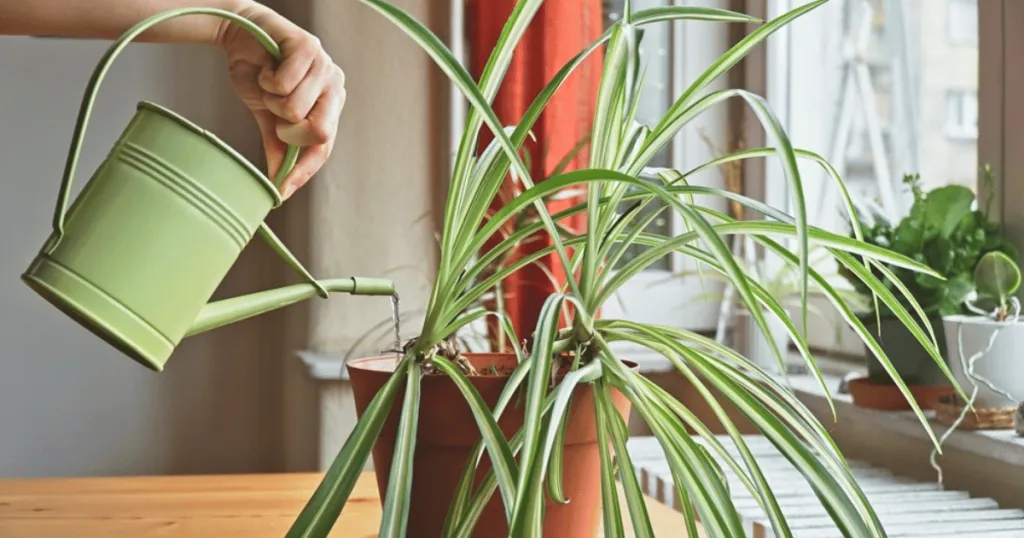
Watering errors remain the single most frequent cause of indoor plant decline. Developing a reliable routine for spider plant care requires moving away from rigid calendar schedules and paying attention to actual soil moisture levels. A good working rule is to stick your finger about an inch into the potting mix before reaching for the watering can. If the soil feels dry at that depth, it is time to water thoroughly until excess liquid drains out the bottom of the container. If it still feels damp, hold off for a few more days.
Managing Water Quality and Root Health
One detail that surprises many office workers is that this species is sensitive to certain chemicals commonly found in municipal tap water, specifically fluoride and chlorine. Accumulations of these minerals in the potting medium often manifest as persistent brown leaf tips, even when watering frequency is otherwise ideal. If your tap water is heavily treated, consider using filtered water, distilled water, or letting tap water sit in an open container overnight to allow chlorine to dissipate before application. This is especially important in older office buildings where plumbing infrastructure might contribute to higher mineral concentrations.
Root health is directly tied to soil composition and container drainage. The root system features thick, fleshy tuberous structures that store moisture, making the plant somewhat drought-tolerant but highly susceptible to root rot if left sitting in stagnant water. Always use a standard, well-draining all-purpose potting soil blended with perlite or coarse sand to improve aeration. Ensure your container features at least one functional drainage hole, and never let the pot sit in a filled saucer of standing drainage water for more than a few minutes. If you use decorative cachepots without drainage, ensure the inner nursery pot is elevated on a layer of pebbles so the roots never touch the bottom of the outer vessel.
Humidity, Temperature, and Fertilizing Needs
Office environments are notorious for low humidity due to continuous heating and cooling cycles. While many tropical houseplants struggle in dry air, spider plant care is forgiving enough to handle average indoor humidity without requiring a dedicated electric humidifier on your desk. However, during the dry winter months, humidity levels can drop low enough to cause crispy leaf margins. Grouping several plants together or placing the container on a shallow pebble tray filled with water can elevate local humidity just enough to keep the foliage pristine. Avoid misting the leaves as a primary humidity strategy, as this provides only temporary relief and can encourage fungal issues if the office air lacks sufficient circulation.
Temperature preferences align closely with human comfort zones. Maintain ambient temperatures between 60 and 80 degrees Fahrenheit. Protect the plant from sudden cold drafts coming from exterior doors or drafty windows during winter months, as temperatures dropping below 50 degrees Fahrenheit can shock the foliage and stunt growth. If your office building powers down HVAC systems over the weekend, ensure the plant is not sitting in a location that experiences extreme temperature swings, as these fluctuations can stress the plant’s metabolic processes.
Feeding your plant does not require heavy applications of synthetic fertilizers. During the spring and summer active growing seasons, apply a balanced, water-soluble houseplant fertilizer diluted to half strength once a month. Skip fertilizing entirely during autumn and winter when natural light levels drop and the plant enters a period of semi-dormancy. Over-fertilizing leads to a salt buildup in the soil, which burns the roots and turns leaf tips brown. If you notice white crusty deposits forming on the surface of the soil, this is a clear indicator of mineral accumulation from fertilizer or hard water; flush the soil with fresh, filtered water to leach out the excess salts.
Repotting, Pruning, and Propagation Methods
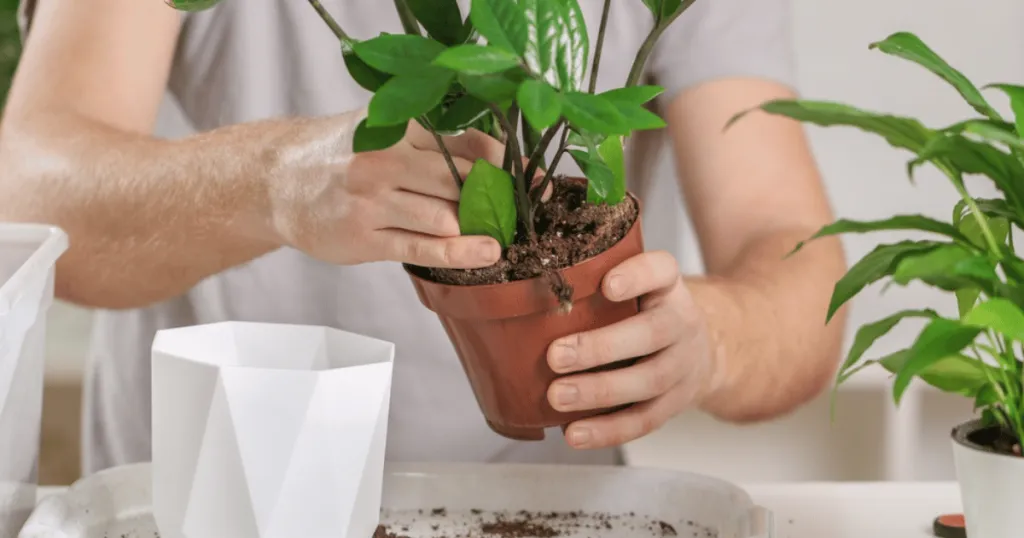
Over time, a healthy specimen will outgrow its container, sending thick, fleshy roots circling the bottom or even cracking plastic nursery pots. Repotting is typically necessary every one to two years, preferably in the spring as active growth resumes. Select a new container only one or two inches wider in diameter than the previous one. Sizing up too drastically increases the volume of wet soil surrounding the roots, which elevates the risk of accidental overwatering.
When repotting, inspect the tuberous roots; if they appear mushy or dark, trim away the damaged sections before placing the plant in fresh, well-draining potting mix.
Pruning is straightforward and mostly cosmetic. Snip away any yellowed or brown leaf tips using clean, sharp scissors, cutting at an angle that mimics the natural taper of the leaf blade. When runner stems finish flowering and producing offset plantlets, you can trim them off entirely if you prefer a compact silhouette, or leave them intact for a cascading look. Removing the runners can actually redirect the plant’s energy back into foliage production, which is a useful tactic if your specimen is looking sparse.
Propagating Offsets in the Office
One of the most rewarding aspects of spider plant care is propagating the baby plantlets, often called spiderettes, that form on long arching stems. These miniature clones make fantastic gifts for coworkers or replacements for aging specimens. You can propagate them using two primary methods:
- Water propagation: Snip a mature plantlet off the runner and suspend its base in a small glass of water, ensuring only the bottom node touches the liquid. Roots will emerge within a couple of weeks, after which you can plant it in standard potting mix. Change the water weekly to maintain oxygen levels.
- Direct soil rooting: Leave the baby plant attached to the mother plant, pin it down into a small secondary pot filled with moist soil placed nearby, and sever the connecting runner once roots have established in the new pot after a few weeks. This method is often more successful as the mother plant continues to nourish the offset during the transition.
Seasonal Adjustments and Common Care Mistakes
As seasons shift from long summer days to shorter winter afternoons, your plant care routine must adapt accordingly. Growth slows down considerably during the darker months, which means the plant consumes significantly less water and fertilizer. Reduce watering frequency, allowing the soil to dry out slightly deeper between sessions, and pause all fertilizer applications until spring returns. In office settings, be mindful of the “holiday effect” where plants are left unattended for extended periods; ensure the plant is well-watered before a long break but never leave it sitting in a deep reservoir of water, as this will lead to root rot in the absence of evaporation.
Avoiding common mistakes keeps your office greenery looking pristine. The most frequent errors include using un-drained containers, watering on a rigid weekly schedule regardless of soil moisture, and ignoring mineral buildup from tap water. Another frequent oversight is placing the plant in a high-traffic hallway where passing foot traffic continually bends and bruises the arching leaves. Give the specimen enough clearance so its foliage hangs freely without being brushed against constantly. If you notice the plant leaning heavily toward a light source, rotate the pot a quarter turn every time you water to ensure even growth and prevent the plant from becoming lopsided.
Pet Safety and Workplace Considerations
When selecting greenery for shared workspaces or offices that welcome pets, safety is an essential factor. According to veterinary organizations and animal poison control resources like the ASPCA, the spider plant is entirely non-toxic to cats and dogs. This makes it an ideal choice for pet-friendly offices, home-office hybrids, or open-plan areas where roaming animals might occasionally nibble on low-hanging foliage.
Cats in particular are sometimes attracted to the grass-like texture or the mild hallucinogenic compounds found in the foliage, so keeping trailing runner stems slightly elevated can prevent enthusiastic pets from turning your office plant into a personal snack bar. While non-toxic, ingestion can still cause mild stomach upset in pets, so it is best to keep the plant out of reach to maintain both the plant’s appearance and the pet’s digestive comfort.
Beyond safety, consider the aesthetic impact of the spider plant in a professional setting. Because they grow rapidly and produce many offsets, they are excellent for filling empty corners or softening the harsh lines of metal filing cabinets. Their ability to thrive in a wide range of temperatures makes them suitable for reception areas that might experience temperature drops during the night or weekends. When integrating them into a larger office design, consider using them in hanging baskets to maximize floor space, or group them with other low-light-tolerant plants like pothos or snake plants to create a lush, layered look that improves the overall office atmosphere.
Related Spider Plant Guides
- what the Spider Plant is like as an office plant
- Spider Plant symptoms and fixes
FAQ
Why are my spider plant leaves turning brown at the tips?
Brown tips are usually caused by low humidity, dry soil, or a buildup of fluoride and chlorine from tap water. Switching to filtered water and avoiding dry drafts near HVAC vents usually resolves the issue.
Can spider plants survive in an office with zero natural sunlight?
Yes, they tolerate low-light conditions well and can survive under standard fluorescent or LED office lighting, though growth will be slower and variegation may fade.
How often should I water my office spider plant?
Water thoroughly whenever the top inch of soil feels dry to the touch. This typically translates to every seven to ten days, but always check the soil rather than following a strict calendar.
Are spider plants safe for office cats and dogs?
Yes, veterinary guidance from organizations like the ASPCA confirms that spider plants are non-toxic to cats and dogs, making them a safe choice for pet-friendly workplaces.