The most vital aspect of successful jade plant care in an office setting is managing moisture levels with extreme discipline. Because jade plants are succulents, they store water in their fleshy, oval-shaped leaves, making them highly sensitive to overwatering. In an office environment, where air circulation can be stagnant and light levels are often inconsistent, the soil takes longer to dry out than it might in a greenhouse or a sunny outdoor garden. If you prioritize letting the soil dry completely before adding more water, you will avoid the most common cause of plant failure in the workplace.
Quick Facts
- Light: Requires bright, direct or indirect light to thrive.
- Watering: Allow soil to dry out completely between waterings.
- Humidity: Highly tolerant of dry, climate-controlled office air.
- Toxicity: Toxic to cats and dogs if ingested per ASPCA guidance.
- Growth: Slow-growing, long-lived, and drought-tolerant succulent.
Maintaining a jade plant (Crassula ovata) in a professional space requires understanding its natural rhythm. These plants are built for survival in arid conditions, meaning they prefer a cycle of deep hydration followed by a significant period of drought. When you treat them as if they are tropical foliage plants that require constant moisture, the root system will quickly succumb to rot. By respecting their succulent nature, you ensure a long-lived, sculptural addition to your desk or reception area that requires very little daily attention.
Light Requirements and Strategic Placement
Jade plants are sun-loving succulents that perform best when placed in the brightest possible location available in your office. In a typical workspace, this means positioning the plant on a windowsill that receives several hours of natural light. If your office lacks a south or west-facing window, you may need to supplement with artificial light to prevent the plant from becoming leggy or weak.
Understanding Light Needs
Bright, indirect light is the gold standard for office jade plants. While they can tolerate some direct sun, intense afternoon rays hitting a glass window can occasionally scorch the leaves if the plant has not been acclimated. If your plant begins to stretch out, with large gaps between the leaves, it is a clear sign that it is not receiving enough light. This condition, known as etiolation, happens when the plant reaches toward the nearest light source, resulting in a thin, unstable stem.
Artificial Lighting in the Office
If your desk is in an interior cubicle, standard fluorescent or LED overhead lighting is rarely sufficient on its own. While a jade plant might survive for a few months in low light, it will not thrive. If you must keep a jade plant in a windowless office, consider placing it directly under a dedicated full-spectrum LED desk lamp. Keep the lamp on for at least eight to ten hours a day to mimic the intensity of natural sunlight. This will help the plant maintain its compact, sturdy growth habit and prevent the stems from drooping under their own weight.
Watering and Soil Management
The golden rule for jade plant care is to err on the side of underwatering. Because these plants are native to regions with distinct dry seasons, they have evolved to thrive in soil that dries out entirely. In the office, where humidity is often kept low by HVAC systems, the evaporation rate can be deceptive. Always check the soil moisture manually rather than relying on a fixed schedule.
How to Water Correctly
Before you add water, insert your finger at least two inches into the soil. If you feel any dampness, wait a few more days. When you do water, do so thoroughly until water flows out of the drainage holes at the bottom of the pot. This ensures that the entire root ball is hydrated. After watering, ensure the plant is not sitting in a saucer of standing water. If your decorative pot does not have drainage, you should use a plastic nursery liner inside it so you can remove the plant to drain it properly after watering.
Selecting the Right Soil
Standard potting soil is often too dense for jade plants, as it retains moisture for too long. For optimal health, use a dedicated cactus or succulent mix. These blends are specifically formulated with high levels of perlite, pumice, or sand to ensure rapid drainage. If you cannot find a succulent mix, you can create your own by mixing regular indoor potting soil with an equal part of coarse perlite or horticultural grit. This airy, fast-draining medium is essential for preventing the root rot that often plagues office plants.
Humidity, Temperature, and Feeding
Jade plants are exceptionally well-suited for office environments because they are indifferent to low humidity. Unlike tropical ferns or calatheas that struggle in the dry air created by office heating and cooling systems, jade plants actually prefer these conditions. You do not need to mist the leaves or use a humidifier, as high humidity can actually encourage fungal issues on the foliage.
Temperature Stability
These plants prefer temperatures between 65 and 75 degrees Fahrenheit, which aligns perfectly with standard office climate control. The main risk is exposure to extreme drafts. Avoid placing your jade plant directly in the path of an air conditioning vent or near a heater. Sudden, sharp fluctuations in temperature can cause the leaves to drop prematurely. If you notice the plant shedding leaves in the middle of the week, check for nearby vents that might be blowing cold or hot air directly onto the foliage.
Feeding Your Jade
Jade plants are not heavy feeders. During the active growing season, which generally spans from spring through late summer, you can apply a balanced, water-soluble fertilizer diluted to half strength once every six weeks. Do not fertilize during the winter months when the plant enters a period of dormancy. Over-fertilizing can lead to weak, rapid growth that makes the plant prone to pests and structural instability.
Repotting, Pruning, and Propagation
Because jade plants are slow growers, they do not require frequent repotting. In fact, they often prefer to be slightly root-bound. You should only consider moving your plant to a larger container when it becomes top-heavy or when the roots begin to circle the bottom of the pot. When you do repot, choose a container that is only one or two inches wider than the current one, and always ensure it has adequate drainage holes.
Pruning for Structure
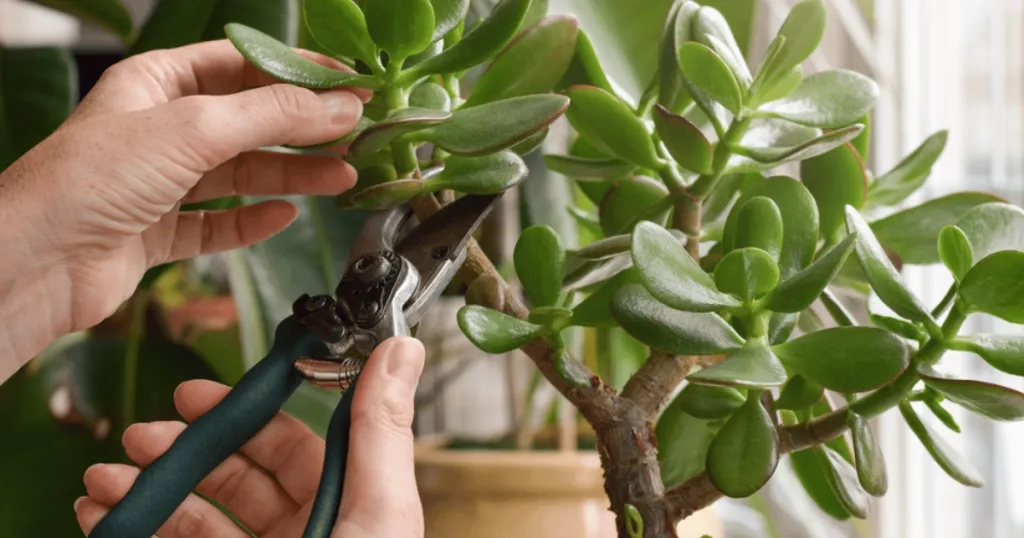
Pruning is an essential part of maintaining a jade plant in a professional space, especially if you want to keep it compact for a desk. If a branch becomes too long or begins to lean, you can snip it off just above a leaf node. This encourages the plant to branch out, creating a bushier, more tree-like appearance. Use clean, sharp shears to make these cuts, and do not worry about the plant, as it recovers quickly from minor pruning.
Propagation
If you have a healthy jade plant, you can easily propagate it to create new plants for other areas of the office. Simply take a stem cutting that is about three to four inches long and allow the cut end to callous over for a few days in a dry, shaded spot. Once the end has dried, insert it into a small pot filled with slightly damp succulent soil. Keep the soil barely moist until roots develop, which usually takes a few weeks. This is a simple way to expand your office greenery without purchasing new plants.
Seasonal Adjustments and Common Mistakes
Your jade plant care routine should shift slightly as the seasons change. During the winter, when light levels are lower and the plant is resting, reduce your watering frequency significantly. You might only need to water once every three or four weeks. In the summer, as the plant receives more light and the office warms up, it will use water more quickly, allowing for slightly more frequent checks.
Common Care Mistakes
The most frequent error is overwatering, which manifests as yellowing, mushy leaves or stems that appear translucent. If you see these signs, stop watering immediately and check the roots. If the roots are brown and soft, they are rotting. You may need to remove the plant from its pot, trim away the decayed roots, and repot it in fresh, dry soil. Another common mistake is failing to clean the leaves. Dust can accumulate on the broad, flat leaves of a jade plant, blocking light and reducing photosynthesis. Periodically wipe the leaves with a damp cloth to keep them clean and healthy.
Recognizing Healthy Growth
A healthy jade plant will have firm, plump leaves that are a vibrant green, sometimes with a slight reddish tint along the edges if it is receiving high-quality light. The stems should be sturdy and upright. If the plant looks dull, has shriveled leaves, or is leaning heavily, it is likely signaling that it needs more light or a more consistent, though still infrequent, watering schedule. By observing these subtle cues, you can adjust your care to keep the plant thriving year-round.
Advanced Office Considerations: Long-Term Maintenance
Beyond the basics, maintaining a jade plant in a corporate setting involves long-term planning for plant health. Because offices are often subject to weekend shutdowns or holiday breaks, the jade plant is an ideal candidate for low-maintenance greenery. Its ability to tolerate periods of neglect makes it superior to many other indoor plants that require daily attention. However, there are nuances to consider for long-term success.
Managing Plant Weight and Stability
As a jade plant matures, it can become quite heavy, especially if it is growing in a tall, narrow pot. In a high-traffic lobby or a busy open office, a top-heavy plant can be a safety hazard if it tips over. Ensure that the pot is heavy enough to act as a counterweight. Ceramic or terracotta pots are excellent choices because they provide stability and allow for better soil breathability compared to plastic. If your plant is becoming lopsided, rotate it every few weeks to ensure even growth on all sides, which helps maintain its center of gravity.
Dealing with Pests in the Office
While jade plants are generally hardy, they can occasionally attract pests like mealybugs. These look like small, white, cottony tufts and often hide in the crevices where leaves meet the stem. In an office, pests can spread quickly if you have multiple plants in close proximity. If you spot mealybugs, isolate the affected plant immediately. You can remove them by dabbing the spots with a cotton swab dipped in rubbing alcohol. This is a safe and effective way to treat the plant without using harsh chemicals that might be inappropriate for a shared workspace.
The Role of Air Quality
While jade plants are indifferent to humidity, they do appreciate good air circulation. In offices with stagnant air or poor ventilation, the soil surface can remain damp for too long, creating an environment where fungus gnats might thrive. If you notice small flies hovering around your plant, it is a clear indicator that the top layer of soil is staying wet for too long. Improve air circulation by ensuring the plant isn’t tucked into a corner with no airflow, and allow the soil to dry out more thoroughly between waterings to break the life cycle of the gnats.
Choosing the Right Location for Success
When selecting a spot for your jade plant, consider the “traffic” of the area. A desk corner is perfect, but a high-traffic hallway where people might brush against the plant can lead to broken stems and leaf drop. Jade plants are somewhat brittle; their leaves and stems can snap off easily if bumped. Choose a location that is visible and bright but protected from the flow of daily office traffic. This simple placement strategy will keep your plant looking pristine and prevent unnecessary damage to its structural integrity over time.
Integrating Jade Plants into Office Design
Jade plants offer a unique aesthetic that fits well with modern, minimalist, or industrial office designs. Their architectural, tree-like growth habit adds a sense of permanence and maturity to a workspace. Unlike flowering plants that create debris, the jade plant is a clean, low-maintenance option that keeps the office looking professional year-round. When grouping plants, consider pairing the jade with other succulents that have similar light and water requirements, such as Haworthia or Echeveria, to create a cohesive, low-care succulent display.
The Psychological Benefit of Greenery
The presence of a healthy, vibrant jade plant can contribute to a more positive office atmosphere. Studies on biophilic design suggest that incorporating living elements into the workplace can reduce stress and improve focus. Because the jade plant is so reliable and easy to care for, it provides these benefits without the added stress of high-maintenance plant care. It is a low-risk, high-reward choice for office managers looking to improve the environment for their team.
Final Thoughts on Longevity
With proper care, a jade plant can live for decades, often becoming a fixture in an office for years. By following these guidelines – prioritizing bright light, exercising restraint with water, and ensuring excellent drainage – you can enjoy a thriving, sculptural plant that enhances your workspace. Remember that the key to success is patience; let the plant dictate its needs, and it will reward you with steady, beautiful growth that stands the test of time in any office setting.
Related Jade Plant Guides
- our Jade Plant overview
- why your Jade Plant might be struggling
FAQ
Why are the leaves on my jade plant falling off?
Leaf drop is most commonly caused by overwatering, which leads to root rot. If the soil is constantly wet, the plant cannot absorb nutrients properly and will shed leaves as a survival mechanism. Check the soil moisture and ensure the pot has proper drainage. Less frequently, sudden temperature changes from nearby HVAC vents can also cause leaf drop.
Is it safe to keep a jade plant in an office with pets?
According to ASPCA guidance, the jade plant is toxic to cats and dogs. If ingested, it can cause vomiting, depression, and loss of coordination. If your office allows pets, keep the plant in a location where they cannot reach the foliage, such as on a high shelf or a secure, elevated desk area.
How do I know if my jade plant needs more light?
The most reliable indicator is etiolation, where the stems stretch out and become thin with large gaps between the leaves. A healthy jade plant should have a compact, dense growth habit. If your plant looks leggy or is leaning aggressively toward a window, it is not receiving enough light and should be moved to a brighter spot or supplemented with a grow lamp.
Can I use a self-watering pot for my jade plant?
We generally advise against using self-watering pots for jade plants. These containers are designed to keep soil consistently moist, which is the opposite of what a succulent requires. Jade plants need a cycle of saturation and complete drying. A standard pot with drainage holes is the safest choice to prevent the root rot that often occurs in self-watering systems.