When an office plant starts dropping leaves or turning yellow, the instinctive reaction is often to grab the watering can. In professional settings, however, philodendron problems frequently stem from the exact opposite issue. Overzealous watering schedules, especially when combined with heavy office potting soil and low light near interior desks, create anaerobic conditions around the root zone. Before altering your watering routine or adding supplements, look past the visible foliage and examine what is happening beneath the soil surface.
Many workplace decision-makers assume that a drooping stem or lackluster foliage automatically signals thirst. In air-conditioned offices, however, damp soil combined with poor air circulation creates a trap where moisture lingers indefinitely. Understanding the real trigger behind these symptoms prevents reactive care cycles that push stressed tropical foliage closer to decline.
Short Answer
Most philodendron problems are rooted in watering errors or poor drainage. Let the top inch of soil dry out completely between waterings, ensure containers drain freely, and provide medium to bright indirect light to keep foliage vibrant and root systems healthy in indoor office environments.
Quick Checks and Fast Fixes for Stressed Office Plants
When you notice sudden leaf drop or a dull appearance on your office plant, run through a rapid diagnostic check before attempting any drastic interventions. Office environments present distinct challenges, from blasting HVAC vents to fluorescent overhead lighting that lacks the spectrum intensity of natural sunlight. A quick physical inspection usually reveals whether the stress is environmental or cultural.
Start by testing the soil moisture not just at the surface, but a few inches down using a wooden probe or your finger. If the soil feels saturated and heavy days after a routine watering, pause all irrigation immediately. Next, inspect the container drainage holes. Many decorative office cachepots lack drainage holes, trapping excess water at the bottom and suffocating the root system. If standing water is present, lift the nursery pot out and empty the saucer.
Check the immediate vicinity for drafts. Air conditioning vents blowing directly onto tropical foliage can dry out leaf margins rapidly, causing crisp brown tips that mimic underwatering. Relocating the plant just a few feet away from a direct airflow path often halts further leaf damage within days. If you find pests such as mealybugs or spider mites hiding under leaves or along the stems, wipe them down immediately with a damp cloth and mild insecticidal soap solution.
Evaluating indoor office plants requires looking at how building operations interact with plant biology. Commercial thermostats often maintain stable ambient air temperatures around 70 to 72 degrees Fahrenheit year-round, but humidity levels can drop precipitously during heating and cooling cycles. This artificial climate accelerates moisture loss through leaf transpiration while simultaneously slowing down how quickly heavy potting mix dries out at depth.
Symptom Diagnosis Guide
Different symptoms point to specific underlying stressors. Use this diagnostic matrix to match what you see on your plant with the correct corrective action.
| Visual Symptom | Most Likely Cause | Immediate Action |
|---|---|---|
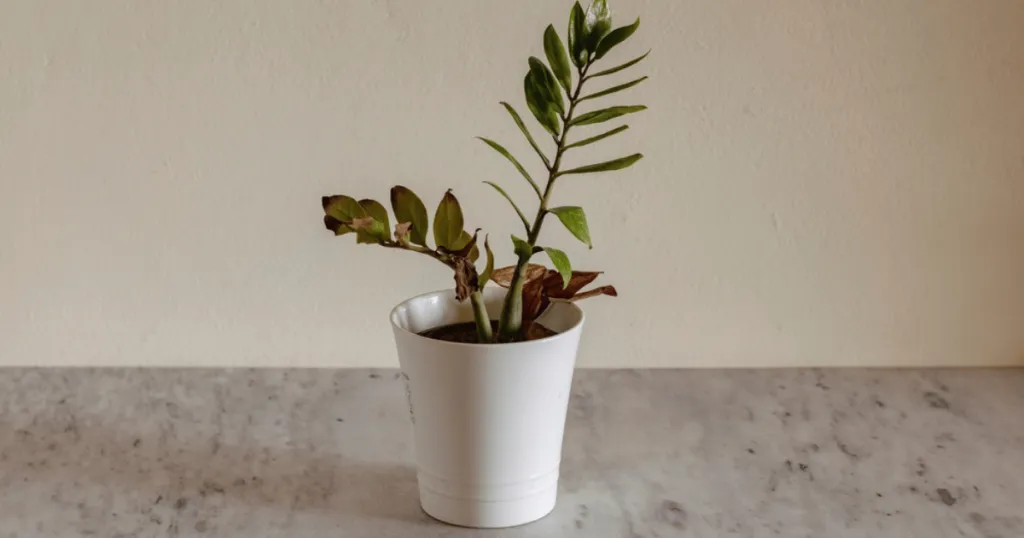
| Lower leaves turning entirely yellow and mushy | Overwatering and early root rot | Let soil dry out; check for blocked drainage |
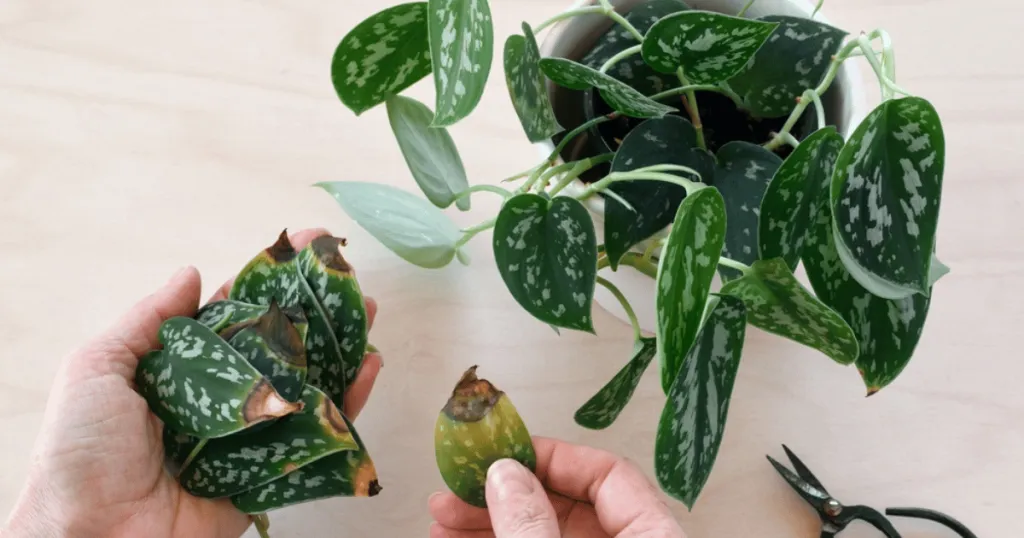
| Crisp brown tips and leaf edges | Low humidity or HVAC draft exposure | Move away from vents; group plants together |
| Stalled growth and tiny pale new leaves | Insufficient light levels | Shift closer to an east or south window |
| Sticky residue and fine webbing | Pest infestation (spider mites or aphids) | Wipe leaves and treat with insecticidal soap |
| Entire plant wilting despite moist soil | Advanced root rot shutting down water uptake | Inspect roots, trim decay, and repot in fresh soil |
Common Issue Fixes for Foliage and Roots
Addressing philodendron problems effectively requires understanding how different symptoms overlap. Managing yellowing leaves, rot, and pest outbreaks demands a methodical approach that avoids shocking the plant.
Treating Yellow Leaves and Water Stress
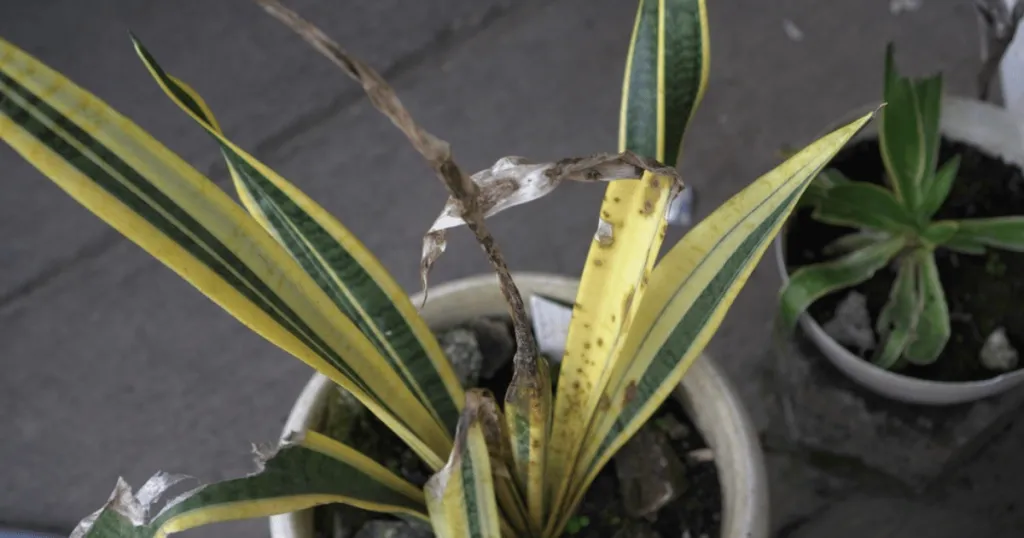
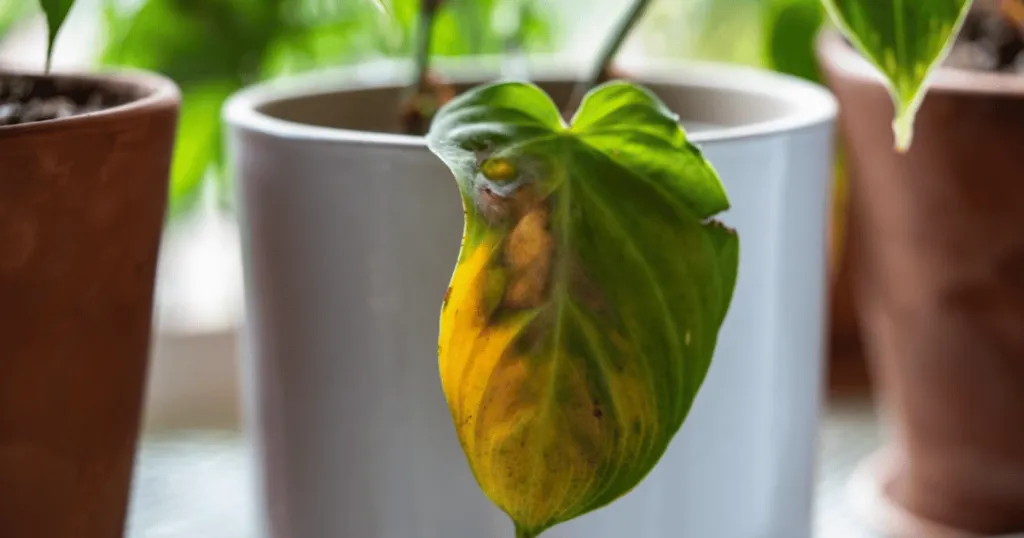
Yellow foliage is the most common distress signal office managers encounter. When lower leaves turn yellow and drop off while upper growth remains green, overwatering is almost always the culprit. Saturating the soil on a rigid weekly calendar without checking actual moisture levels prevents oxygen from reaching the roots. To fix this, stretch out the interval between waterings until the top inch of soil is completely dry to the touch.
Conversely, severe underwatering causes crisp, curled leaves that feel papery and detach easily. If the potting mix has pulled away from the edges of the pot due to extreme dryness, submerge the entire nursery pot in a basin of water for twenty minutes to rehydrate the root ball thoroughly, then allow it to drain completely.
In practice, preventing chlorosis and premature leaf yellowing means establishing a flexible routine based on environmental feedback rather than the office calendar. Because interior office spaces lack the seasonal light fluctuations experienced outdoors, transpiration rates remain relatively steady, but indoor humidity variations still alter how quickly moisture evaporates from the container.
Managing Root Rot and Drainage Failures
When philodendron problems escalate to soft, blackened stems and a persistent sour odor from the pot, root rot has taken hold. This condition occurs when fungal pathogens thrive in waterlogged, oxygen-deprived potting mixes. Fixing this requires intervention.
Gently slide the plant out of its container and brush away old soil to inspect the root system. Healthy roots are firm and light in color, while rotted roots are dark, mushy, and hollow. Use sterilized shears to trim away all decayed tissue. Repot the remaining healthy roots into a fresh, well-aerated potting mix enriched with perlite or orchid bark to ensure fast drainage. Always ensure the new container features functional drainage holes.
For office managers overseeing multiple workspaces, preventing philodendron root rot begins with selecting containers that allow excess moisture to escape freely. Decorative ceramic pots without drainage holes should only ever serve as outer cachepots holding a standard plastic nursery liner. If water accumulates in the cachepot after irrigation, empty it immediately to keep the root system from sitting in stagnant liquid.
Resolving Pest Outbreaks in Indoor Spaces
Office spaces with stable indoor temperatures provide an ideal breeding ground for common indoor pests. Spider mites thrive in the dry air produced by commercial heating systems, while mealybugs hide in leaf axils. If you notice stippled leaves or cottony white masses, isolate the plant immediately to protect neighboring office greenery.
Wash the foliage thoroughly under a warm tap or use a damp microfiber cloth to remove pests physically. Follow up by spraying all leaf surfaces, including undersides, with ready-to-use insecticidal soap. Repeat this treatment every week for a month to break the reproductive cycle of any remaining pests.
Conducting routine plant care troubleshooting helps catch these infestations before they spread across open-plan desk clusters. Regular leaf cleaning not only discourages pests like spider mites that favor dusty, undisturbed surfaces, but it also maximizes light absorption under artificial office lighting.
Advanced Fixes for Stalled Growth and Leggy Stems
When a plant survives but fails to thrive, the issue usually involves light quality or nutrient depletion. In windowless conference rooms or interior cubicles, these plants often adapt by growing long, stretched-out stems with wide gaps between leaves, known as leggy growth.
Relocating the plant closer to a natural light source or supplementing with a full-spectrum LED desk lamp encourages compact, robust foliage development. If the plant has become excessively sparse, prune back the longest vines just above a node. This encourages branching and results in a fuller appearance over time.
Nutrient deficiencies also stall development. While these plants do not heavy-feed, growing in the same container for years depletes essential micronutrients. Apply a balanced liquid houseplant fertilizer diluted to half strength once a month during spring and summer, withholding fertilizer entirely during the slower winter months.
Workplace environments often introduce unique light limitations. While natural sunlight through office windows provides optimal energy, interior desks rely heavily on fluorescent tubes or overhead LED fixtures. If your workspace lacks windows entirely, supplementing with horticultural lighting ensures the plant maintains adequate cellular energy to support healthy foliage health without stretching awkwardly toward distant light sources.
Prevention Habits for Healthy Office Plants
Establishing consistent maintenance routines prevents most common philodendron problems from developing in the first place. Office environments experience fluctuating staffing schedules, making simple, repeatable care habits essential for long-term plant health.
Adopt a tactile watering test rather than relying on a calendar. Designate one person or rotate responsibility for checking soil moisture weekly. Keeping a moisture meter or simply testing the upper inch of soil ensures irrigation happens only when necessary.
Position containers where they receive bright indirect light without suffering from intense thermal heat or cold drafts. If your office uses central heating and cooling that drops relative humidity significantly, consider grouping multiple plants together to create a localized microclimate of elevated humidity.
Finally, practice routine hygiene. Wipe dust off large leaves periodically to maximize photosynthetic efficiency under artificial office lighting, and inspect new foliage regularly for early signs of pests. A proactive stance keeps tropical foliage resilient against common indoor stressors.
Related Philodendron Guides
FAQ
Are philodendron plants safe to keep around office pets?
According to veterinary guidance from organizations like the ASPCA, philodendrons contain calcium oxalate crystals. If chewed or ingested by cats or dogs, these crystals cause intense oral irritation, drooling, and digestive distress, making it wise to keep them out of reach of office pets.
Why are the new leaves on my office plant growing in much smaller than the older ones?
Diminished leaf size is a classic indicator of insufficient light or depleted soil nutrients. If your plant sits far from windows in an interior office core, it lacks the energy required to produce full-sized foliage.
Should I cut off leaves that have turned completely yellow?
Yes, once a leaf has turned completely yellow or brown, it will not revert to green. Snipping it off near the stem with clean shears allows the plant to redirect its energy toward pushing out healthy new growth.
How often should I fertilize an office philodendron?
Feed your plant with a balanced liquid fertilizer diluted to half strength once a month during the active growing season in spring and summer. Skip fertilization entirely during fall and winter when natural light levels drop and growth slows down.