When managing greenery in a professional setting, the debate between liquid vs slow-release fertilizer for office plants often comes down to one factor: how much time you can realistically dedicate to maintenance. In an office environment, where HVAC systems create dry air and lighting is often inconsistent, the goal of fertilization is to provide steady, manageable nutrition without risking the salt buildup that frequently plagues indoor containers.
For most office managers and busy professionals, the best choice is typically a slow-release granular or pelletized fertilizer. This option aligns with the intermittent nature of office care, as it provides a consistent nutrient supply over several months. Conversely, liquid fertilizers offer precise control and immediate availability, making them better suited for plants that are actively growing or showing signs of nutrient deficiency. Understanding the rhythm of your office and the specific needs of your plant collection will help you decide which delivery method minimizes the risk of over-fertilization while keeping your plants healthy.
Short Answer
Choose slow-release fertilizer for low-maintenance consistency in busy offices. Use liquid fertilizer only if you have a dedicated care schedule or need to treat specific nutrient deficiencies. The main trade-off is between the convenience of set-and-forget pellets and the precise, immediate control offered by liquid formulas.
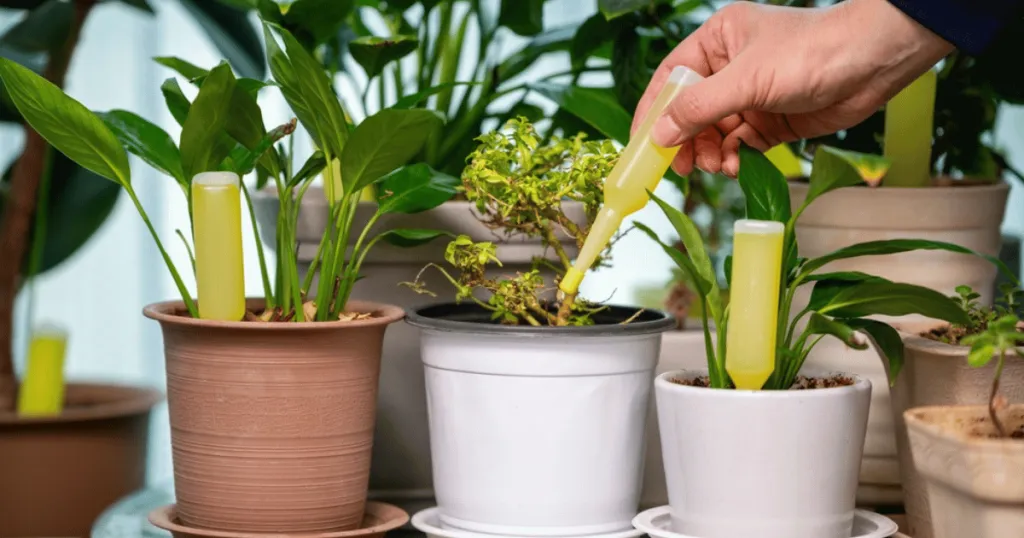
Comparison of Fertilizer Delivery Methods
| Feature | Liquid Fertilizer | Slow-release Fertilizer |
|---|---|---|
| Application Frequency | Every 2-4 weeks | Every 3-6 months |
| Nutrient Availability | Immediate | Gradual/Time-released |
| Risk of Burn | High if overused | Low |
| Best For | Rapid growth/Recovery | Routine maintenance |
| Effort Level | High | Low |
Analyzing Liquid Fertilizer for Indoor Environments
Liquid fertilizer is essentially a concentrated nutrient solution that you dilute with water before application. Because it is dissolved, the nutrients are immediately available to the plant roots. In an office setting, this provides a powerful tool for correcting issues quickly. If you notice yellowing leaves or stunted growth, a liquid feed can act as a jump-start. However, this immediacy is a double-edged sword. If you apply too much, or if the soil is already dry, the concentrated salts can cause root burn, leading to brown leaf tips and potential plant decline.
The primary challenge with liquid fertilizer in an office is the requirement for a strict schedule. You must remember to mix and apply the solution during your watering rounds. If your office has rotating staff or if plants are left unattended during holidays, liquid feeding often becomes inconsistent. Furthermore, because office plants often deal with lower light levels than those in a greenhouse, they grow more slowly.
Over-fertilizing with liquid products can force growth that the plant cannot support, resulting in weak, leggy stems that struggle to remain upright in low-light conditions. When using liquid formulas, you must also account for the specific mineral content of your local tap water, as adding concentrated nutrients to already “hard” water can accelerate the accumulation of mineral deposits in the potting mix.
Understanding Slow-release Fertilizer Utility
Slow-release fertilizers usually come in the form of coated pellets or spikes that you push into the soil. The coating is designed to break down slowly in response to moisture and temperature. This method is highly effective for office settings because it mimics a more natural, steady supply of nutrients. Once you apply the pellets, you generally do not need to think about fertilization again for several months. This is ideal for reception areas or meeting rooms where plant care might be delegated to staff who are not professional horticulturists.
The main advantage here is the safety profile. Because the nutrients are released in small, controlled doses, the risk of accidental over-fertilization is significantly lower than with liquid alternatives. Even if you miss a watering or if the office temperature fluctuates due to HVAC settings, the fertilizer remains stable. This reliability makes it the preferred choice for office managers who need to maintain a professional appearance without the constant risk of nutrient-related plant stress. Furthermore, slow-release pellets are less likely to be affected by the irregular watering cycles common in offices, where plants might experience periods of drought followed by heavy saturation.
Feature-by-Feature Differences
The most significant difference between these two methods is the interaction with the soil medium. Liquid fertilizers wash through the soil quickly. In office containers, which often lack the drainage capacity of outdoor garden beds, this can lead to salt accumulation. Over time, these salts build up in the potting mix, creating an inhospitable environment for roots. If you choose to use liquid fertilizer, you must be diligent about flushing the soil with plain water occasionally to remove these excess minerals.
In contrast, slow-release fertilizers are designed to stay within the root zone. Because they do not flood the soil with a high concentration of nutrients at once, they are less likely to contribute to rapid salt buildup. This makes them inherently safer for long-term use in containers that are not repotted frequently. Another factor is the impact of light. Plants in low-light office corners have lower metabolic rates. Liquid fertilizer often provides a surplus of nitrogen that these plants simply cannot process, leading to a buildup of unused salts. Slow-release options provide a lower, more sustainable dose that matches the slower metabolic pace of indoor plants.
Finally, consider the human factor. Liquid fertilizer requires mixing, measuring, and storage of chemicals, which can be messy in an office breakroom or storage closet. Slow-release pellets are clean, odorless, and easy to store. For a workplace, the simplicity of a pellet or spike is almost always superior to the logistical burden of maintaining a liquid feeding regimen. When considering the total cost of ownership, the time saved by staff not having to measure and mix liquid solutions often outweighs the slightly higher upfront cost of high-quality slow-release pellets.
The Role of Environmental Factors in Fertilizer Choice
Office environments present unique challenges that influence how plants absorb nutrients. HVAC systems constantly cycle air, often stripping humidity from the room. This low humidity forces plants to transpire more rapidly, which can lead to faster water uptake but not necessarily faster nutrient uptake. If you rely on liquid fertilizer, you risk concentrating salts in the soil as water evaporates, which can lead to severe root burn. Slow-release pellets are generally more forgiving in these high-evaporation environments because they do not rely on a single, high-concentration event to feed the plant.
Lighting is another critical variable. Most office plants, such as pothos or snake plants, are chosen for their ability to tolerate lower light. In these conditions, their metabolic rate is naturally suppressed. Providing a high-potency liquid fertilizer to a plant in a dark corner is akin to forcing a meal on someone who isn’t hungry. The plant cannot process the excess nitrogen, leading to weak, etiolated growth that makes the plant susceptible to pests like mealybugs or scale. Slow-release fertilizer, by contrast, provides a “trickle” of nutrients that the plant can access only when it has the energy to grow, making it the safer choice for low-light office aesthetics.
Best Use Cases for Your Office
If you are managing a large collection of plants across multiple offices, slow-release fertilizer is the clear winner. It allows you to standardize care, ensuring that every plant receives the same baseline nutrition regardless of who is performing the watering. This is particularly useful for high-traffic areas like lobbies or boardrooms where plant health is a reflection of the company image. For large floor-standing planters, slow-release spikes are particularly effective as they can be pushed deep into the root zone, ensuring nutrients are available where the roots are most active.
Liquid fertilizer should be reserved for specific scenarios. For example, if you have a high-light office with a specimen plant that is actively pushing out new growth, liquid fertilizer can provide the extra boost needed to sustain that development. It is also useful for plants that have been neglected and need a quick recovery. However, for the vast majority of standard office foliage like pothos, snake plants, or peace lilies, the slow-release method is more than sufficient and carries significantly less risk of error. If you decide to use liquid fertilizer, consider using a “weakly, weekly” approach – diluting the fertilizer to one-quarter of the recommended strength and applying it more frequently – to mitigate the risks of salt buildup.
Troubleshooting and Long-term Soil Health
Regardless of the method chosen, long-term success depends on the health of the potting mix. Over time, even the best fertilizers can leave behind residues. If you notice a white, crusty layer on the top of your soil, this is a sign of mineral accumulation. In this scenario, liquid fertilizer will only exacerbate the issue. You should prioritize flushing the soil with distilled or filtered water to leach out the excess salts. If you are using slow-release pellets, ensure that you are not burying them too deep, as they need a degree of moisture and microbial activity to break down their protective coating.
Another consideration is the age of the potting mix. If your office plants have not been repotted in over two years, the soil structure may have broken down, leading to poor drainage. In such cases, neither fertilizer will perform optimally. Before switching fertilizers, assess whether the plant actually needs nutrients or if it simply needs a fresh medium to support root respiration. Often, the best “fertilizer” for an office plant is a fresh, well-draining potting mix that allows for proper oxygen exchange at the roots.
Which One Should You Choose?
The decision between liquid vs slow-release fertilizer for office plants should be based on your available time and the specific light conditions of your office. If you want a set-and-forget solution that keeps your plants healthy without requiring a calendar reminder, choose a high-quality, slow-release granular fertilizer. This choice minimizes the risk of root burn and salt buildup, which are the most common causes of plant failure in office settings.
Only choose liquid fertilizer if you are prepared to manage a strict schedule and have the time to monitor your plants for signs of over-fertilization. If you find that your plants are growing too slowly or if you have a specialized collection that requires high-intensity care, then the precision of liquid feeding is justified. For most office managers, however, the trade-off of slightly faster growth is not worth the increased risk of plant damage and the logistical burden of frequent, precise application. Stick to the slow-release method to ensure your office greenery remains a low-stress, high-impact asset to your workspace.
FAQ
- Can I use both liquid and slow-release fertilizer at the same time?
Using both is generally unnecessary and risky. Combining them often leads to over-fertilization, which can burn roots and cause leaf tip browning. It is best to choose one method that fits your office maintenance schedule and stick to it consistently. - How do I know if my office plants are suffering from fertilizer burn?
Signs of fertilizer burn include brown, crispy leaf tips, white crusty deposits on the soil surface, or sudden wilting despite adequate moisture. If you see these, stop fertilizing immediately and flush the soil with plain water to wash away excess salts. - Does the type of potting soil affect which fertilizer I should use?
Yes, high-quality potting mixes often contain peat or coconut coir, which hold onto nutrients differently than sandy soils. If your soil is dense, slow-release pellets are safer because they won’t cause the rapid, localized nutrient spikes that liquid fertilizers can trigger in poorly draining pots. - Should I fertilize my office plants during the winter months?
In most offices, light levels drop significantly in winter. Since plant growth slows down, you should reduce or stop fertilization entirely. Slow-release fertilizers are safer here because they naturally release less when growth is dormant, whereas liquid fertilizer can easily lead to over-feeding during this period.