Affiliate Disclosure: As an Amazon Associate, I earn from qualifying purchases.
Finding greenery that survives the artificial ecosystem of a modern workplace requires looking past outdoor gardening rules. Office environments run on fluorescent lighting, recirculated air from HVAC systems, and dry humidity levels that can stress delicate foliage within weeks. If you manage a corporate suite, a bustling reception area, or a quiet private desk, this shortlist of the best indoor plants for office spaces is built for you. We focus on resilient species that tolerate weekend neglect and low natural light. If your workspace lacks windows entirely or receives zero direct sun, you are in the right place, whereas those seeking outdoor landscape perennials or heavy sun-loving crops will need to look elsewhere.
Key Takeaway
- Selecting resilient office greenery saves maintenance time while boosting workplace morale.
- Prioritize low light tolerance over delicate beauty.
- Choose species that withstand irregular watering schedules.
- Match plant size directly to your available desk footprint.
Criteria for Evaluating Office Greenery
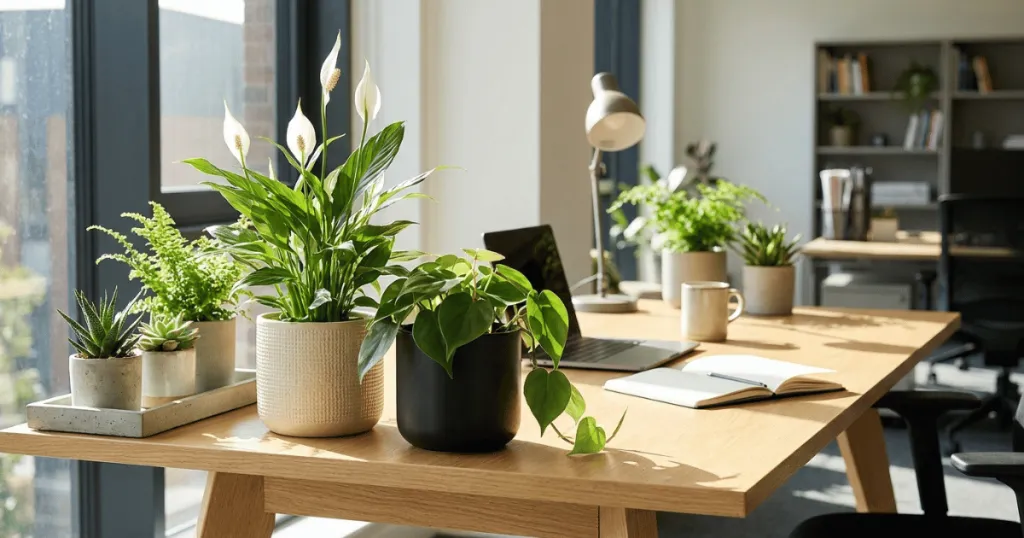
Curating a shortlist of office plants requires evaluating traits that matter specifically indoors. Natural sunlight is rarely abundant in standard workspaces, meaning candidates must tolerate indirect illumination or LED office grids. Furthermore, weekend neglect is standard operating procedure in corporate settings, so plants must endure erratic irrigation schedules without dropping all their leaves. We also weigh physical footprint, ensuring options fit neatly on corner desks, credenzas, or floor stands without crowding coworkers or blocking pathways.
Evaluating these factors filters out high-maintenance outdoor favorites that quickly wither indoors. The selections below represent the most forgiving species available for workplace interiors, balancing aesthetic appeal with biological resilience under artificial conditions.
Top Office Plant Selections
Snake Plant
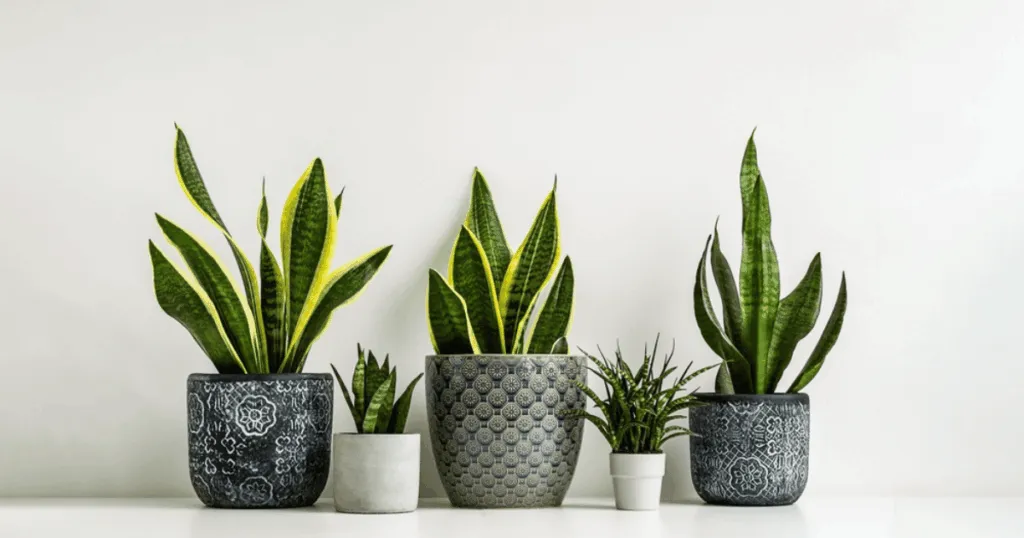
The Snake Plant stands out as one of the most forgiving options available for commercial interiors. Overwatering represents the primary risk for this architectural succulent, making it exceptionally resilient when team members forget to water it for weeks at a time. It tolerates low light conditions easily, though it performs best when placed near medium to bright indirect light sources. One important thing many people overlook is that its upright, rigid leaves require minimal horizontal desk space, making it an ideal companion for narrow cubicle partitions. Note that this species is toxic to cats and dogs if chewed or ingested due to its saponin content.
ZZ Plant
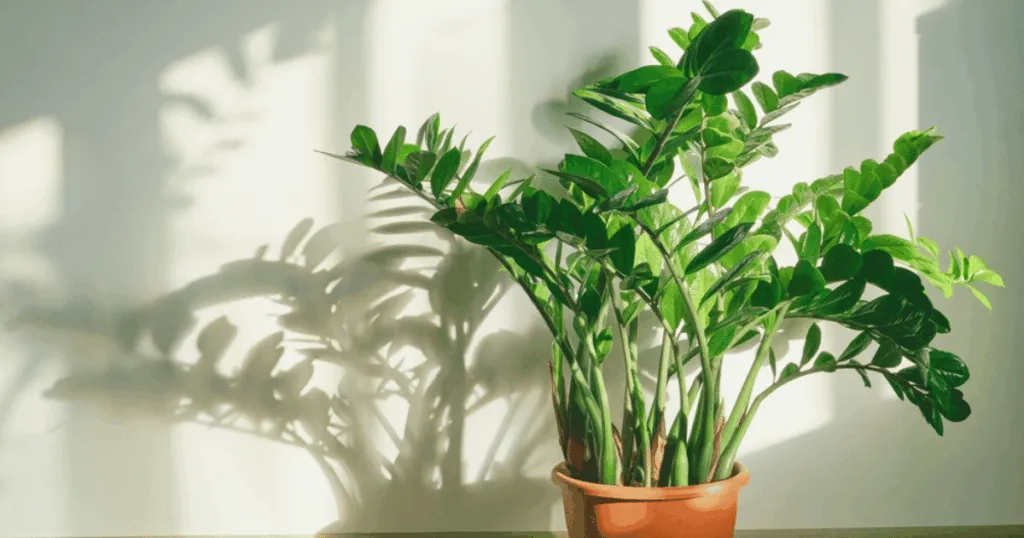
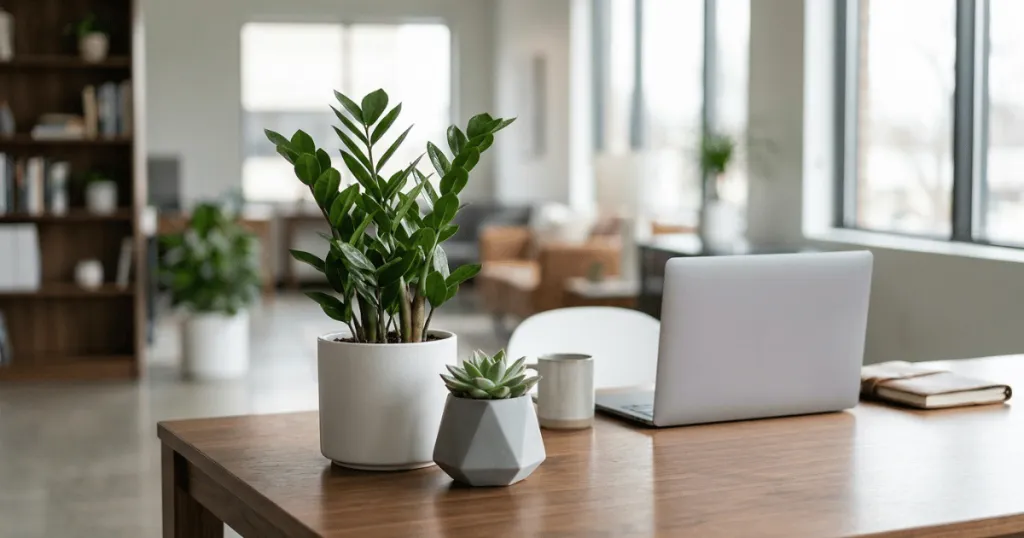
Extremely tolerant of neglect and fluorescent lighting, the ZZ Plant is a perennial favorite for windowless interior offices and dimly lit reception desks. Its thick, waxy rhizomes store water efficiently, which protects the plant from dry indoor air and extended periods between waterings. In practice, this usually means you only need to check the soil moisture every few weeks. While it adapts well to dark corners, it prefers medium indirect light to maximize growth speed. Keep in mind that all parts of the plant are toxic to pets due to calcium oxalate crystals.
Chinese Evergreen
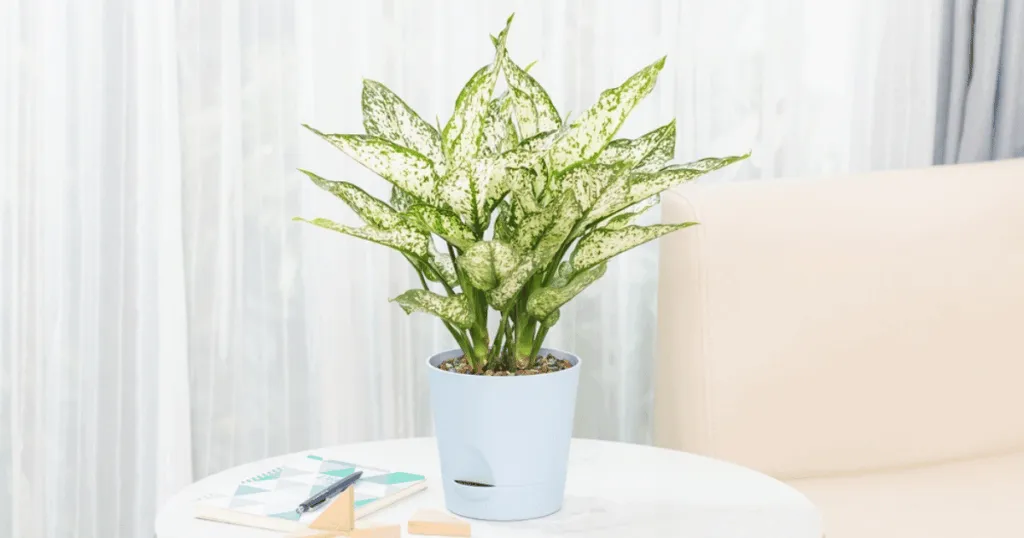
Also sold widely under the name Aglaonema, the Chinese Evergreen features striking variegated foliage that brings color to dull corporate hallways. While many cultivars vary in leaf pattern and color, their core care requirements remain identical and straightforward. It tolerates low light reasonably well, though brighter indirect light helps maintain vibrant leaf coloration. Our advice is to let the top couple of inches of soil dry out completely before watering again. This species contains calcium oxalate crystals and is toxic to cats and dogs if ingested.
Cast Iron Plant
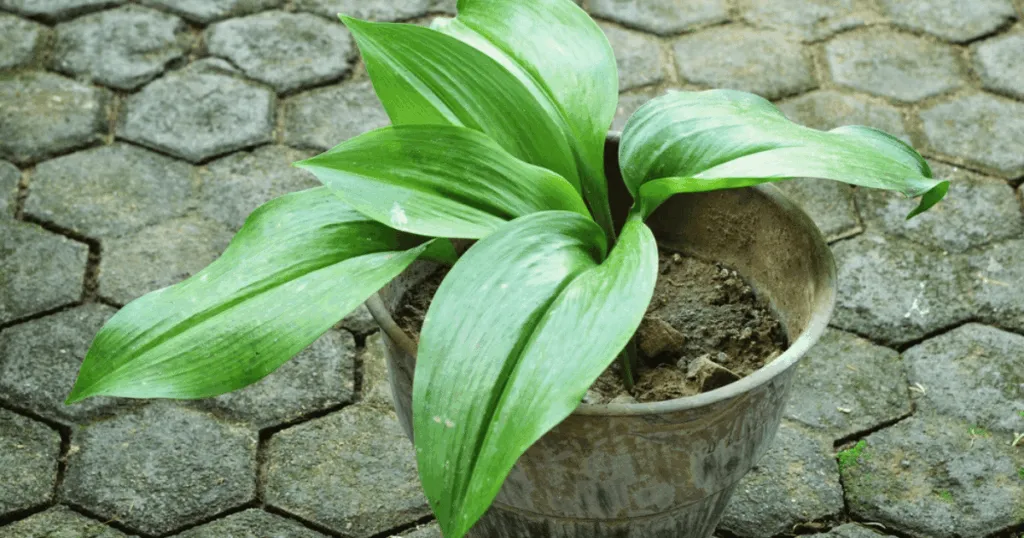
True to its descriptive name, the Cast Iron Plant earns its reputation through sheer toughness and survival capability. It tolerates low light levels better than almost any other leafy tropical plant, thriving even in dark interior corridors away from windows. Direct sun should be avoided entirely, as intense rays scorch its dark green fronds. A safer approach in busy office environments is to dust its broad leaves periodically to maintain clear stomata for gas exchange. It is entirely non-toxic to cats and dogs.
Parlor Palm
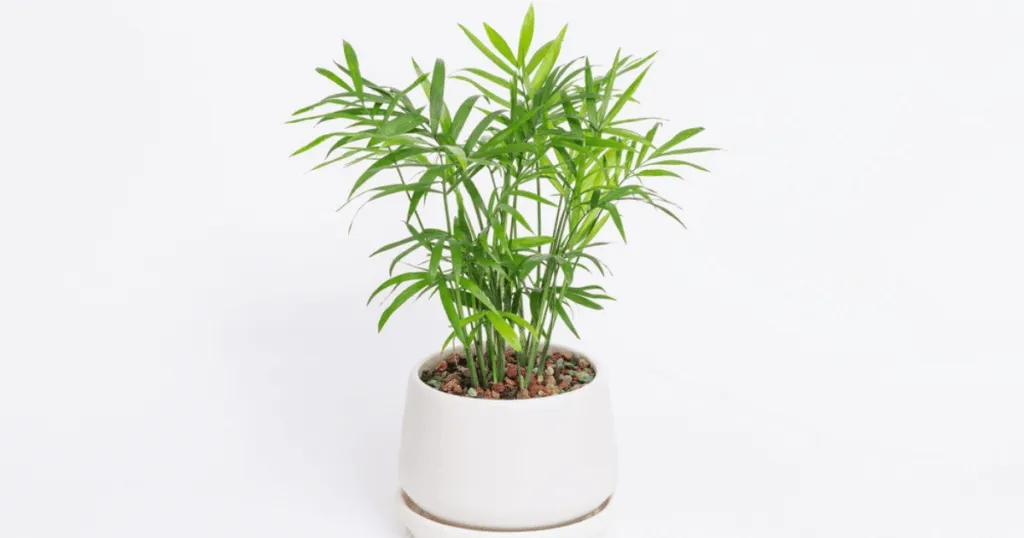
For offices desiring a soft, tropical aesthetic without managing high-maintenance fronds, the Parlor Palm offers an elegant solution. It ranks among the most shade-tolerant palms available, making it well-suited to interior desks and meeting rooms with limited window access. It grows slowly in typical office conditions, which prevents it from outgrowing its container too quickly. One consideration is that it prefers stable moisture levels without standing water at the root base. Fortunately, it is non-toxic to household pets.
Spider Plant
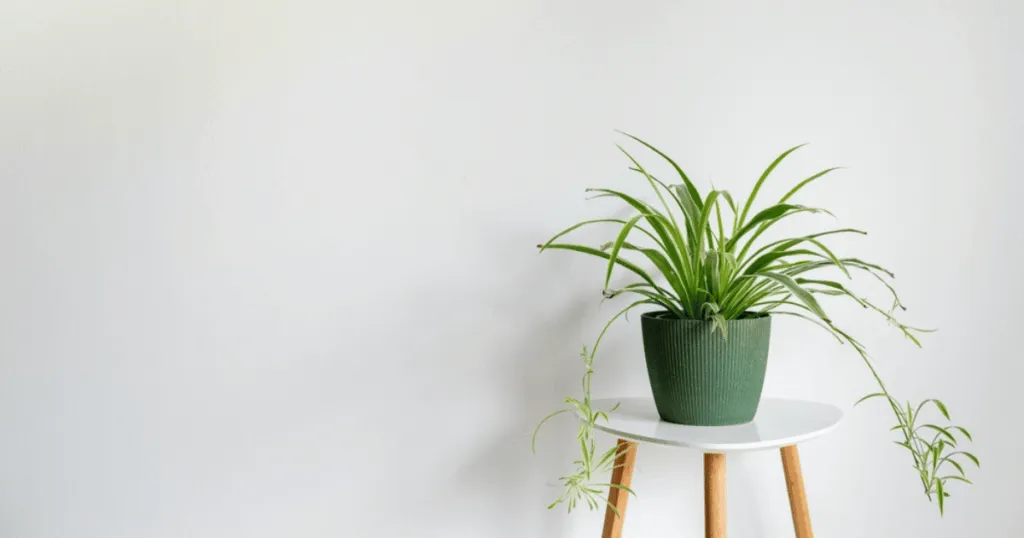
Known for producing miniature plantlets on long arching stems, the Spider Plant brings a dynamic, living element to hanging baskets or high shelving units. It tolerates low light well, though medium to bright indirect light encourages faster runner development. A common mistake is letting the soil stay waterlogged, which leads to root rot in dry indoor air. It is entirely non-toxic to cats and dogs, making it a safe choice for pet-friendly hybrid offices. Trimming brown tips caused by fluoridated tap water keeps its slender leaves looking neat.
Heartleaf Philodendron
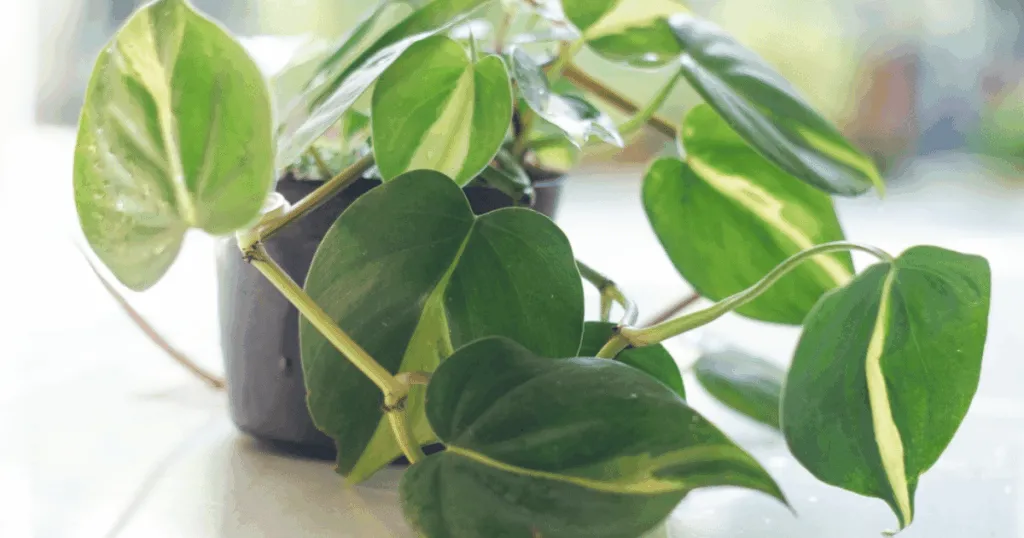
The most common trailing philodendron variety features glossy, heart-shaped leaves that cascade gracefully from file cabinets or high book shelves. It thrives under standard office fluorescent or LED lighting and adjusts quickly to indoor temperature fluctuations. Pruning the vine tips encourages bushier growth rather than long, leggy stems. In our editorial review, this plant remains one of the most reliable choices for vertical office styling. Like many popular aroids, it is toxic to cats and dogs if chewed.
Peperomia
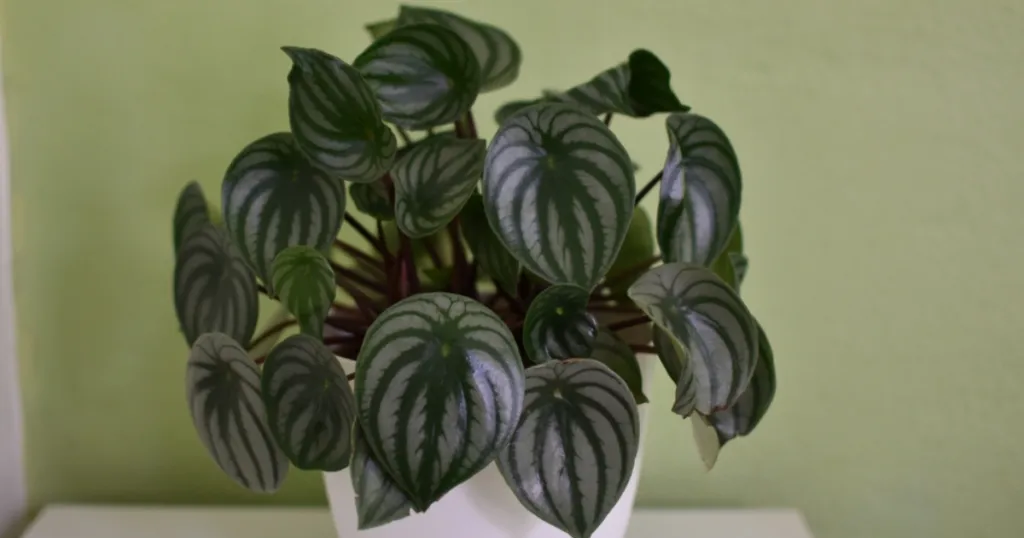
Compact desk-sized specimens within the Peperomia genus offer incredible leaf-texture variety without demanding excessive room. They adapt well to fluorescent office lighting setups and require very little physical footprint on a crowded workspace. Because they store moisture in their succulent stems and leaves, they tolerate occasional underwatering without permanent damage. Overwatering remains the fastest way to harm them, so verify dry soil before reaching for the watering can. They are non-toxic to both cats and dogs.
Placement Strategies for Different Office Zones
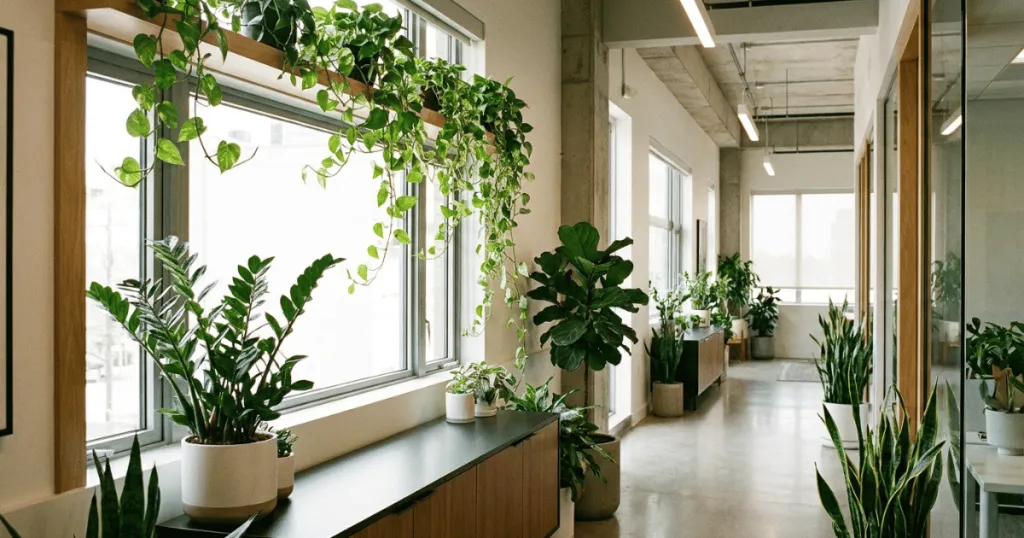
Strategic placement determines whether an office plant thrives or struggles. Reception desks and executive lobbies typically feature stronger natural light near entry glass, making them prime real estate for architectural statements like larger palms or taller statement species. Conversely, interior windowless conference rooms demand ultra-tough selections like ZZ plants or Cast Iron plants that handle pure artificial lighting without declining.
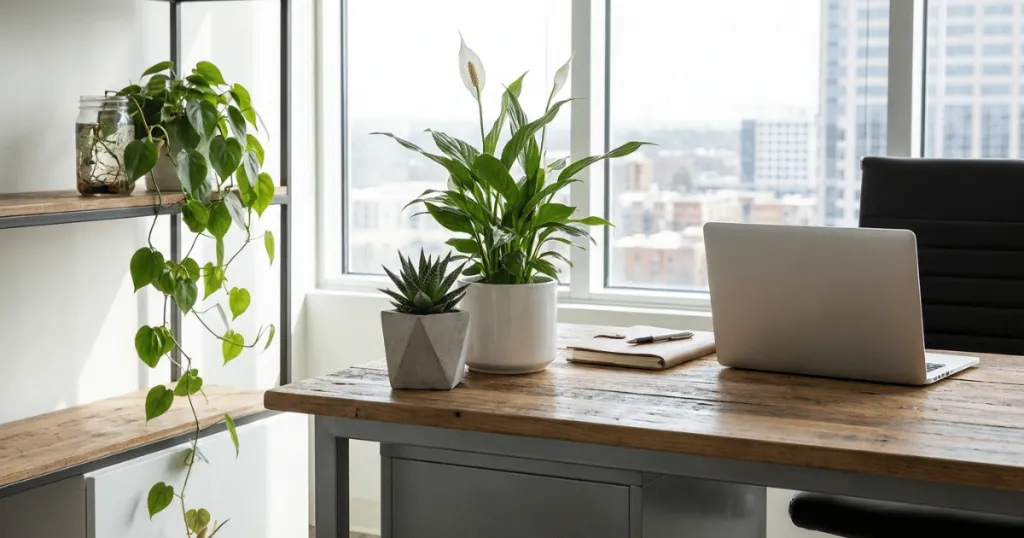
Cubicles and personal desks require a different approach entirely. Limited desktop real estate means verticality matters more than canopy width. Selecting upright growers or trailing vines mounted on top partitions maximizes green exposure without sacrificing valuable paperwork space. Keeping plants away from direct HVAC vents also prevents rapid moisture evaporation from leaves and soil.
Understanding Artificial Ecosystems: Light and Air Dynamics
To keep workplace greenery vibrant over the long term, facilities managers must look closely at how office lighting and heating systems interact with biological tissue. Standard overhead office fixtures – whether legacy fluorescent tubes or modern LED arrays – emit a narrower spectrum of usable light energy than direct solar radiation.
Plants that evolved under forest canopies, such as aroids and certain palms, are naturally pre-adapted to these lower-intensity environments because their chloroplasts maximize energy capture from diffuse illumination. However, placing a high-light desert succulent on a dark back-row desk will inevitably lead to thin, stretched growth as the plant desperately reaches for distant photon sources.
Beyond illumination, forced-air climate control systems present a unique stress factor. Commercial HVAC setups actively scrub moisture from the air to maintain occupant comfort, resulting in ambient relative humidity levels that often dip well below residential norms. This dry air causes rapid transpiration across leaf surfaces.
If root systems cannot pull up water fast enough – either due to infrequent manual watering or compacted soil that repels moisture – leaf margins crisp and brown tips appear. Grouping plants together creates a localized microclimate where shared transpiration slightly elevates humidity around individual pots, mitigating some of the drying effects of continuous office airflow.
Watering Protocols for Variable Office Schedules
Establishing a reliable watering routine in a workplace setting is notoriously difficult. Team members often fall into two opposite traps: overzealous daily splashing that suffocates roots or total abandonment until leaves droop past recovery. The safest operational rule for corporate environments is the finger-depth dry test.
For most tropical selections like Chinese Evergreens and Heartleaf Philodendrons, inserting a finger two inches into the potting medium ensures the root zone has dropped excess moisture before the next hydration cycle begins. Succulent-like specimens such as Snake Plants and ZZ Plants require complete desiccation throughout the entire container depth, often extending intervals to three or four weeks during cooler winter months when building temperatures drop.
Drainage is another non-negotiable factor in office settings. Decorative cachepots that lack drainage holes trap excess irrigation at the base, silently rotting roots while the topsoil appears dry. Always ensure nursery pots feature functional drainage outlets, and empty any standing water from saucer trays within thirty minutes of watering. For shared offices where multiple people might attempt to care for the same plant, placing a discreet laminated care card nearby prevents accidental double-watering and extends the lifespan of sensitive varieties.
Limitations, Trade-Offs, and Who Should Choose Differently
No indoor plant survives absolute neglect indefinitely, and understanding physical trade-offs prevents wasted budgets. High-humidity lovers like delicate ferns or colorful calatheas generally fail in aggressively air-conditioned or heated offices where humidity hovers in the dry zone. If your office lacks anyone willing to check soil moisture even twice a month, live greenery might not be appropriate, and artificial alternatives should be considered instead.
Furthermore, facilities managers must evaluate pet policies before introducing trailing or low-hanging greenery. While non-toxic options like Parlor Palms and Spider Plants offer peace of mind, popular aroids containing calcium oxalate require careful placement out of reach if office pets visit regularly. Choosing the right plant means matching your workspace reality to biological tolerance rather than forcing high-maintenance species into hostile microclimates.
In addition to lighting and watering challenges, office managers must account for physical clearance and architectural constraints. Large statement plants placed in high-traffic corridors frequently suffer from broken stems, crushed leaves, or tipped containers caused by rolling desk chairs and passing cleaning carts. Selecting heavy, stable ceramic or fiberglass planters mitigates the risk of accidental tipping, while choosing upright growers with tightly clustered vertical stems prevents branches from snagging on clothing or blocking narrow walkways between modular desk pods.
Another crucial operational trade-off involves temperature drops during weekends and building shutdowns. Many commercial offices reduce heating or cooling output overnight and on weekends to conserve energy, causing indoor ambient temperatures to fluctuate sharply outside of standard business hours. Tropical species sensitive to thermal shock, such as certain delicate ferns or variegated aroids, may drop leaves if positioned directly against uninsulated single-pane exterior windows or directly in the path of automated night-cycle ventilation blasts. Conducting a thorough site audit of drafts and thermal corridors before purchasing plants ensures that selected varieties are placed in stable microclimates where weekend temperature dips will not trigger stress responses.
Short Non-Shopping Disclaimer
This article provides independent informational guidance for workplace plant selection and care. We do not sell plants, maintain retail storefronts, or accept financial compensation from nurseries or commercial landscaping providers. All care recommendations are based on general horticultural principles tailored to standard indoor corporate environments.
FAQ
Can office plants survive over the weekend when the building HVAC is turned down?
Most resilient office plants handle weekend temperature fluctuations easily because indoor thermal mass retains heat or coolness. Species like ZZ plants and snake plants tolerate lower humidity and drier air without showing stress.
Do office plants actually survive under pure fluorescent or LED lighting without natural windows?
Yes, shade-tolerant varieties like cast iron plants, ZZ plants, and snake plants photosynthesize effectively under standard artificial office lighting. However, growth rates will be significantly slower compared to rooms with natural sunlight.
What causes brown leaf tips on office plants?
Brown tips usually stem from dry HVAC air, underwatering, or chemical sensitivities to fluoridated tap water. Using filtered water and misting surrounding air helps minimize tip browning in sensitive varieties.
How often should office plants be watered?
Watering frequency depends on pot size, ambient temperature, and humidity, but most office plants prefer letting the top two inches of soil dry out completely between waterings.