When you notice your prayer plant, or Maranta, looking less than vibrant in your office, the first instinct is often to assume it needs more water or a different spot. However, before you start adjusting your care routine, consider the most common misdiagnosis: the natural circadian rhythm of the plant. Prayer plants are famous for their nyctinasty, a process where their leaves fold upward at night and unfurl during the day. If you arrive at your desk in the morning or evening and see folded leaves, this is not a sign of distress or a health issue. It is a perfectly normal, healthy behavior.
Once you have ruled out this natural movement, you can begin to investigate actual prayer plant problems. These plants are sensitive to the specific conditions of a workspace, particularly the dry, climate-controlled air and the artificial lighting typical of modern offices. By identifying the specific visual cues your plant is giving you, you can pinpoint the environmental imbalance and restore its health without unnecessary intervention.
Short Answer
Most prayer plant problems stem from inconsistent moisture or low humidity rather than pests. Ensure the soil remains evenly moist but never waterlogged, and increase ambient humidity through grouping or pebble trays to counteract dry office HVAC air, which is the primary cause of leaf browning.
Symptom-Based Troubleshooting
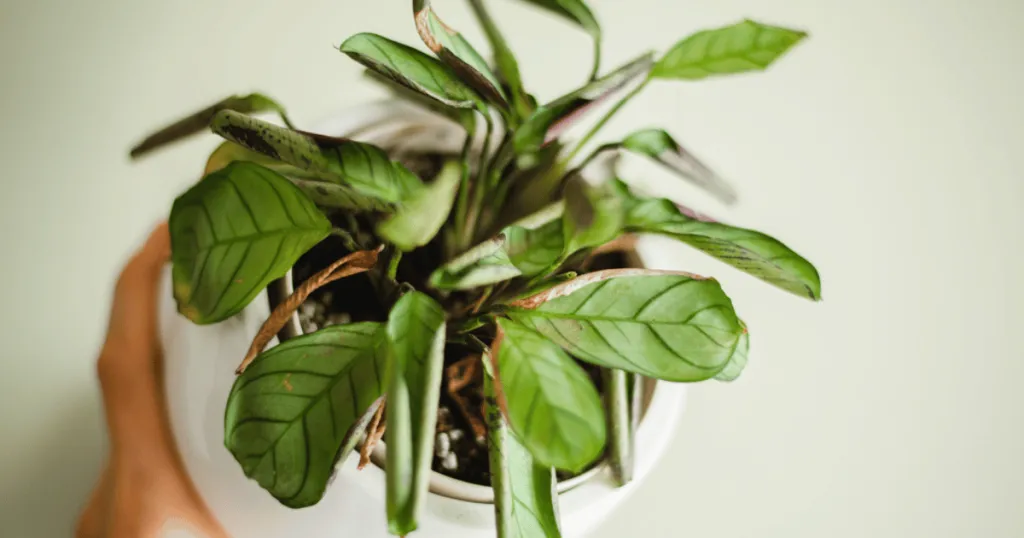
Troubleshooting your plant requires looking at the leaves as a diagnostic tool. Because these plants are native to tropical forest floors, they react sharply to changes in their environment. Use the following guide to match your plant’s current appearance with the most likely cause.
Yellowing Leaves
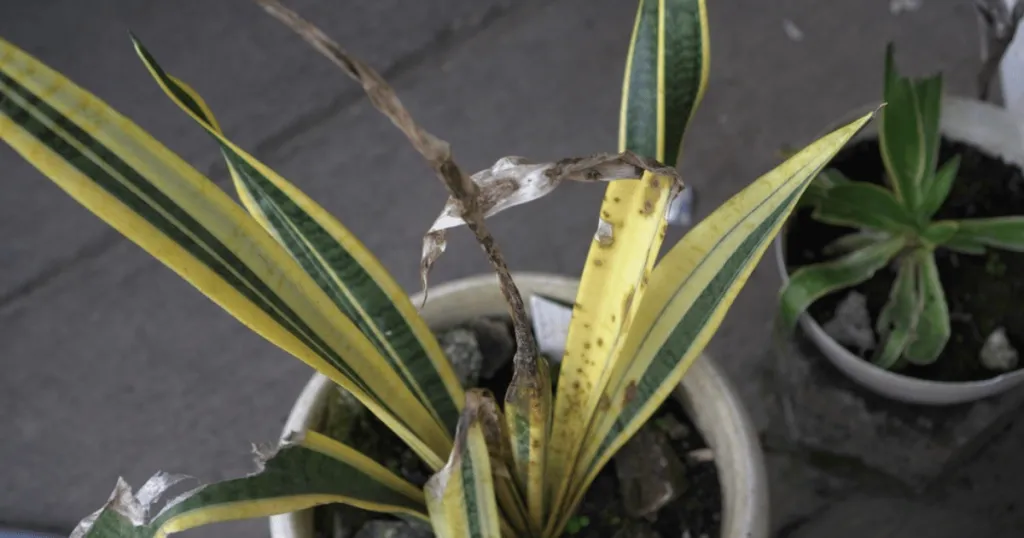
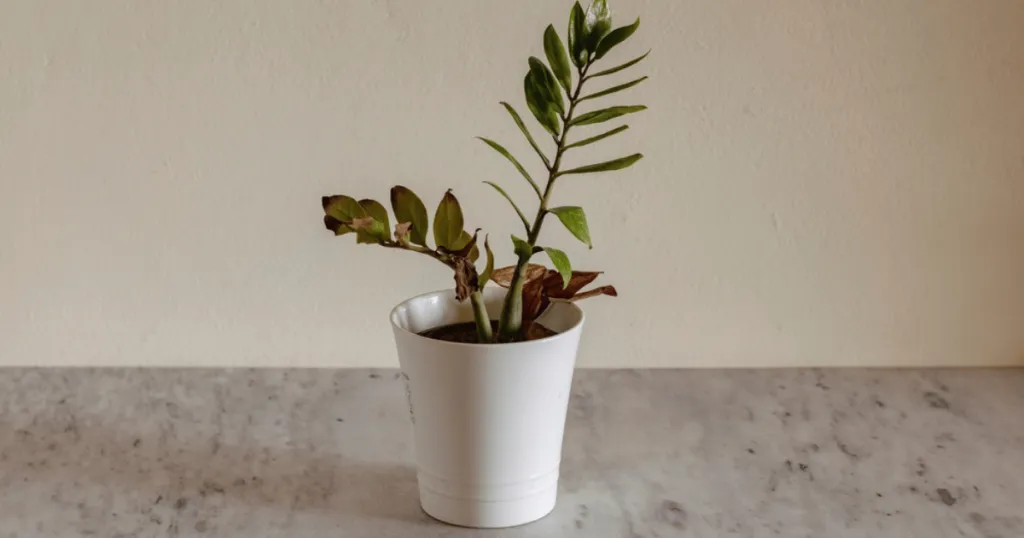
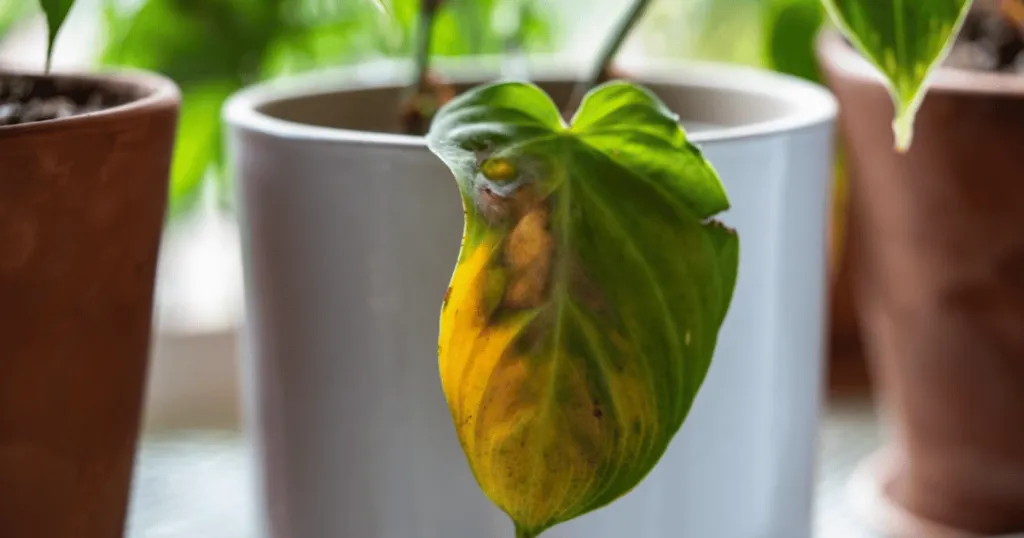
Yellowing is frequently a sign of overwatering or poor drainage. In an office setting, it is easy to over-water when multiple people might be tending to the plant. If the soil stays soggy, the roots cannot breathe, leading to root rot. Check the soil depth; if it feels wet several inches down, stop watering immediately and ensure the pot has drainage holes. If the yellowing is accompanied by a mushy stem base, you may need to repot into fresh, well-draining soil and remove any blackened, decaying roots.
Brown, Crispy Edges
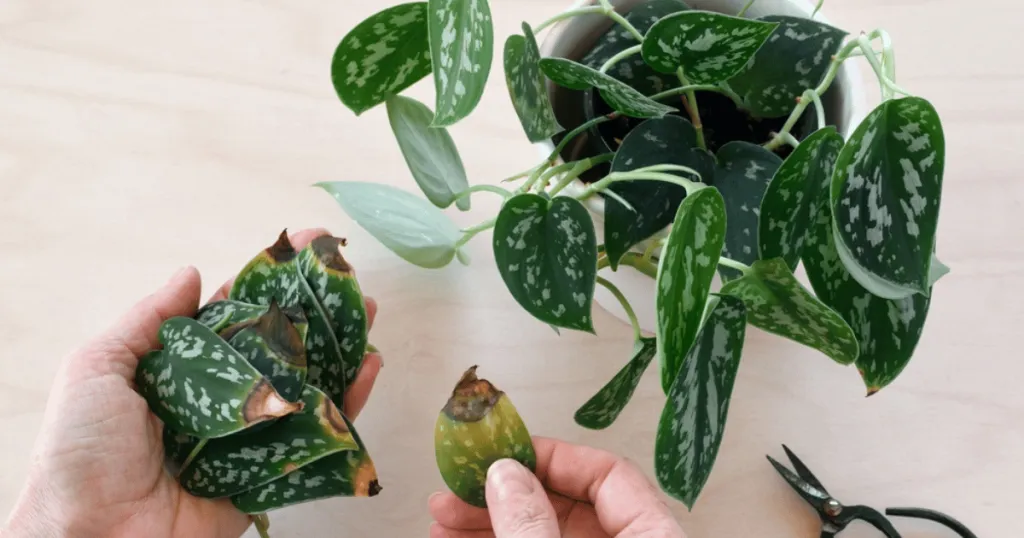
This is the hallmark sign of low humidity. Office buildings are notorious for low-humidity environments due to continuous air conditioning or heating. When the air is too dry, the leaf tips and edges lose moisture faster than the roots can replenish it. To fix this, move the plant away from direct air vents. You can increase local humidity by placing the plant on a tray filled with pebbles and water, ensuring the pot sits on the pebbles and not directly in the water.
Stalled Growth and Pale Foliage
If your plant is not growing or the leaves look washed out, the issue is likely light-related. While prayer plants tolerate lower light, they still require medium indirect light to thrive. If your office has only dim fluorescent lighting or no windows, the plant will struggle to produce enough energy. Move the plant closer to a window where it can receive bright, indirect light, but keep it out of direct sun, which can scorch the delicate foliage.
Managing Moisture and Humidity
The most common mistake in office plant care is treating a prayer plant like a succulent. These plants require consistent moisture. In an office, the weekend presents a risk; if the temperature spikes or the air remains dry, the plant may dry out completely. Check the soil on Friday afternoon and ensure it is moist before leaving for the weekend. If the office is particularly dry, consider a small humidifier nearby or group the plant with other foliage to create a microclimate.
Water quality also matters. Prayer plants are sensitive to the minerals and chemicals, such as chlorine or fluoride, found in tap water. If you notice persistent browning despite adequate humidity, try switching to filtered or distilled water. This simple change often resolves chronic leaf tip burn that standard tap water can cause over time.
Advanced Care and Prevention
Prevention is far more effective than trying to nurse a stressed plant back to health. Establish a routine that prioritizes consistency. Use a moisture meter if you are unsure about the soil state, but remember that these are just tools; your finger is the best sensor. If the top inch of soil feels dry, it is time to water. Never let the soil dry out entirely, as this causes the leaves to curl and eventually drop.
Repotting should only be done when the plant has clearly outgrown its current container, usually when roots are circling the bottom. Use a high-quality, peat-based potting mix that retains moisture while allowing excess water to escape. Avoid heavy garden soil, which compacts and suffocates the root system. When you repot, do not go up more than one or two inches in pot size, as a pot that is too large will hold too much water, leading back to the overwatering cycle.
Finally, keep an eye out for pests like spider mites, which thrive in the dry, warm air of office spaces. If you see fine webbing on the undersides of leaves, wipe them down with a damp cloth and use a mild insecticidal soap. Regular cleaning of the leaves also helps the plant breathe and keeps it looking tidy in a professional setting.
Deep Dive: Understanding Environmental Stressors in the Workplace
To master Maranta care, one must understand how office infrastructure impacts plant physiology. Unlike a home environment, an office is often a closed loop of HVAC-controlled air. This system is designed for human comfort, not plant health, often resulting in humidity levels dropping below 30%. For a tropical plant, this is a severe environmental imbalance.
Transpiration – the process by which plants lose water through their leaves – accelerates in these dry conditions. If the root system cannot keep up with this accelerated water loss, the plant will prioritize survival by sacrificing its leaf edges, leading to the characteristic brown, crispy margins that plague many office plants.
Furthermore, the lighting in offices is often inconsistent. While fluorescent lights provide some energy, they lack the full spectrum of natural light. If your prayer plant is situated in a cubicle far from a window, it may experience a slow decline. You might notice the plant becoming leggy, or ‘stretching,’ as it attempts to reach for a light source that isn’t there. This is a classic sign of light starvation. To mitigate this, consider supplemental LED grow lights specifically designed for office desks, which can provide the necessary intensity without the heat of traditional bulbs.
Practical Decision Guidance for Office Managers
When managing a collection of plants in a shared office space, consistency is the greatest challenge. Prayer plant problems often arise when multiple people attempt to care for the same plant. One person might water it on Monday, and another on Wednesday, leading to waterlogged soil. Establish a ‘plant lead’ or a simple tracking system to ensure the plant is only watered when the soil actually requires it. This prevents the common cycle of overwatering that leads to root rot.
Another consideration is the placement of the plant in relation to office traffic. Prayer plants have delicate foliage that can be easily damaged by passing people or equipment. Choose a location that is visible and aesthetically pleasing but protected from high-traffic areas. Additionally, avoid placing the plant near doors that lead to the outside, as cold drafts during winter months can cause the leaves to curl or drop suddenly, a reaction to thermal shock.
The Role of Soil and Drainage
The potting mix is the foundation of your plant’s health. In an office, you may be tempted to use whatever soil is available, but the specific needs of the prayer plant require a well-aerated, moisture-retentive medium. A mix containing peat moss or coco coir, perlite, and a small amount of bark is ideal. The perlite is essential for drainage, ensuring that even if you accidentally overwater, the excess moisture can escape.
If you are using a decorative pot without a drainage hole, always keep the plant in its plastic nursery liner inside the decorative pot. This allows you to remove the plant, water it in a sink, let it drain completely, and then return it to its display spot, preventing the accumulation of standing water at the bottom of the container.
Strategic Placement and Long-Term Health
Beyond basic maintenance, long-term success with prayer plants in an office hinges on strategic placement. Avoid placing these plants directly under air conditioning vents, as the constant airflow acts like a hair dryer, rapidly stripping moisture from the foliage. If your office layout forces you to place the plant near a vent, consider installing a small physical barrier, such as a desk divider or a decorative screen, to deflect the airflow. This simple adjustment can prevent the rapid onset of brown leaf tips and maintain the structural integrity of the leaves.
Furthermore, consider the seasonal shifts in your office. During winter, heating systems often run at higher capacities, further reducing indoor humidity. This is the time when prayer plants are most vulnerable to spider mite infestations. Proactive monitoring during these months is essential. Inspect the undersides of the leaves weekly for signs of webbing or fine, stippled dots. Early detection allows for immediate intervention, such as wiping leaves with a diluted neem oil solution or insecticidal soap, which is far less disruptive than dealing with a full-blown infestation that could necessitate removing the plant from the office entirely.
Lastly, recognize the limitations of your office environment. If you have tried adjusting light, humidity, and watering schedules without success, the environment may simply be too hostile for a Maranta. In such cases, it is a responsible decision to rotate the plant to a more suitable area of the building – perhaps a breakroom with higher humidity or a corner office with better natural light – rather than forcing the plant to survive in a high-stress zone. Understanding when to relocate a plant is a key skill for any office manager, ensuring that your greenery remains a source of visual calm rather than a source of maintenance frustration.
Related Prayer Plant Guides
FAQ
Why are my prayer plant leaves curling?
Leaf curling is a classic response to dehydration or low humidity. In an office, your plant is likely losing moisture faster than it can take it up. Check the soil moisture first; if it is dry, water thoroughly. If the soil is moist, the air is too dry, and you should increase humidity.
Is it normal for prayer plant leaves to close at night?
Yes, this is a natural behavior called nyctinasty. The plant moves its leaves in response to light cycles. It is not a sign of stress or a prayer plant problem, and you do not need to adjust your care routine when you see the leaves folded in the evening.
Can prayer plants survive in windowless offices?
They will struggle significantly without natural light. While they can survive for a time under bright LED or fluorescent office lights, they will eventually show signs of stress like pale leaves and stunted growth. If you have no natural light, consider rotating the plant to a brighter location periodically.
Are prayer plants safe for office pets?
According to the ASPCA, the Maranta leuconeura is non-toxic to cats and dogs. This makes them a safe choice for offices that allow pets or for employees who are concerned about potential ingestion by animals.