Affiliate Disclosure: As an Amazon Associate, I earn from qualifying purchases.
Selecting the best plants for air conditioned offices requires a shift in how you evaluate plant health. Most indoor plants originate from tropical environments where humidity remains consistently high and air movement is gentle. In contrast, a modern office environment is defined by HVAC systems that actively strip moisture from the air, creating a desert-like microclimate.
This low humidity is the primary factor that causes leaf tips to brown, edges to crisp, and sensitive foliage to drop prematurely. Before selecting greenery, it is vital to understand that plants with thin, papery leaves or those requiring high-moisture environments – such as many ferns or tropical exotics – are often disqualified from the start, as they will struggle to maintain turgor pressure in the dry, recycled air typical of corporate buildings.
Decision Snapshot
- Prioritize plants with thick, waxy leaves to resist dry air.
- Avoid delicate ferns unless you can provide supplemental humidity.
- Focus on low-light tolerance to survive fluorescent-only zones.
- Check for toxicity if your office is a pet-friendly workspace.
- Start with one or two hardy specimens before expanding your collection.
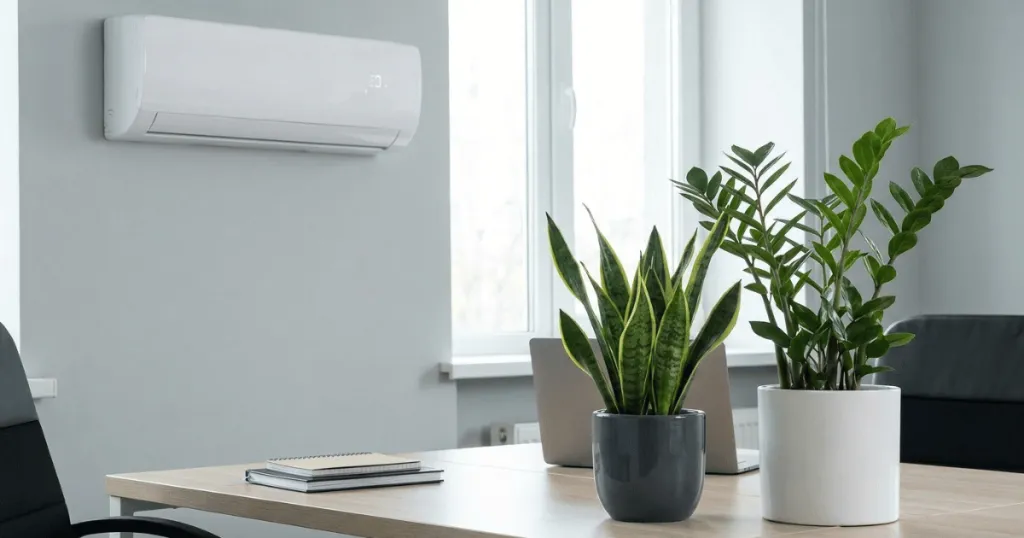
What Defines Success in an Air Conditioned Environment
Beyond humidity, the light quality in professional settings is often suboptimal. While you might assume a window seat is ideal, the combination of intense, direct sun through glass and the cooling effect of nearby air vents can stress a plant. Conversely, interior offices relying solely on LED or fluorescent lighting require species that can perform photosynthesis efficiently under lower light intensity. A successful office plant must be able to handle these environmental stressors without requiring constant intervention or specialized equipment.
Success in these spaces is measured by a plant’s ability to tolerate “dry-cycle” stress. When HVAC systems run, they lower the relative humidity, which increases the rate of leaf transpiration. If a plant cannot regulate this water loss, it will wilt. Therefore, the best choices are those that have evolved to store water in stems, rhizomes, or succulent leaves, allowing them to bridge the gap between infrequent watering sessions and the drying effects of office climate control.
The Most Resilient Choices for Office Environments
Snake Plant
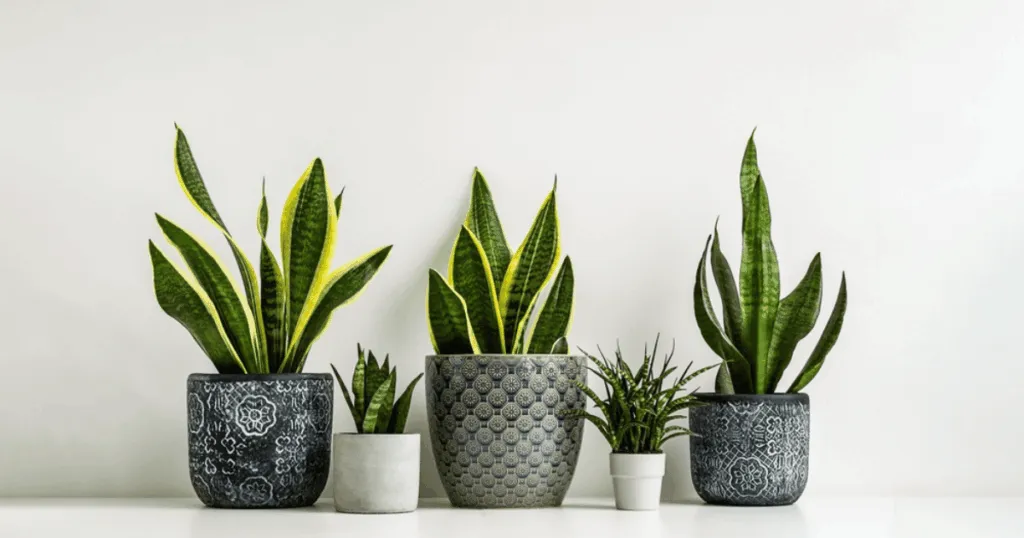
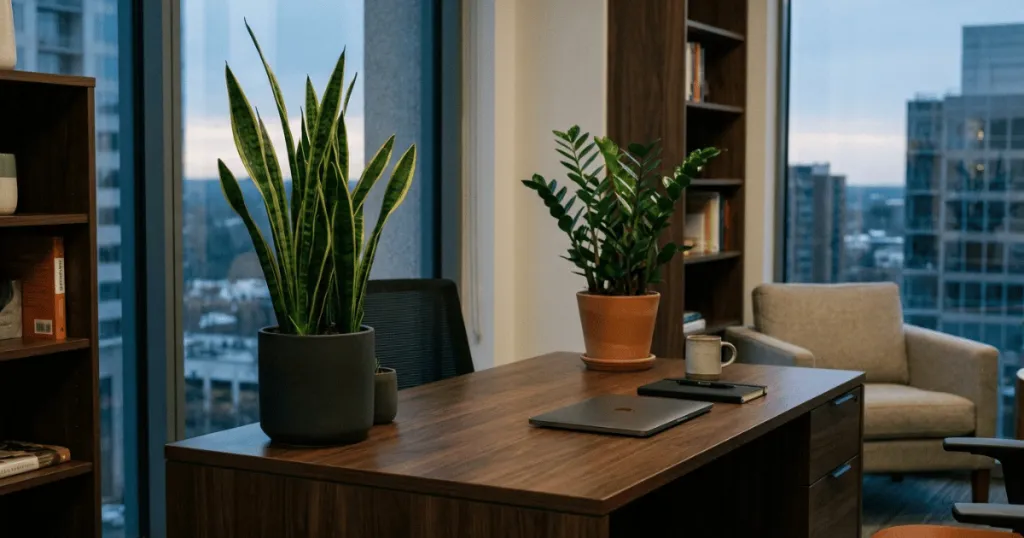
The Snake Plant is perhaps the most reliable choice for any office manager. Its thick, succulent-like leaves are evolutionarily designed to store water, making them incredibly resistant to the dry air produced by HVAC units. Because it thrives on neglect and can tolerate a wide range of light conditions, it is an ideal candidate for reception areas or corners that receive little natural light. Note that while it is highly drought-tolerant, it is mildly toxic to cats and dogs if ingested, so keep it elevated if the office is pet-friendly.
ZZ Plant
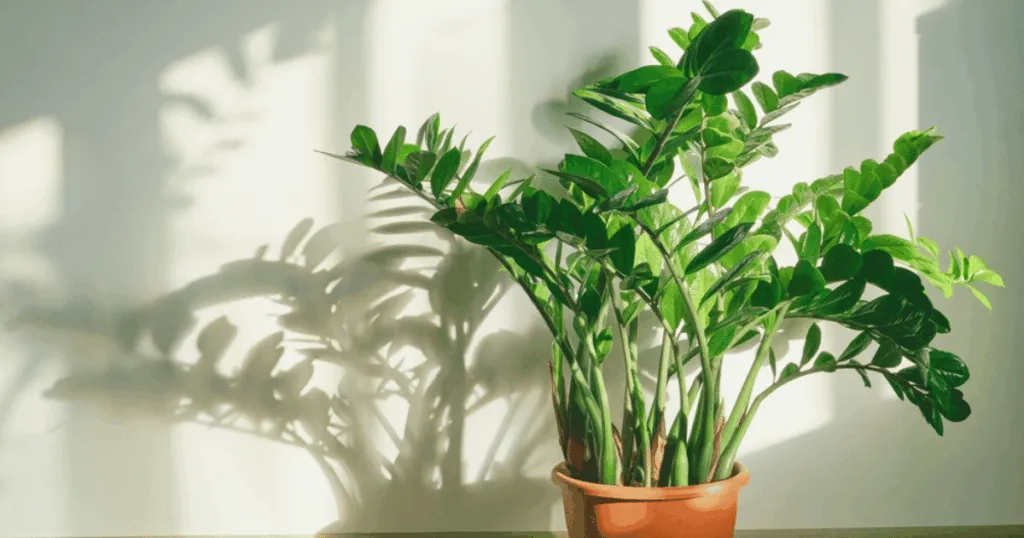
If your office has minimal natural light, the ZZ Plant is a top-tier candidate. It features waxy, deep green leaves that reflect artificial light beautifully. It is exceptionally tolerant of the fluctuating temperatures often found near office doorways or air vents. The main rule here is to avoid overwatering, as its rhizomes store moisture effectively, allowing it to survive long weekends or holiday breaks without attention. It is toxic to pets, so placement should be considered carefully.
Cast Iron Plant
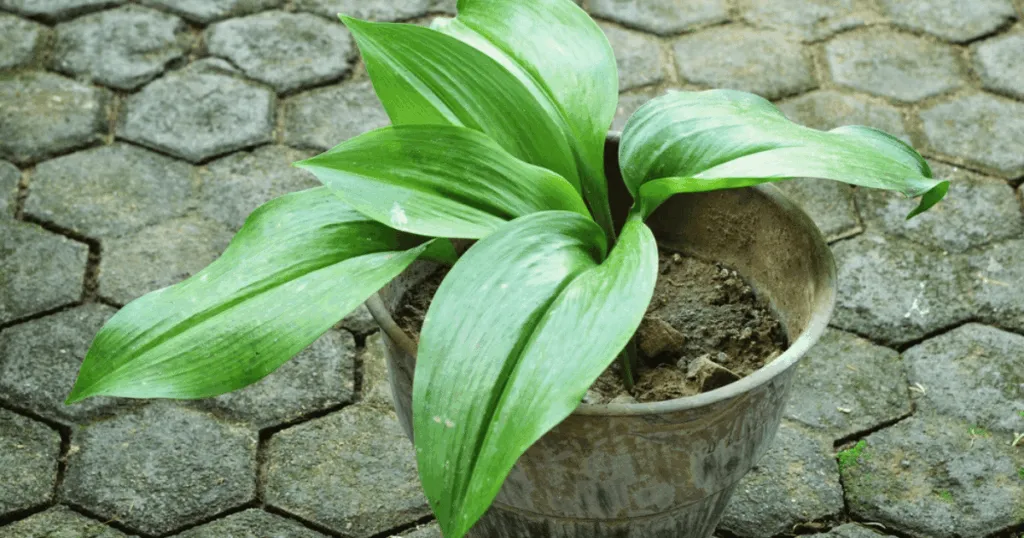
True to its name, the Cast Iron Plant is nearly indestructible. It handles low light and dry, conditioned air better than almost any other foliage plant. While it grows slowly, its deep green, arching leaves provide a sophisticated, architectural look that fits well in professional meeting rooms. It is a non-toxic option, making it a safe choice for offices that allow pets. It is particularly effective at maintaining its appearance even when subjected to the dust and fluctuating temperatures of high-traffic hallways.
Chinese Evergreen
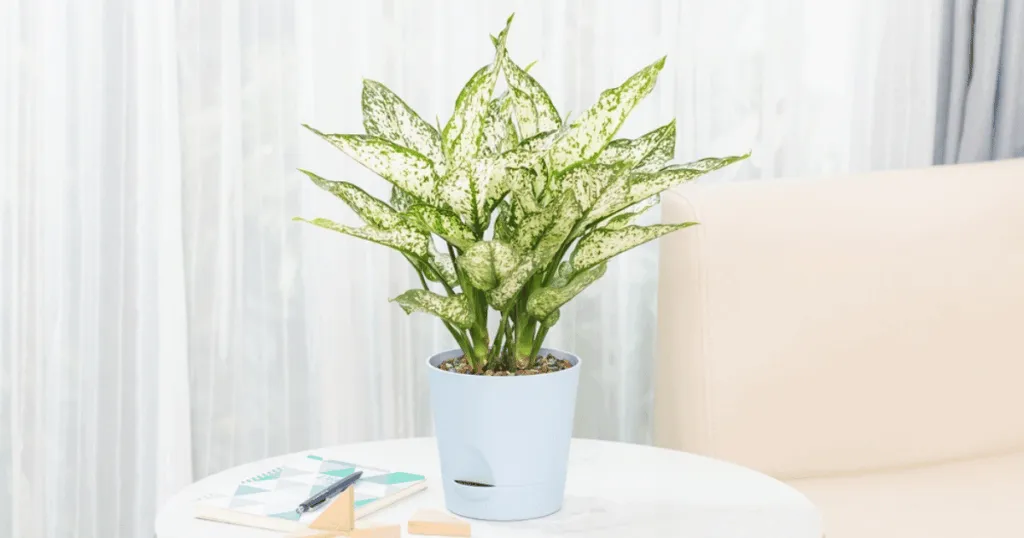
For those looking to add a bit of color, the Chinese Evergreen offers various patterns and silver-toned variegation. It is highly adaptable to the lower light levels found in interior cubicles. While it prefers slightly more humidity than a Snake Plant, it is robust enough to handle standard office conditions if you keep the soil lightly moist but not saturated. Be aware that this plant is toxic to pets if chewed.
Parlor Palm
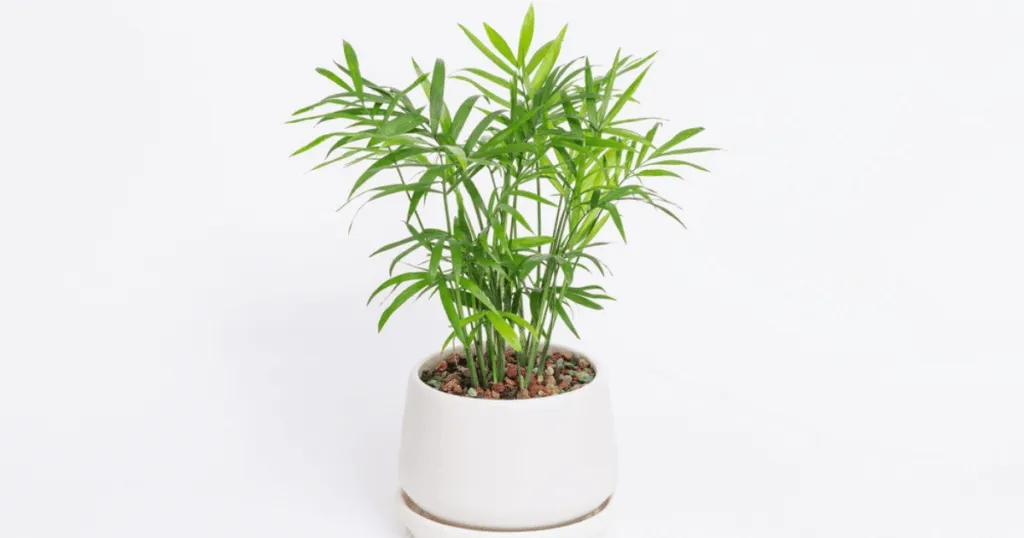
If you need a plant with a more vertical, tropical aesthetic, the Parlor Palm is a classic for a reason. Unlike many other palms that struggle in dry air, the Parlor Palm is surprisingly shade-tolerant and compact. It brings a soft texture to open office plans without requiring the high-intensity light or constant misting that more demanding palms require. It is also non-toxic, making it a safe, elegant choice for shared workspaces.
Pothos
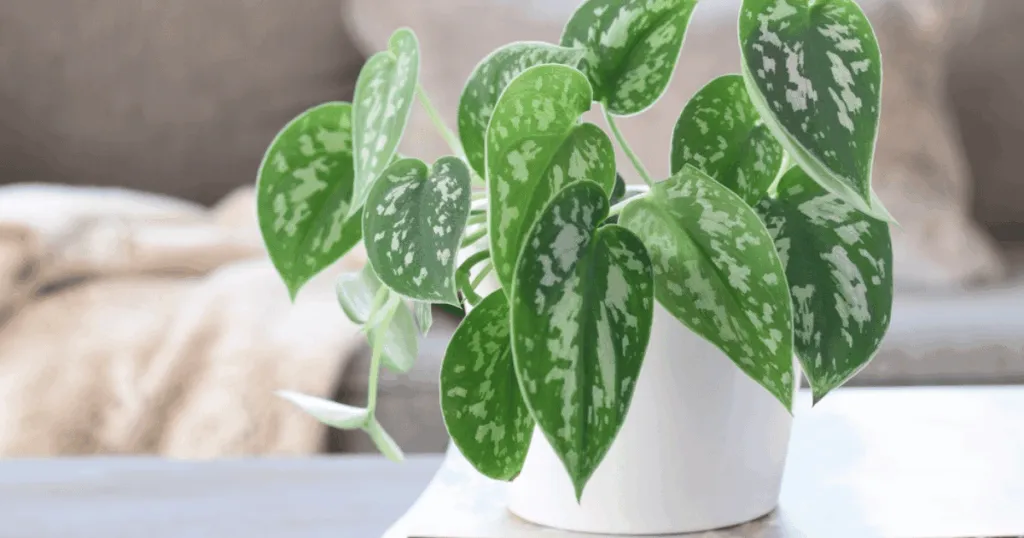
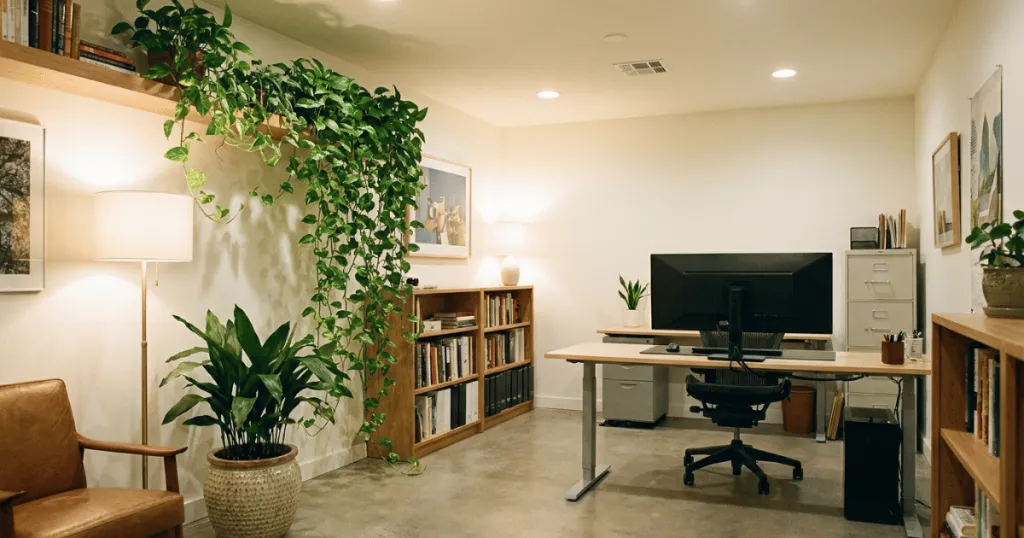
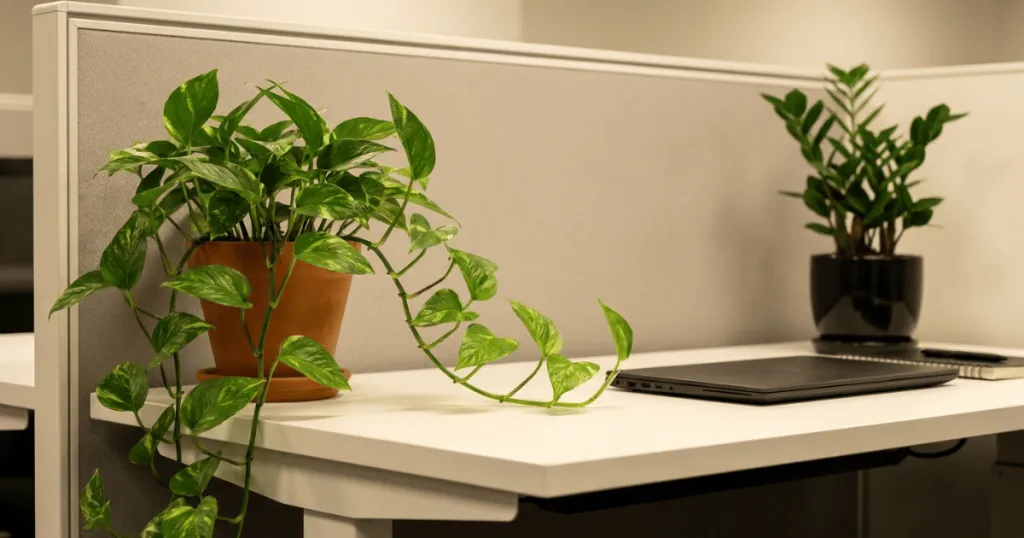
Pothos is a versatile, trailing vine that can be placed on high shelves or in hanging planters. It is remarkably forgiving of the dry air found in air conditioned spaces. If the leaves begin to droop, the plant is signaling that it needs water, and it usually recovers within hours of a thorough soak. It is an excellent starter plant for anyone new to office greenery, though it should be kept away from pets due to its toxicity.
Rubber Plant
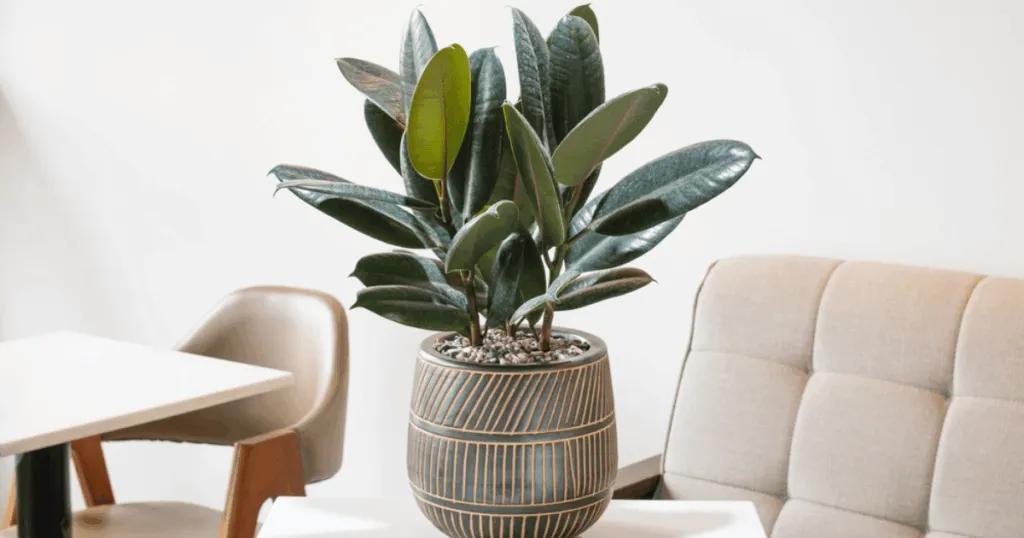
The Rubber Plant offers a bold, structural statement with its large, glossy leaves. It prefers brighter, indirect light, making it a perfect fit for a window-adjacent desk or a bright lobby. Its thick leaves are well-equipped to handle the dry air of an air conditioned office, provided you keep it away from direct, cold blasts from an AC vent. Note that the latex sap can be an irritant to skin and toxic to pets if ingested.
Syngonium
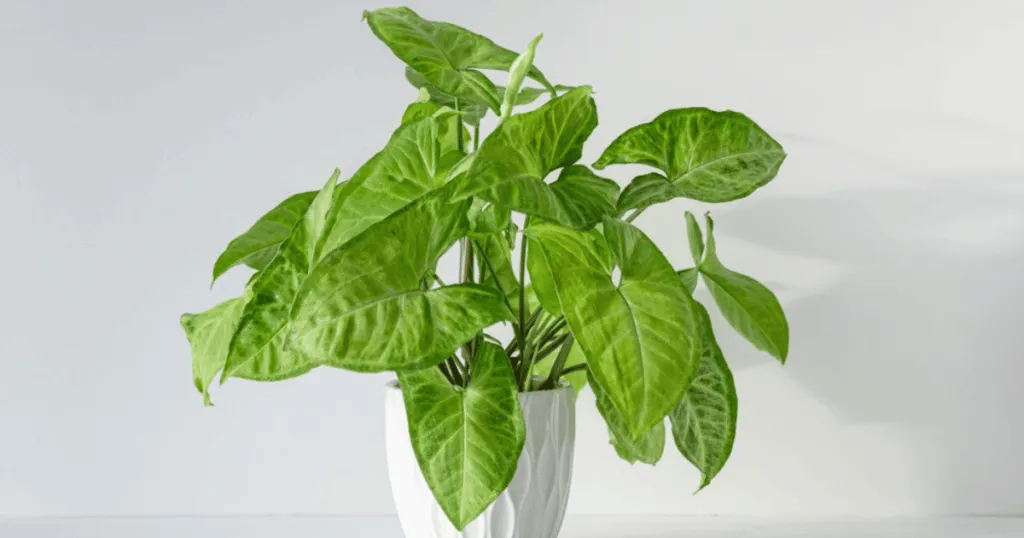
Also known as the Arrowhead Plant, this species is excellent for adding variety to your office landscape. Its leaves change shape as the plant matures, and it is generally quite adaptable to indoor conditions. It prefers medium light and can handle the average humidity levels found in most modern office buildings without much fuss. Like many other popular office plants, it is toxic to pets.
Spider Plant
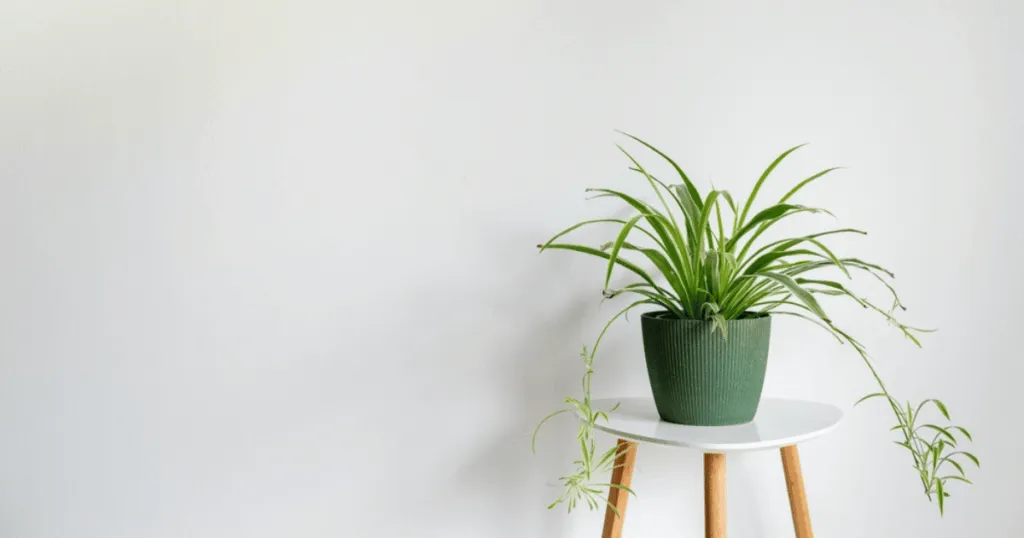
The Spider Plant is a staple for a reason. It is non-toxic to pets and highly adaptable to varying light conditions. It produces “babies” or plantlets on long stems, which can be propagated easily. It handles average office humidity well, though it appreciates a consistent watering schedule to keep the tips of its leaves from browning.
Dracaena
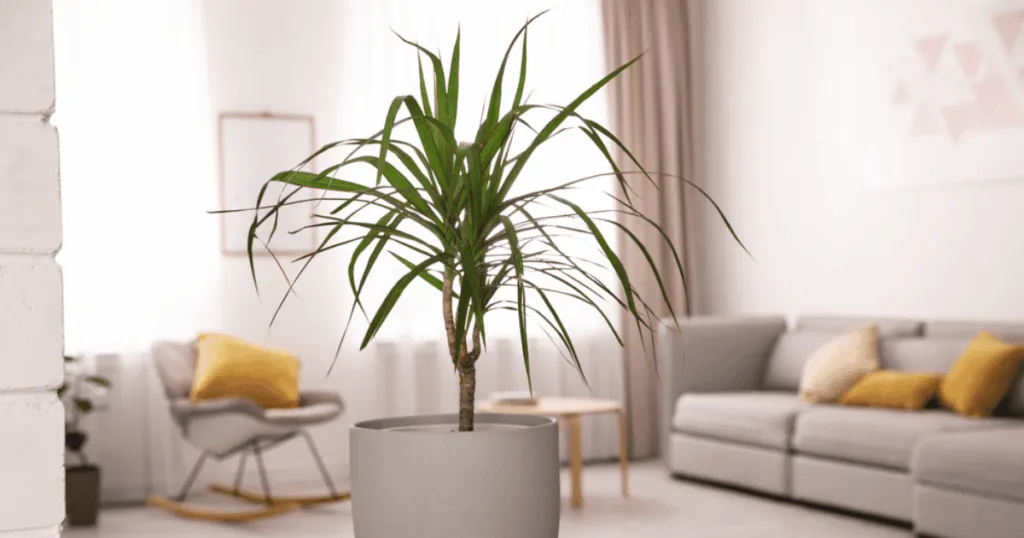
Dracaena species, such as the Corn Plant, provide a tree-like appearance that works well in corners or reception areas. They are tolerant of low light but sensitive to fluoride in tap water, which can cause brown tips. Using filtered water can help maintain their aesthetic appeal in a professional setting. They are moderately toxic to pets.
Expanding Your Selection: Advanced Considerations
Beyond the standard “bulletproof” list, office managers should consider the specific growth habits of plants when designing a workspace. For instance, the Kentia Palm is a superior choice for executive offices or high-end reception areas where a more mature, elegant look is required. Unlike the faster-growing Areca Palm, the Kentia is slow-growing and highly tolerant of lower light levels, making it a long-term investment that won’t quickly outgrow its designated corner. Similarly, for those wanting a splash of color, the Anthurium can provide long-lasting, waxy flower spathes, though it requires slightly more attention to soil moisture than a Snake Plant.
When dealing with Fiddle Leaf Figs, caution is advised. While they are visually stunning, they are notoriously sensitive to the “micro-drafts” created by HVAC systems. If you choose a Fiddle Leaf Fig, ensure it is placed in a stable, bright location far from any vent output. If you notice sudden leaf drop, it is almost certainly a reaction to a change in temperature or a draft, rather than a lack of water. This highlights the importance of matching the plant’s sensitivity to the specific office zone; reserve the high-maintenance specimens for private offices where environmental controls are more predictable.
The Role of Soil and Potting Media in Dry Offices
In an air conditioned office, the potting medium is just as critical as the plant species itself. Standard potting soil often retains too much water, which can lead to root rot when the plant is not actively transpiring due to low light or cool temperatures. For most office plants, amending your potting mix with perlite or pumice is a professional strategy to improve aeration. This ensures that the roots receive oxygen even when the soil is damp, preventing the common “wet feet” syndrome that often kills office plants. For succulents like the Jade Plant or Ponytail Palm, using a dedicated cactus mix is non-negotiable; these plants require rapid drainage to survive the lower metabolic rates typical of indoor office environments.
Managing Seasonal Stress and Maintenance
Office environments are not static. During the summer, air conditioning runs at peak capacity, creating the driest conditions of the year. Conversely, in winter, heating systems can create a “forced-air” environment that is equally dehydrating. A proactive maintenance schedule involves adjusting your care routine based on these seasons. During the height of AC usage, check your plants more frequently for signs of dehydration. If you notice the soil pulling away from the edges of the pot, it is a clear indicator that the soil has become too dry and needs a thorough, deep watering. Avoid the “little bit every day” approach, which leads to uneven root hydration and salt buildup in the soil.
Placement and Use Case Strategies
Where you place your plants is just as important as the species you choose. In an air conditioned office, the most dangerous spot is directly under or adjacent to an air vent. The constant stream of dry, cold air can cause rapid dehydration and cold shock, even for hardy species. Aim for locations that receive consistent, indirect light away from high-traffic doorways or vents.
For open office plans, use larger plants like the Rubber Plant or a grouping of Snake Plants to create natural visual barriers. This not only improves the aesthetic of the space but can also help dampen ambient noise. In smaller cubicles, prioritize compact plants like the Peperomia or a small Pothos in a hanging planter to maximize your limited desk surface area. When grouping plants, you create a micro-environment where the collective transpiration of the plants can slightly elevate the local humidity, benefiting all members of the group.
Limitations and Trade-offs
No plant is truly maintenance-free. Even the most resilient species require occasional dusting, as office air often carries more particulate matter than home environments. A layer of dust on the leaves can inhibit photosynthesis, effectively starving the plant of energy. Wiping the leaves down with a damp cloth every few weeks is a necessary task for long-term health.
You must also be realistic about the light levels in your specific workspace. If you are in a windowless interior office, even the most shade-tolerant plants will eventually struggle. In these cases, consider rotating your plants to a brighter area for a few days each month, or accept that you may need to replace them periodically. Understanding that some plants are essentially long-term rentals rather than permanent fixtures can help you manage your expectations and keep your office looking its best.
A Note on Office Plant Care
Our editorial guidance is to treat office plants as part of your office infrastructure rather than an afterthought. They require a consistent schedule for monitoring, even if that schedule is infrequent. Most office plant failures occur due to overwatering rather than underwatering. Because air conditioned offices are dry, it is tempting to water frequently, but the soil often stays damp longer than you expect. Always check the soil moisture with your finger or a moisture meter before adding more water. If the top two inches of soil are still damp, wait a few more days.
Furthermore, consider the seasonality of your office. During winter months, when heating systems run alongside air conditioning, the air can become even drier. During these times, monitor your plants more closely for signs of stress, such as drooping or yellowing leaves. Conversely, during summer months, ensure that plants near windows are not receiving direct, scorching sun, which can burn foliage even through glass.
FAQ
Why do the tips of my office plant leaves turn brown?
Brown tips are almost always a sign of low humidity, which is common in air conditioned offices. While you cannot easily change the building’s humidity, you can group plants together to create a more humid microclimate or use a pebble tray to increase moisture around the foliage.
Can I keep plants in a windowless office?
Yes, but you must choose low-light tolerant species like the Snake Plant or ZZ Plant. Even these will struggle in total darkness, so ensure they receive at least some exposure to overhead office lighting, or consider a small LED grow light if the space is completely devoid of natural light.
How often should I water plants in an air conditioned environment?
There is no universal schedule because light and temperature vary. Instead of a calendar, use the soil check method. Stick your finger two inches into the soil; if it feels dry, it is time to water. If it feels moist, wait. Overwatering is the most common cause of plant death in offices.
Are these plants safe for office pets?
Many common office plants are toxic if ingested. If your office allows pets, prioritize non-toxic options like the Parlor Palm, Cast Iron Plant, or Spider Plant. Always check the specific toxicity profile of a plant before bringing it into a pet-friendly workspace.