Managing office greenery often comes with unique logistical challenges, especially when desks sit empty over long weekends or holiday closures. Self-watering pots offer a practical mechanism to bridge these gaps by delivering moisture to plant roots steadily from an integrated reservoir rather than relying entirely on surface irrigation. These systems help office managers and facilities teams maintain healthy vegetation without constant daily oversight.
Understanding how these containers function allows workplace decision-makers to choose the right setup for low-light corners, reception desks, and open-plan layouts. By separating the water supply from the potting mix via a physical barrier, these containers leverage capillary action to draw moisture upward as the soil dries, creating a consistent environment for root development. Integrating office plant care strategies around these sub-irrigation planters transforms unpredictable manual schedules into a streamlined, reliable facility maintenance workflow that protects workplace greenery.
Mechanics and Design of Sub-Irrigation Containers
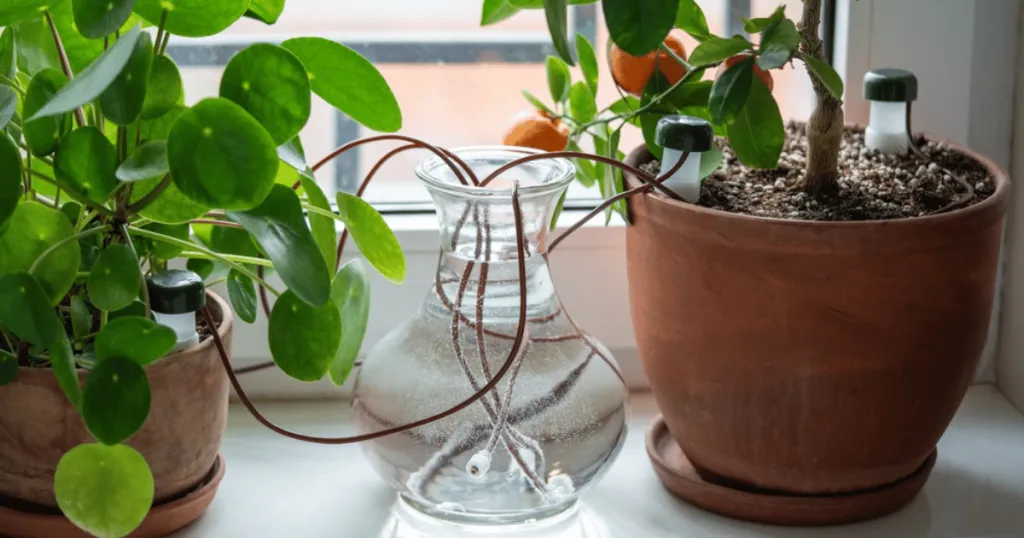
At their core, sub-irrigation planters consist of a standard upper compartment for soil and a lower reservoir that holds liquid. A separation plate or false bottom creates an air gap between the standing water and the root zone, preventing the soil from becoming waterlogged. Wicks, capillary cones, or porous soil columns extend down into the reservoir, pulling moisture up into the root ball through capillary action.
This design contrasts sharply with traditional top-down watering, where moisture floods the root zone all at once and then drains away or pools in a saucer. In an office setting, traditional saucers often overflow or collect stagnant water that goes unnoticed until odors or mineral crusts develop. Sub-irrigation eliminates surface runoff during routine maintenance, protecting office furniture and commercial carpeting from accidental spills. Effective indoor plant watering systems rely heavily on this bottom-up mechanism to optimize plant hydration while preventing root rot and soil compaction.
Reservoir Capacity and Refill Intervals
The size of the lower water chamber dictates how frequently facilities staff or office workers need to replenish the supply. Smaller desk containers might require weekly refills under warm HVAC conditions, while large floor-standing units in reception areas can often sustain plants for three to four weeks. Real-world refill intervals depend heavily on ambient temperature, relative humidity, and the specific water requirements of the plant species housed inside. Evaporation rate fluctuations caused by seasonal building heating cycles directly impact how fast the water reservoir depletes, making it essential to monitor the water level indicator regularly rather than relying strictly on a fixed calendar schedule.
Facilities managers should evaluate how building ventilation zones affect evaporation. Air vents blowing directly over an open office desk can double the rate at which water leaves the reservoir, requiring a more proactive refill routine than plants tucked into sheltered conference room corners. Factoring in these microclimate variations ensures that automatic watering pots perform consistently regardless of where they are positioned on the floor plan.
Oxygen Exchange and Root Aeration
A common misconception is that keeping water constantly accessible in a reservoir will suffocate roots. Well-designed planters incorporate an air gap and aeration channels that allow oxygen to circulate around the root ball even when the lower chamber is full. This prevents root rot by ensuring that oxygen reaches subterranean plant tissues, supporting healthy respiration alongside hydration. Maintaining proper moisture retention without sacrificing air circulation is the primary advantage of modern automatic watering pots in professional environments.
Without an adequate drainage layer and dedicated air space, stagnant water in conventional pots forces air pockets out of the potting mix, leading to hypoxia in the root zone. Sub-irrigation addresses this by isolating the liquid reservoir away from the primary root network, allowing oxygen to diffuse freely through the upper substrate layers. This separation is particularly critical in corporate settings where office plants cannot be easily monitored for signs of oxygen deprivation.
Practical Applications in Office Environments
Office interiors present distinct environmental pressures that differ vastly from outdoor gardens or home windowsills. Constant climate control, fluctuating humidity from heating and cooling cycles, and artificial lighting from fluorescent fixtures or LEDs all influence how rapidly plants absorb moisture. Self-watering pots adapt well to these conditions by buffering against irregular maintenance schedules.
In open-plan offices and shared conference rooms, plant maintenance often falls to whichever team member notices dry leaves first, leading to erratic care routines. Establishing a centralized watering protocol using sub-irrigation planters makes plant care predictable. Staff members simply check the water level indicator rather than probing dry soil with a finger, removing guesswork from the routine.
Weekend and Holiday Unattended Care
Extended office closures over long weekends or winter holidays frequently result in drought stress for desk plants. Sub-irrigation containers store enough reserve moisture to sustain resilient office varieties like pothos, snake plants, or peace lilies through multi-week absences without intervention. This capacity protects initial investments in office flora and reduces replacement costs. When facilities are closed, these self-regulating containers prevent sudden desiccation caused by dry HVAC air blowing across unwatered foliage.
For buildings that shut down entirely for extended winter holidays, configuring sub-irrigation planters beforehand provides peace of mind. Facilities teams can top off the reservoirs just before departure, knowing the capillary action will meter out water at a pace matching the reduced metabolic rate of plants under dim holiday lighting conditions.
Aesthetic and Spatial Considerations
Beyond functional watering benefits, modern sub-irrigation systems integrate clean lines and concealed reservoirs that suit professional workplace aesthetics. They eliminate the need for unsightly plastic saucers beneath every container. Clean exterior finishes coordinate with contemporary office architecture, making them a popular choice for architectural plantscaping in corporate lobbies and executive boardrooms.
Coordinating container styles across different departments helps maintain a cohesive visual identity in open-plan offices. Because these planters house the water supply internally, they maintain a streamlined profile that fits neatly into tight corners, narrow windowsills, or integrated desktop partition systems without cluttering workspaces.
Implementation and Maintenance Best Practices
Transitioning existing office plants into sub-irrigation containers requires careful attention to soil composition and initial setup procedures. Rushing the transition can disrupt root systems and cause temporary transplant shock, so following a structured approach ensures long-term success.
- Select the appropriate potting substrate: Use a fast-draining, structured potting mix that retains moisture without compacting tightly against the aeration layer. Avoid heavy garden soil that holds excessive moisture.
- Establish initial root contact: When potting, ensure that the wicking mechanism or the bottom layer of soil makes firm contact with the upper surface of the reservoir insert to initiate capillary action.
- Water from the top initially: For the first two to three weeks after repotting, water the plant from the top surface to help settle the soil and encourage roots to grow downward toward the moisture source.
- Monitor the level indicator: Once roots have established downward growth, fill only the lower reservoir and monitor the indicator float to track consumption rates.
Avoiding Common Setup Errors
A frequent mistake during setup is keeping the reservoir completely full at all times for plants that prefer dry soil cycles between waterings. Succulents and certain drought-tolerant species require the reservoir to run dry for several days before a refill to prevent root saturation. Allowing the reservoir to empty completely mirrors natural wet-and-dry cycles much more effectively than keeping the substrate perpetually damp. Understanding the specific biology of each plant ensures that automatic watering mechanisms support rather than hinder long-term vitality.
Another error involves ignoring the root establishment phase. If the user relies solely on the reservoir from day one before the root system has grown downward, the upper soil layer may remain bone dry while the lower reservoir stays full, causing dehydration in newly introduced specimens.
Managing Mineral Accumulation
Tap water contains dissolved minerals that gradually deposit along the soil surface and inside the wicking channels as moisture evaporates. Over time, these mineral salts can form a white crust and alter soil pH. Office managers should flush the soil from the top every few months, allowing excess water to drain completely out of a separate drainage valve rather than accumulating in the closed reservoir, thereby clearing out residual salt buildup and preventing long-term root toxicity.
In regions with hard water, mineral scaling can also affect the internal float mechanism of the water level indicator. Periodic cleaning of the indicator shaft ensures accurate readings and prevents false readings caused by hard water deposits binding the buoyant components together.
FAQ
Can all office plants thrive in Self-watering pots?
Most tropical foliage plants used in offices adapt well to sub-irrigation containers, but desert species like cacti and certain succulents prefer complete dry-out cycles between waterings and may struggle if the soil remains constantly moist.
How do you prevent mosquito breeding in indoor water reservoirs?
Quality containers feature fully enclosed or tightly capped reservoir access points that prevent adult insects from entering and laying eggs, eliminating pest concerns in indoor office spaces.
Do water level indicators require manual calibration?
Most built-in float indicators operate via simple buoyancy and do not require calibration, but facilities staff should occasionally check that the indicator shaft moves freely without salt crust interference.
What happens to excess water during heavy top-watering events?
Advanced designs include an overflow drain plug near the maximum fill line, allowing excess liquid to escape safely outside the reservoir when top-watering during routine cleaning or flushing.