Before assuming your aloe vera is suffering from a lack of nutrients or a need for more frequent hydration, rule out the most common misdiagnosis: the belief that the plant is “thirsty.” In office environments, people often mistake the natural, firm texture of a succulent for dehydration. If you notice your aloe vera looking slightly dull or soft, your first instinct might be to reach for the watering can.
However, in the vast majority of cases, aloe vera problems are caused by excess moisture rather than a deficit. Because office air is often dry and climate-controlled, the surface of the soil may appear dry while the root zone remains saturated, leading to a cycle of overwatering that is difficult to reverse.
Understanding the balance between light, airflow, and soil moisture is essential for long-term success. Unlike tropical foliage plants that thrive in the consistent humidity of a greenhouse, the aloe vera is a desert-adapted succulent that requires specific environmental triggers to remain healthy. By shifting your focus from a rigid watering schedule to a symptom-first troubleshooting approach, you can maintain a thriving plant that adds vitality to your workspace without the common pitfalls of decay or stunted growth.
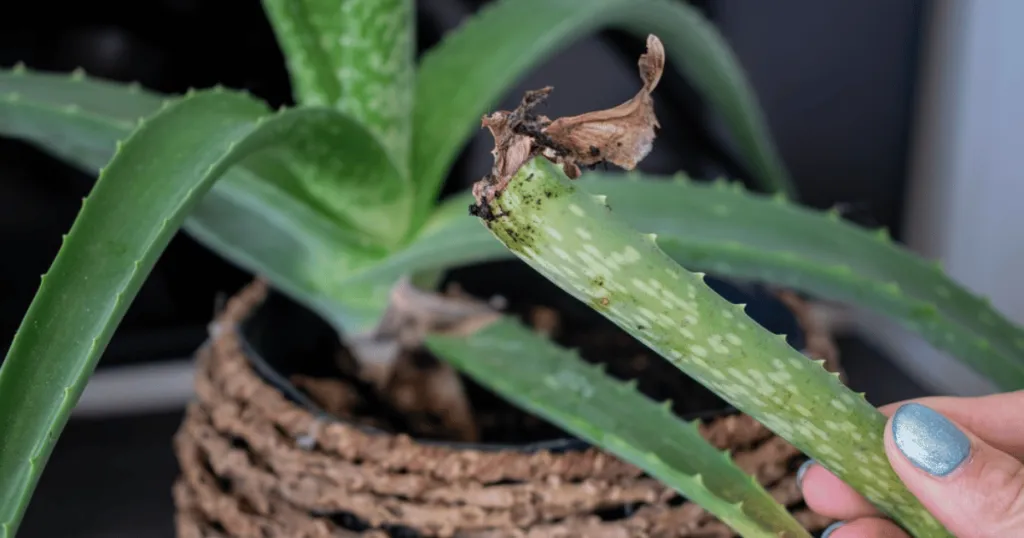
The Most Likely Culprit: Moisture Management
When you notice your aloe vera drooping or turning a mushy, translucent brown, the most common instinct is to assume the plant is thirsty. In an office environment, this is almost always the wrong conclusion. Aloe vera is a desert-adapted succulent that stores water in its thick, fleshy leaves. When the soil remains damp for too long, the root system begins to suffocate and decay, a condition known as root rot. Because office temperatures are often climate-controlled and consistent, the soil does not dry out as quickly as it might in a high-heat greenhouse or an outdoor garden.
Signs of Overwatering
Before you reach for the watering can, observe the leaves closely. If the leaves feel soft, squishy, or appear water-soaked at the base, you are likely dealing with excess moisture. In severe cases, the base of the plant may turn black or dark brown, and the leaves may begin to detach from the stem with very little pressure. This is a sign that the rot has moved from the roots into the main stem of the plant. You may also notice a distinct, unpleasant odor coming from the soil, which indicates anaerobic bacteria are thriving in the waterlogged medium.
Immediate Corrective Steps
If you suspect overwatering, stop all hydration immediately. Do not attempt to flush the soil or add more water to balance it out. Move the plant to a spot with better air circulation to help the top layer of soil evaporate moisture faster. If the plant is in a decorative pot without drainage holes, this is a critical failure point.
You must move the aloe to a container with functional drainage holes. If the soil is heavy or dense with peat moss, consider repotting it into a cactus or succulent mix that contains perlite or pumice to improve aeration. When repotting, inspect the roots; healthy roots are firm and light-colored, while rotted roots are mushy, dark, and prone to breaking off. Trim away any damaged roots with sanitized shears before placing the plant in fresh, dry soil.
Light Deficiency and Growth Patterns
Aloe vera requires bright, direct, or bright indirect light to maintain its structural integrity. In many office settings, plants are tucked into cubicles or corners where natural light is obstructed by partitions or window blinds. When an aloe does not receive enough light, it will exhibit a phenomenon called etiolation. This is where the plant stretches rapidly toward the nearest light source, resulting in thin, pale, and weak leaves that cannot support their own weight.
Recognizing Insufficient Light
A healthy aloe vera should have a compact, rosette-like growth pattern with firm, upright leaves. If your plant begins to lean heavily, or if the new growth at the center is significantly paler than the outer leaves, it is signaling a light deficit. Unlike overwatering, which kills the plant quickly, light starvation is a slow decline that makes the plant more susceptible to pests and diseases over time. The plant is essentially “stretching” to find a light source that isn’t there, exhausting its stored energy reserves in the process.
Relocation Strategies
The best fix for a light-starved aloe is to move it closer to a window. If your office layout does not allow for a window spot, consider using a dedicated full-spectrum LED grow light. These can be clipped onto a desk or placed on a shelf above the plant. Ensure the light is positioned close enough to be effective, usually within 12 to 18 inches of the plant foliage, and set it on a timer to mimic a natural day and night cycle.
In an office, artificial lighting from overhead fluorescent fixtures is rarely sufficient for an aloe vera, as the intensity drops off rapidly with distance. A dedicated light source provides the necessary energy for photosynthesis, allowing the plant to maintain its structural integrity and color.
Pest Pressures in the Workplace
While aloe vera is generally resilient, office environments can sometimes harbor pests like mealybugs or scale. These insects are often introduced through other plants or are present in the soil of new arrivals. Mealybugs appear as small, white, cotton-like clusters in the crevices between leaves, while scale looks like small, brown, raised bumps that can be scraped off with a fingernail. These pests thrive in stagnant air, which is common in many office cubicles.
Managing Infestations
If you spot pests, isolate the plant immediately to prevent them from spreading to other office greenery. For minor infestations, dip a cotton swab in isopropyl alcohol and dab it directly onto the pests. This breaks down their protective coating and kills them on contact. For larger outbreaks, a gentle application of insecticidal soap is usually effective.
Avoid harsh chemical pesticides, as the scent can be disruptive in a shared office space. Regularly wiping the leaves with a damp cloth can also help remove dust and prevent pests from establishing a foothold, as clean leaves are better able to perform gas exchange.
Prevention Habits for Long-Term Success
Maintaining a healthy aloe vera in an office requires a proactive approach to care rather than reactive troubleshooting. Establish a routine where you check the soil moisture by inserting your finger or a wooden dowel at least two inches into the soil before adding any water. If the soil feels cool or damp, wait another few days. In the winter months, when office heating systems are running and daylight hours are shorter, the plant will require significantly less water than it does in the summer. During this period of dormancy, the plant’s metabolic rate slows down, and it requires less moisture to survive.
Soil and Potting Best Practices
Always use a potting medium specifically formulated for succulents. These mixes are designed to drain quickly and prevent the soil from compacting around the roots. When repotting, choose a terracotta or unglazed ceramic pot. These materials are porous and allow the soil to breathe, which helps regulate moisture levels more effectively than plastic or glazed ceramic containers. This is particularly useful in office environments where air circulation might be limited. Ensure that your pot has large, unobstructed drainage holes to allow excess water to escape immediately after watering.
The Role of Humidity and Airflow
While aloe vera is drought-tolerant, it does not enjoy stagnant air. In offices with poor ventilation, moisture can linger on the surface of the leaves, potentially leading to fungal issues. If your office is particularly stuffy, consider using a small desk fan to improve air circulation around your plants. This mimics the natural breeze that succulents encounter in their native habitats and helps prevent the buildup of humidity around the crown of the plant, which is a common site for rot.
Safety and Toxicity Information
It is important to be aware that aloe vera is considered toxic to cats and dogs if ingested. According to guidance from the ASPCA on toxic and non-toxic plants, the leaves contain compounds that can cause gastrointestinal distress, including vomiting and diarrhea, if chewed or swallowed by pets. If your office is pet-friendly or if you keep the plant in a home office where pets have access, ensure it is placed on a high shelf or a secure surface where it cannot be reached by animals.
While the plant is generally safe to handle, some individuals may experience mild skin irritation from the clear gel inside the leaves, so it is best to wash your hands after pruning or repotting.
Understanding Seasonal Care Adjustments
Office plants often experience a “micro-climate” that differs from the outdoors. During the summer, air conditioning may keep the office cool, but the lack of natural light remains a constant challenge. In the winter, heating systems can dry out the ambient air significantly. While aloe vera handles dry air well, it is important to monitor the soil moisture more closely during these times. A plant that dries out in five days during the summer might take ten days to dry out in the winter. Adjusting your care routine based on these seasonal shifts is a hallmark of successful office plant maintenance.
Related Aloe Vera Guides
FAQ
Why are the tips of my aloe vera leaves turning brown?
Brown tips are often caused by low humidity or inconsistent watering. While aloe vera handles dry office air well, extreme fluctuations can cause the tips to dry out. Ensure you are watering deeply until water drains from the bottom, then letting the soil dry out completely to encourage a strong root system.
Can I use tap water for my aloe vera?
Yes, tap water is generally fine for aloe vera. However, if your office building has very hard water with high mineral content, you might notice white crusty deposits on the soil surface over time. If this happens, you can switch to filtered water, but it is rarely a cause for major plant health issues.
How often should I fertilize my office aloe vera?
Aloe vera is a slow grower and does not require heavy fertilization. In an office setting, applying a balanced, water-soluble fertilizer diluted to half-strength once or twice during the active growing season in spring and summer is sufficient. Avoid fertilizing in the winter when the plant is dormant.
What should I do if my aloe vera is leaning to one side?
Leaning is usually a sign that the plant is reaching for light. Rotate your pot 90 degrees every time you water to ensure all sides of the plant receive equal light exposure. If the leaning is severe, the plant may need to be moved to a brighter location or supplemented with a grow light.