When you notice your office African violet struggling, the most frequent culprit is almost always improper watering technique. Because these plants have delicate, fuzzy foliage that traps moisture, any water splashed directly onto the leaves often leads to unsightly brown spots or crown rot. In the context of an office, where you might be rushing between meetings or relying on a communal kitchen sink, it is easy to accidentally spill water on the leaves or leave the plant sitting in a saucer of stagnant water over a long weekend. Understanding how to navigate these specific environmental constraints is the first step toward restoring your plant to health.
Rest assured that most African violet problems are manageable once you identify the environmental stressor. These plants are resilient, but they require a consistent, gentle approach that respects their need for stable, indirect light and well-draining soil. By adjusting your watering method and checking your plant’s placement relative to office windows or fluorescent lights, you can usually reverse symptoms like yellowing leaves or stalled blooms within a few weeks.
What This Means
This means your plant is likely reacting to a mismatch between its natural environmental needs and the specific conditions of your office. You should immediately inspect the soil moisture and check for water droplets on the leaves, as these are the most common indicators of improper hydration or leaf-surface damage. In an office setting, the primary challenge is the lack of a stable microclimate. Unlike a greenhouse, offices experience fluctuating temperatures, inconsistent airflow from HVAC systems, and varying light intensity throughout the day. Recognizing that your African violet is a sensitive indicator of these changes allows you to act as a proactive steward rather than a reactive one.
Symptom-Based Troubleshooting
Identifying the root cause of your plant’s distress requires observing the specific pattern of damage. Use the following guide to match your plant’s current state with the most likely cause and the appropriate corrective action.
- Brown or white spots on leaves: Usually caused by cold water splashing on foliage or direct sun exposure.
- Yellowing lower leaves: Often a sign of overwatering, poor drainage, or a lack of nitrogen in the soil.
- Drooping or limp foliage: Typically indicates either severe underwatering or, conversely, root rot from sitting in water.
- Stalled growth or lack of blooms: Most often caused by insufficient light or the plant being pot-bound.
- Fuzzy gray mold on stems: A sign of Botrytis, usually triggered by high humidity and poor air circulation.
Addressing Leaf Spotting and Damage
Leaf spotting is a classic issue for African violets in office environments. If you see circular, bleached, or brown spots on the leaves, you are likely using water that is significantly colder than the ambient room temperature. When cold water hits the warmer leaf surface, it causes cellular damage. To fix this, always use room-temperature water. Furthermore, avoid overhead watering entirely. Instead, use a bottom-watering method by placing the pot in a shallow tray of water for 20 minutes, allowing the soil to soak up moisture through the drainage holes. This keeps the foliage dry and prevents the moisture-trapping issues that lead to fungal growth.
Beyond temperature, consider the chemical composition of your office water. If your building uses a water softener, the high sodium content can be detrimental to African violets. If you suspect your tap water is causing issues, try using filtered or bottled water at room temperature for a few weeks to see if the spotting subsides. This simple change in water quality can often be the difference between a thriving plant and one that struggles to maintain its vibrant green foliage.
Managing Watering and Root Health
If your plant looks limp, the first step is to check the soil. If the soil is bone-dry, the plant is dehydrated. African violets prefer the soil to remain slightly moist but never waterlogged. If the soil is soggy and the plant is drooping, you may have root rot. In this case, remove the plant from its pot, trim away any black or mushy roots, and repot it in fresh, well-draining African violet potting mix. Ensure your office pot has adequate drainage holes, as these plants will not tolerate sitting in a saucer of standing water for extended periods.
Root health is the foundation of African violet care. In an office, the tendency to over-water is high because people often equate “care” with “watering.” However, these plants have a shallow, fine root system that requires oxygen. When the soil is constantly saturated, the roots are deprived of oxygen, leading to the rapid onset of root rot. To prevent this, always check the soil moisture by inserting a finger or a wooden dowel into the soil. If it feels damp, wait another day or two. The goal is to maintain consistent moisture, not constant saturation.
Correcting Light-Related Issues
African violets require bright, indirect light to thrive. In an office, this means placing the plant near a window that does not receive direct, harsh sun, or under a dedicated LED desk lamp. If your plant is stretching toward the light or has long, spindly stems, it is not getting enough intensity. Conversely, if the leaves look bleached or scorched, move it further away from the window. Fluorescent office lighting is often insufficient on its own, so a small, full-spectrum desk lamp can provide the necessary intensity to encourage consistent blooming.
When utilizing artificial light, distance matters. A full-spectrum lamp should be placed roughly 12 to 18 inches above the plant. If the light is too close, you risk heat buildup on the leaves, which can cause them to curl or brown. If it is too far, the plant will not receive the energy needed for its growth cycle. Finding the “sweet spot” for your specific desk setup is an exercise in observation. If you notice the plant leaning heavily to one side, rotate it a quarter turn every few days to ensure even growth and prevent the plant from becoming lopsided.
Advanced Care and Maintenance
Once you have addressed immediate problems, focus on long-term stability. Repotting is necessary only when the plant becomes root-bound, which you can identify if the plant stops growing or if roots are circling the bottom of the pot. When repotting, use a specialized, peat-based mix that is light and airy. Avoid heavy garden soil, which compacts and suffocates the delicate root system.
For office managers, it is helpful to note that African violets are non-toxic to cats and dogs according to ASPCA guidance on toxic and non-toxic plants. This makes them a safe choice for pet-friendly offices. However, keep them away from HVAC vents. The constant stream of dry, forced air can cause the edges of the leaves to curl and turn brown, mimicking the symptoms of underwatering even when the soil is moist. If your desk is near a vent, consider using a small desk-top humidifier or placing the plant on a pebble tray with water to boost the local humidity levels.
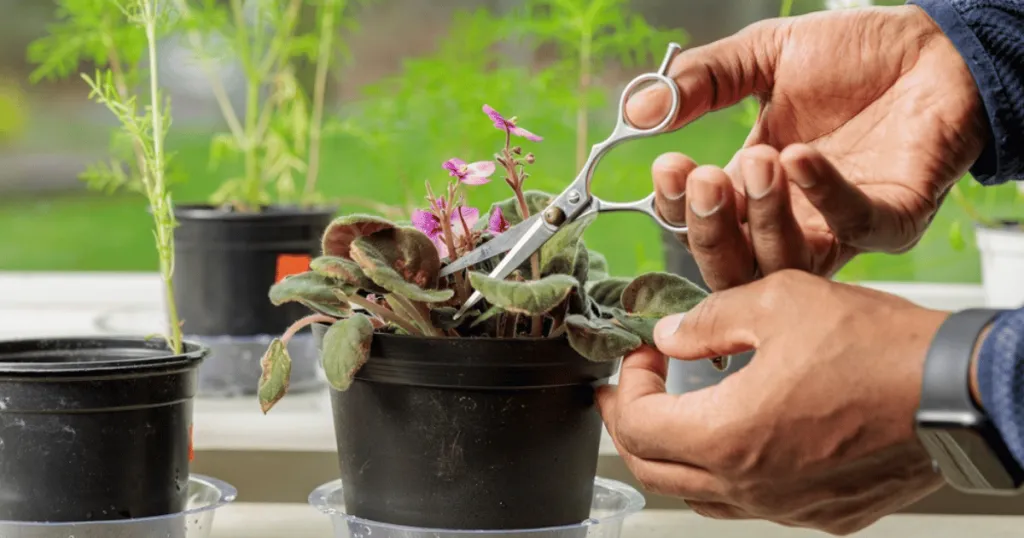
Another advanced consideration is the grooming of the plant. As the plant grows, older leaves at the base may begin to yellow or wither. These should be gently removed to encourage the plant to direct its energy toward new growth and flower production. Use clean, sharp scissors to snip the leaf stem close to the main crown, taking care not to damage the central stem. This practice of regular maintenance not only improves the aesthetic appearance of the plant but also reduces the risk of fungal issues by improving airflow around the base of the plant.
Prevention Habits for Office Success
Consistency is the best prevention for African violet problems. Establish a weekly check-in routine. On Friday afternoons, check the soil moisture. If the top inch of soil feels dry, provide a bottom-water soak. If it is still damp, leave it until Monday. This prevents the plant from sitting in excess water over the weekend. Keep a small watering can at your desk filled with room-temperature water, so you never have to use cold water directly from the tap. By keeping the leaves dry and the light levels consistent, you eliminate the two most common stressors for this species.
Furthermore, consider the “plant-sitter” dynamic. If you are going on vacation, do not ask a colleague to water your plant unless they understand the specific needs of African violets. It is often safer to leave the plant in a slightly drier state than to have it overwatered by someone unfamiliar with its requirements. A well-hydrated African violet can typically survive a week without additional water, provided it is not in direct, hot sunlight. By setting clear expectations for your plant’s care, you ensure that your office greenery remains a source of calm rather than a source of stress.
Related African Violet Guides
FAQ
Why are the flowers on my African violet falling off prematurely?
Premature flower drop is often caused by low humidity or sudden temperature shifts. In an office, this frequently happens when a plant is placed too close to an air conditioning vent or a drafty window. Try moving the plant to a more stable location away from direct airflow to help the blooms last longer.
How can I tell if my African violet has a pest problem?
Common pests like mealybugs appear as white, cotton-like masses in the crevices of the stems or under the leaves. If you see these, isolate the plant immediately to prevent spread. Gently wipe the affected areas with a cotton swab dipped in rubbing alcohol, which is a safe, non-toxic way to manage small infestations in an office.
Do African violets need special fertilizer to stop growth problems?
Yes, they benefit from a balanced, water-soluble fertilizer specifically formulated for African violets. Use it at half-strength every few weeks during the growing season. Avoid over-fertilizing, as salt buildup in the soil can cause leaf edges to burn and actually hinder growth rather than helping it.