Affiliate Disclosure: As an Amazon Associate, I earn from qualifying purchases.
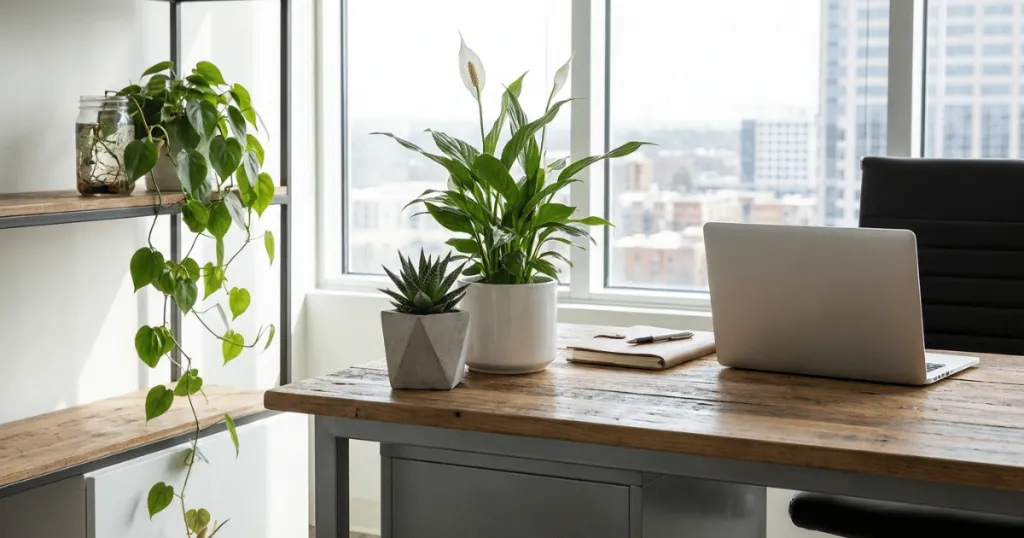
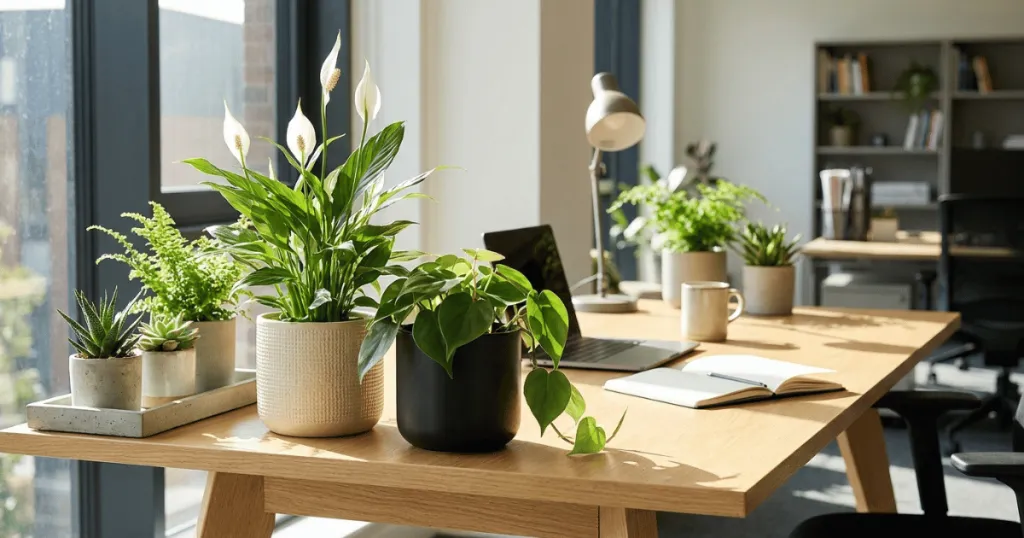
Choosing greenery for a workspace involves managing variables that do not exist in a typical home garden. Office lighting is often dominated by fluorescent tubes or commercial LED panels, humidity levels drop significantly due to continuous HVAC operation, and plants routinely go completely unattended over long weekends and holiday closures. Finding the best live plants for office environments means looking past trendy houseplant varieties that demand pristine humidity and morning sun, focusing instead on resilient species capable of thriving in enclosed, artificial microclimates.
Before committing to a green acquisition plan for a workspace, setting realistic maintenance expectations is essential. Real indoor flora requires proper drainage, occasional inspection for pests, and a watering rhythm tuned to actual container moisture rather than a rigid calendar. This curated selection focuses on options that balance visual appeal with genuine office endurance, evaluating each candidate against the specific stressors of a modern corporate setting.
Quick Facts
- Most office plants prefer drying out between watering sessions to protect root health.
- Fluorescent lighting supports many low-light tolerant tropical species without auxiliary grow bulbs.
- HVAC drafts cause rapid leaf drop in sensitive tropical varieties if positioned near ceiling vents.
- Container drainage is mandatory to prevent root rot in shared indoor spaces.
- Neglect is rarely fatal for tough foliage species when long weekend closures occur.
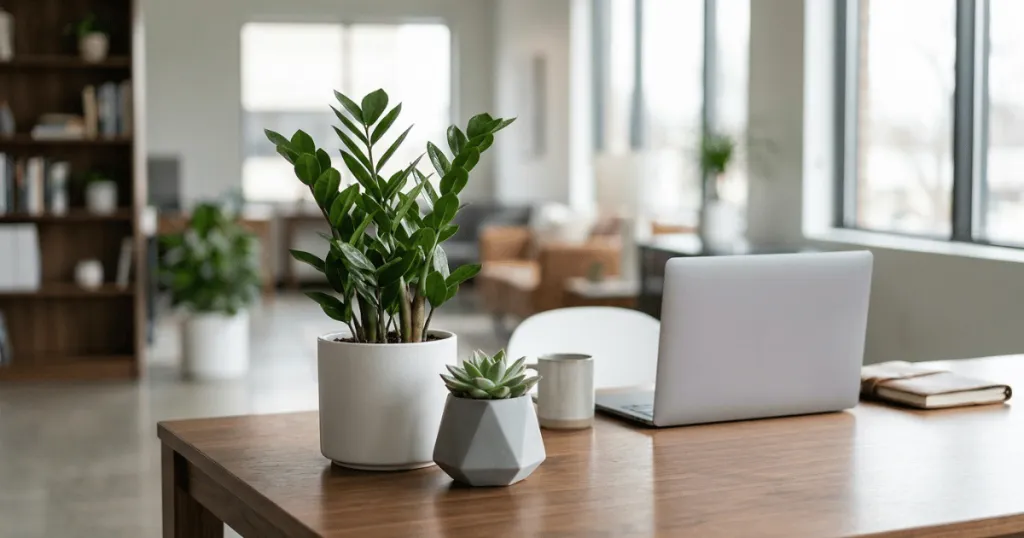
Criteria for Evaluating Office Plant Survival
To build a dependable shortlist of office greenery, several environmental factors must be weighed. Real-world office architecture rarely features unobstructed south-facing glass. Instead, interiors rely on ambient artificial illumination, filtered light from distant windows, or windowless core spaces lit entirely by commercial fixtures. A plant must either adapt to these lower light levels or stall out and decline rapidly. Facilities teams must evaluate lumen output and color temperature when planning green installations for deep interior zones.
Air circulation is another hidden stressor. Commercial heating and cooling systems create dry, moving air currents that rapidly evaporate moisture from both soil and foliage. Species with delicate, thin leaves often develop brown tips or spider mite infestations under these conditions. Conversely, thick-leaved succulents and aroids manage low ambient humidity with much greater success, maintaining turgor pressure despite constant mechanical ventilation.
Finally, maintenance scheduling in a shared workplace is rarely flawless. Janitorial staff or well-meaning coworkers often overwater plants on a whim, or conversely, everyone assumes someone else is handling the hydration. Therefore, the top selections on this list possess a high degree of forgiveness regarding inconsistent watering routines and unheated weekend temperature drops.
Top Plant Selections for Shared Workspaces and Desks
Snake Plant
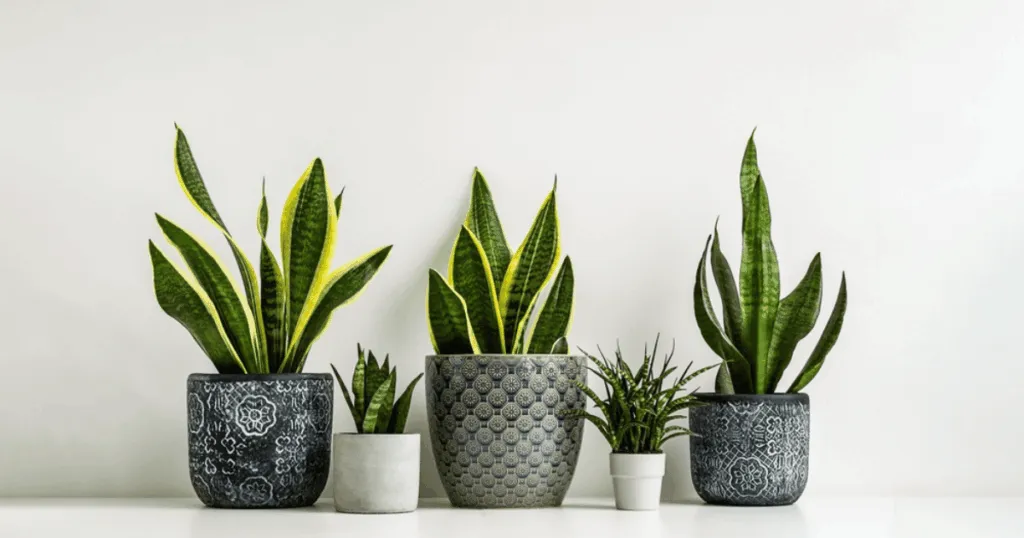
The Snake Plant stands out as one of the most forgiving choices for an indoor workspace. It handles extended periods of drought with ease, making it ideal for offices with unpredictable watering schedules. In fact, overwatering is the primary risk for this species rather than underwatering. It tolerates low-light corners well, though bright indirect light encourages slightly faster growth.
From a botanical standpoint, Sansevieria (now reclassified under Dracaena) relies on crassulacean acid metabolism to manage gas exchange efficiently under dry, closed-office conditions. For office managers, this means the plant can sit undisturbed for weeks without showing stress. When watering, ensure the soil dries out completely before adding moisture, as standing water will quickly cause the thick rhizomes to rot in their containers.
ZZ Plant
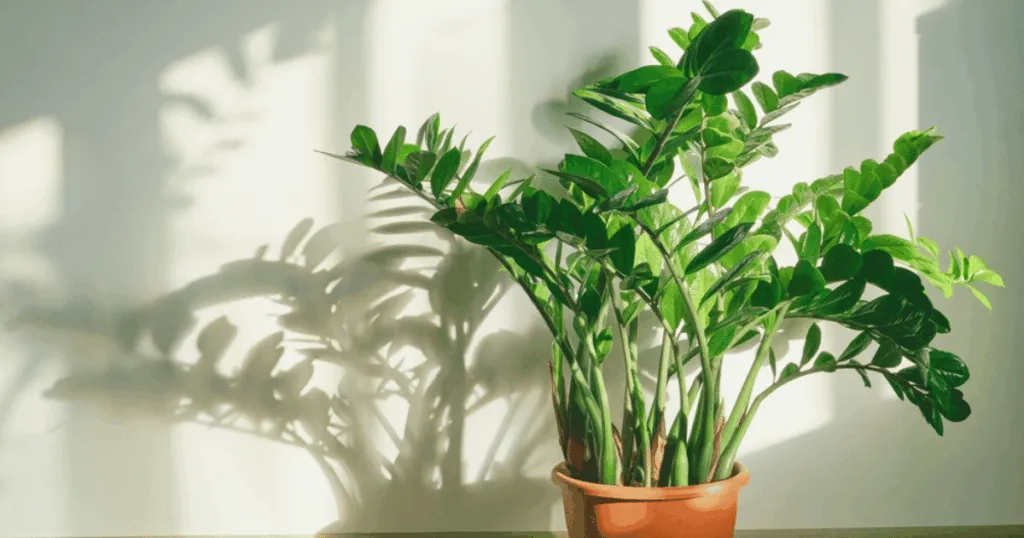
Known for its thick, waxy green leaves and water-storing rhizomes, the ZZ Plant (Zamioculcas zamiifolia) thrives on benign neglect. It adapts exceptionally well to fluorescent lighting and dim reception areas where other species would wither. The main operational risk is root rot from standing water in the saucer, so allowing the potting medium to dry completely between waterings keeps this plant looking glossy and pristine for years.
Zamioculcas zamiifolia stores substantial reserves of moisture beneath the soil line, which acts as a built-in safety net during corporate holiday closures. Desk workers appreciate that this species rarely drops leaves, keeping workspaces clean and requiring minimal janitorial intervention. Dust can accumulate on the broad, shiny leaflets over time, so wiping them down with a damp cloth occasionally restores their ability to absorb ambient light efficiently.
Pothos
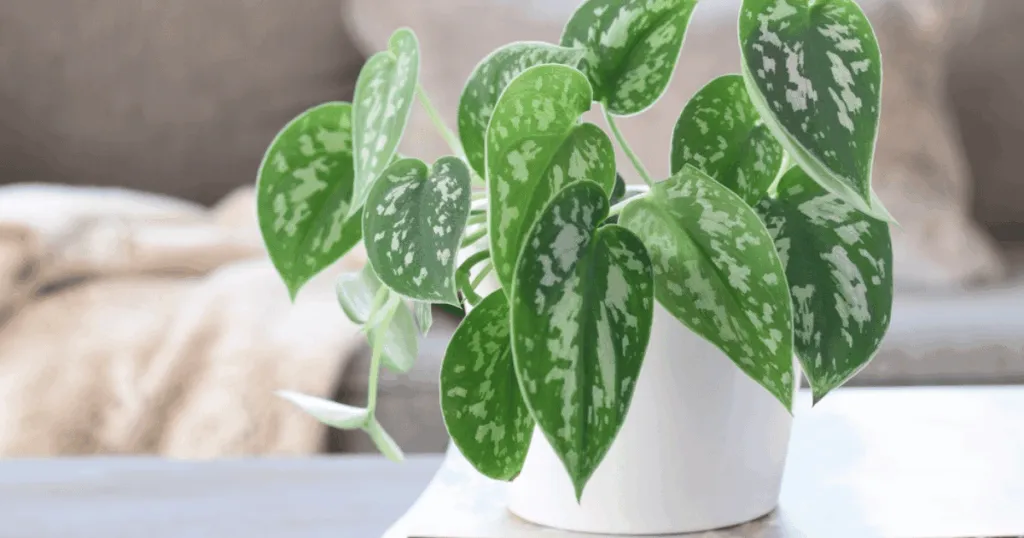
Pothos (Epipremnum aureum) is a classic trailing option that adapts to almost any indoor lighting condition, though variegated types may lose some leaf coloring in very dim spaces. It grows reliably in standard potting mix and propagates easily from stem cuttings in a simple jar of water. This makes it a popular choice for shared break rooms or open-plan partitions where trailing vines can soften hard architectural lines.
Managing Epipremnum aureum in an office setting involves balancing growth rates with available space. Under bright office windows, vines can stretch several feet in a single season, requiring occasional pruning to keep them from tangling with desktop equipment. Letting the top inch of soil dry out between waterings keeps the root zone healthy while preventing the yellowing leaves associated with chronic overwatering.
Chinese Evergreen
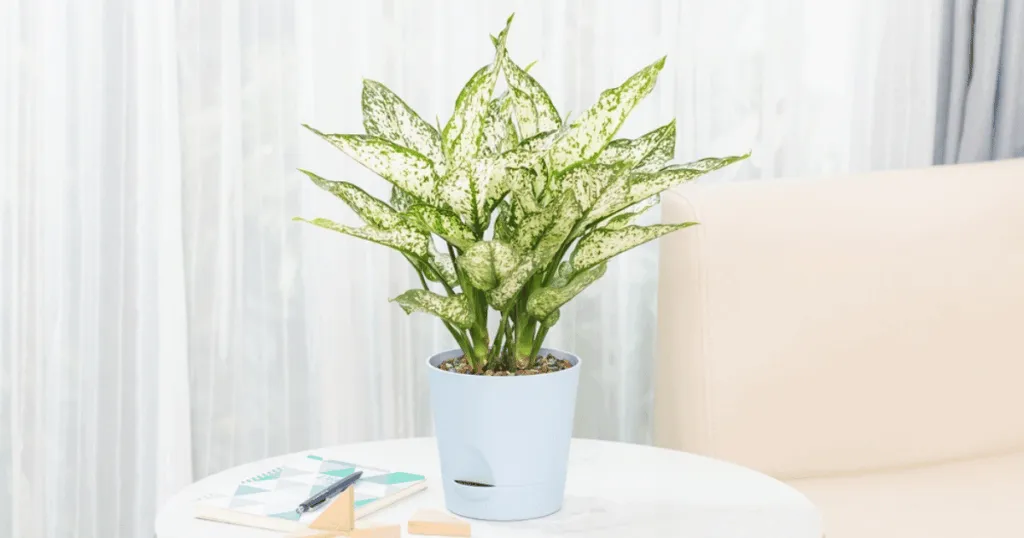
Chinese Evergreen (Aglaonema) offers broad, patterned foliage available in various shades of green, silver, and deep red. It prefers medium indirect light but accepts lower light levels without dropping foliage rapidly. This plant appreciates consistent moisture during active growth phases, yet it remains resilient if an office manager forgets to water it for a week or two during a busy quarter.
Aglaonema cultivars handle low-humidity office spaces much better than many other variegated tropicals. Because their root systems are compact, they do not require frequent repotting, making them reliable desk companions for open-plan areas where desk real estate is at a premium. Avoid placing them directly in the path of cold air vents, which can cause leaf edges to curl or brown.
Parlor Palm
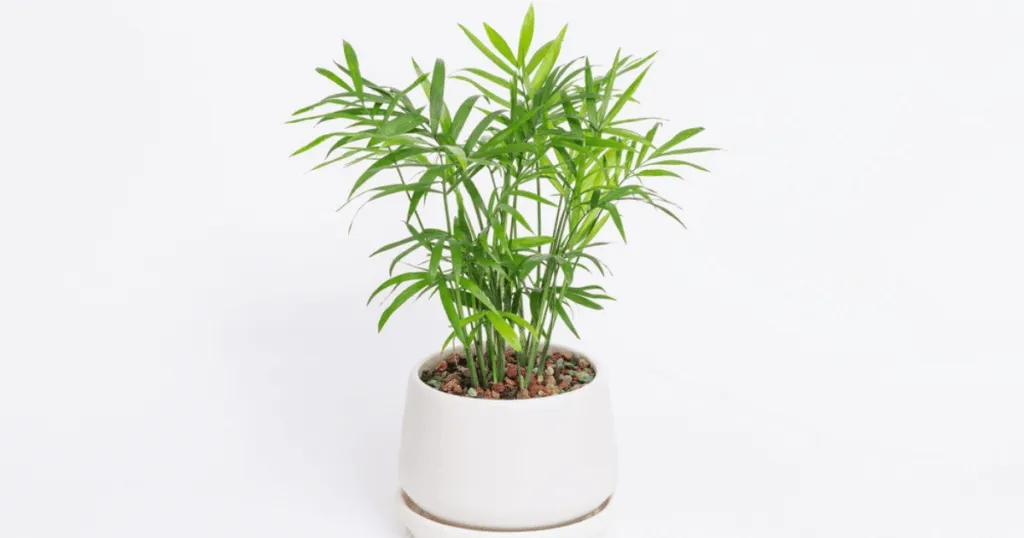
For an upright, architectural silhouette that evokes a classic conservatory feel, the Parlor Palm is exceptionally well-suited for shaded corners. It ranks among the most shade-tolerant palms available, performing reliably under standard office lighting without burning or crisping. It prefers evenly moist soil, so setting it up with a self-watering pot can streamline long-term care in a busy corporate setting.
Unlike moisture-demanding palms that crisp up instantly in dry HVAC air, the Parlor Palm tolerates typical indoor humidity quite well if it is not subjected to direct, hot drafts. Its fine-textured, feathery fronds bring a calming, natural element to executive offices and reception seating areas. Care must be taken not to let its container sit in standing water, even though it prefers consistent moisture over complete drought.
Cast Iron Plant
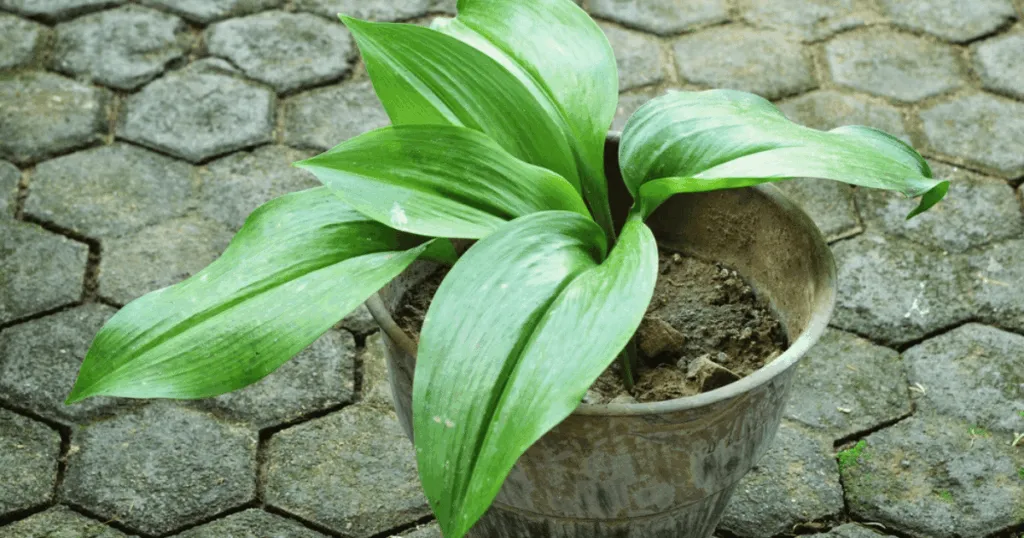
True to its name, the Cast Iron Plant earns its reputation through sheer toughness. It tolerates low light, low humidity, and erratic watering better than almost any other leafy indoor specimen. It is an excellent choice for dark interior corridors, windowless private offices, or high-traffic areas where accidental bumps from passing carts or foot traffic are common.
This slow-growing foliage plant requires almost no maintenance beyond an occasional dusting of its broad, dark green leaves. Because it responds poorly to soggy soil, letting the potting mix dry out thoroughly between waterings is the best strategy for long-term health. It represents an ideal low-maintenance solution for facilities teams seeking green infrastructure that requires minimal specialized horticultural knowledge.
Heartleaf Philodendron
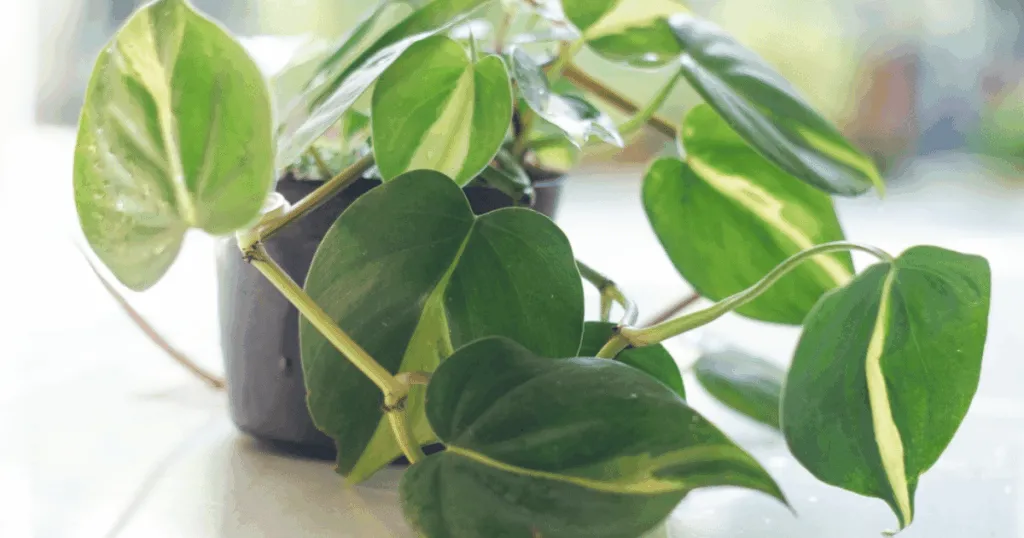
Heartleaf Philodendron features dark green, heart-shaped leaves on trailing stems that look striking on top of filing cabinets or shelving units. It requires minimal pruning and adapts readily to standard indoor temperatures and light levels. A common mistake is keeping the soil perpetually soaked, so let the top couple of inches dry out completely before introducing more moisture.
This specific trailing variety adapts smoothly to the shifting light conditions found near interior office windows and fluorescent-lit cubicles. If vines become too long or sparse due to low light exposure, simple stem cuttings placed in water will root readily, allowing office workers to easily propagate new plants for neighboring desks.
Strategic Placement and Environmental Fit
Matching the plant to its physical location determines whether it thrives or merely survives. Desks located directly under harsh overhead LED fixtures or near cold window glass during winter require specific positioning. Desk surfaces close to computer monitors benefit from compact species like small Peperomia varieties or dwarf Sansevieria selections that do not crowd paperwork or block screens.
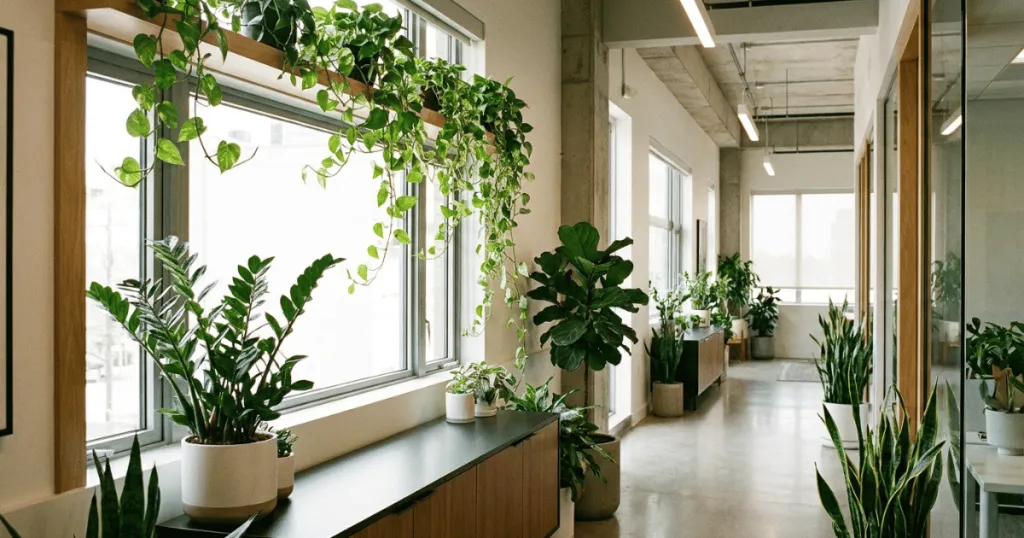
Reception areas and conference rooms present different spatial demands. These zones often feature high ceilings and empty floor spaces where larger vertical specimens, such as a sturdy ZZ Plant or an established Parlor Palm, create an immediate welcoming impression. Grouping plants together in communal zones also creates a localized microclimate that helps combat dry HVAC air, benefiting both the foliage and the overall aesthetic of the room.
Limitations, Trade-Offs, and Managing Expectations
No indoor plant is entirely maintenance-free, and even the toughest species have distinct breaking points. Introducing greenery into a professional environment means accepting that occasional leaf drop, dust accumulation, and seasonal growth slowdowns are normal. Pothos and Philodendron vines will eventually require pruning to maintain a tidy appearance, and larger floor plants need their broad leaves wiped down periodically to remove office dust that blocks light absorption.
Another factor to weigh is pet safety if animals are permitted in the office. Many traditional office favorites, including Snake Plants, ZZ Plants, and Pothos, contain calcium oxalate crystals or saponins that cause irritation if ingested by curious office pets. Selecting non-toxic alternatives like Parlor Palms or certain ferns becomes necessary in pet-friendly corporate environments.
Short Non-Shopping Disclaimer
This overview provides independent horticultural guidance focused strictly on office environmental conditions, light levels, and plant maintenance. It contains no commercial recommendations, affiliate links, or supplier promotions. Facilities managers and workers should evaluate their specific indoor climate, lighting availability, and workplace policies before acquiring any living botanical specimens.
FAQ
How often should office plants be watered during long holiday closures?
Most hardy office plants easily survive a two-week absence if given a thorough watering just before the office closes. For longer breaks, consider self-watering planters or asking a designated team member to check soil moisture every ten to fourteen days.
Can office plants survive without any natural sunlight at all?
Yes, species like the ZZ Plant, Snake Plant, and Cast Iron Plant survive quite well in windowless interior core offices lit entirely by commercial fluorescent tubes or LED panels, though their growth rate will remain exceptionally slow.
What causes the tips of office plant leaves to turn brown?
Brown tips are most commonly caused by low humidity from continuous HVAC heating and cooling, inconsistent watering schedules, or a buildup of mineral salts from hard tap water used during irrigation.
Is it normal for office plants to lose a few leaves when first moved?
Acclimation shock is very common when plants transition from a greenhouse or retail nursery into a climate-controlled office with lower light levels, resulting in minor leaf drop as the specimen adjusts to its new environment.