Transforming a dull corporate workspace into a living environment often starts with selecting low-maintenance greenery. Tillandsia species, commonly known as air plants, offer incredible versatility for desks, reception areas, and open-plan meeting rooms because they do not require soil. However, keeping these epiphytes thriving under fluorescent lighting, dry HVAC air, and weekend office closures requires a distinct approach compared to traditional potted houseplants. Your first operational decision involves choosing a dependable watering station near your desk or breakroom, which sets the foundation for whether your indoor display flourishes or slowly dries out, especially when learning how to care take for air plants in office.
What This Means
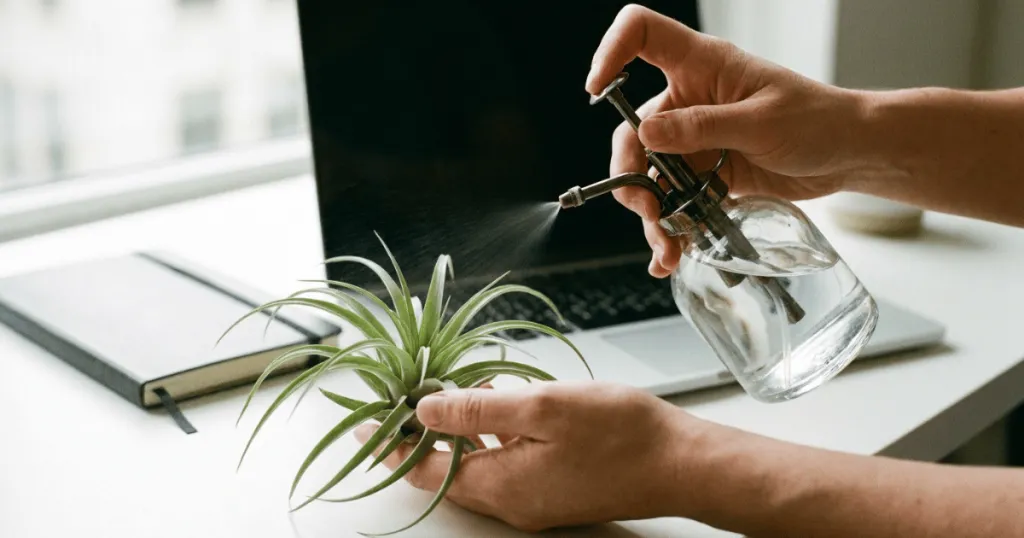
Before bringing an air plant to your desk, establish a predictable hydration routine and locate a reliable water source. Since office environments lack natural humidity, your primary weekly task centers on proper soaking rather than casual misting, keeping the core foliage healthy and rot-free. Understanding this operational rhythm prevents common mistakes like underwatering or accidental crown rot, ensuring your workplace greenery remains vibrant throughout the busy work week.
Before You Start
Successful office horticulture begins with understanding what these unique organisms need to survive away from a tropical greenhouse. Tillandsia species anchor themselves onto objects rather than embedding roots into soil, absorbing moisture and nutrients entirely through specialized leaf structures called trichomes. Recognizing this biological reality shifts your entire maintenance strategy away from conventional potting soil watering and toward foliar hydration. In an office setting, these trichomes act as miniature sponges that capture ambient moisture or direct water during scheduled soaking sessions, making correct execution vital for long-term plant preservation.
Inspect your physical workspace constraints before acquiring any plants. Open offices with aggressive climate control systems tend to drop relative humidity below thirty percent, which rapidly pulls moisture from plant tissue. Furthermore, check the lighting spectrum above your workstation. Standard fluorescent tubes or integrated LED panels provide adequate energy for slow-growing species, but windowless interior conference rooms require supplemental desk lamps to prevent gradual decline. Evaluating these variables ahead of time ensures your air plant care office desk strategy aligns with actual office conditions rather than ideal greenhouse parameters.
Gather your necessary supplies ahead of time to streamline your weekly routine. You will need a dedicated container for soaking, such as a small glass bowl or plastic office mug, clean room-temperature tap water or filtered water, a soft towel for drying inverted foliage, and a well-ventilated drying rack or dish drying mat. Establishing this kit at your desk prevents frantic last-minute scrambles on busy workdays and supports consistent desk plant maintenance across your entire office collection.
Assessing Office Environmental Conditions
Your office ecosystem presents unique environmental pressures that dictate your maintenance schedule. Evaluate your immediate surroundings before setting up your plant display.
Lighting Quality and Intensity
Most commercial buildings rely on artificial illumination for ten to twelve hours daily. Air plants adapt well to office lighting, provided they sit within a few feet of overhead fixtures or desk lamps. Avoid hiding them deep inside dark filing cabinets or windowless corners where photosynthetic activity halts entirely. When relying strictly on fluorescent lighting, ensure your desk display benefits from extended fixture hours or task lighting to maintain metabolic function. In windowless private offices or deep cubicle rows, the lack of natural spectrum light means your botanical maintenance plan must account for lumens and distance from bulbs. If your plants begin showing signs of stretching or pale, washed-out foliage, adjust their positioning immediately to capture more artificial light exposure.
HVAC Airflow and Humidity
Constant air conditioning and heating create an arid microclimate around office desks. While air plants tolerate dry spells better than traditional houseplants, direct blasts from ceiling vents will dehydrate leaf tips within days. Position your display slightly away from direct register output to mitigate the rapid moisture evaporation caused by typical indoor office humidity control systems. Understanding workplace environment dynamics helps you identify micro-drafts caused by doors opening or server room exhaust vents, allowing you to shield your epiphyte care strategy from invisible environmental hazards.
Weekend Neglect Management
Office closures from Friday evening to Monday morning mean zero hands-on care for nearly forty-eight hours. Fortunately, air plants handle short weekend cycles easily if they receive a thorough hydration session right before the end of the work week. Planning your watering schedule for Thursday afternoon or Friday morning gives specimens adequate time to dry completely before the workspace goes dark for the weekend. This timing prevents prolonged moisture retention that might otherwise turn stagnant during extended corporate holidays or building-wide power outages.
Step-by-Step Care Instructions
Execute these core steps weekly to maintain healthy, vibrant foliage across your office collection.
- Inspect the foliage condition: Examine the leaves for signs of excessive curling, brown tips, or pale coloring before starting any maintenance. Healthy specimens feature firm, slightly pliable leaves with open trichomes ready to absorb moisture.
- Prepare the water bath: Fill your desk container with room-temperature tap water. Allow municipal tap water to sit out overnight in an open container if your building uses heavy chlorine treatment, though standard tap water works fine for most resilient species.
- Submerge the plants completely: Place your air plants face-down into the water. Let them soak for thirty to sixty minutes depending on how dry your office air has been over the past week.
- Shake off excess moisture: Remove the specimens from the bath and gently shake them upside down over your sink or wastebasket. This critical action prevents stagnant water from pooling inside the central vase or rosette, which triggers fatal crown rot.
- Dry completely before display: Lay the damp plants upside down on a towel or drying rack for at least four hours in a well-ventilated area. Never return a wet plant directly into a tight glass terrarium or non-porous ceramic container.
- Return to your display mount: Once thoroughly dry, mount your plants back onto your driftwood, wire holders, or desktop display pieces knowing they are safely hydrated for the upcoming work week.
Common Mistakes to Avoid
Even experienced office workers occasionally stumble when adjusting to epiphyte care. Avoiding these widespread errors protects your investment and keeps your desk looking professional.
Relying exclusively on a spray bottle for hydration is a primary trap. While office managers often think a quick spritz from a desk mister is enough, surface misting only dampens the exterior leaves temporarily and fails to deliver sufficient water to the inner tissues. Always commit to regular full submersions.
Another frequent misstep involves placing wet plants directly into sealed glass globes or decorative containers. Trapped moisture combined with stagnant air creates an incubator for fungal decay. Air movement is non-negotiable during the drying phase.
Using softened water or distilled water exclusively without understanding mineral needs can also cause problems. While harsh mineral buildup from hard water can sometimes leave residue, completely demineralized water lacks essential trace nutrients. Standard tap water that has been allowed to outgas chlorine for twenty-four hours is generally the most reliable choice.
Troubleshooting Office Plant Issues
When visual symptoms appear, use this diagnostic breakdown to correct your maintenance approach immediately.
| Visual Symptom | Likely Cause | Immediate Corrective Action |
|---|---|---|
| Extreme leaf curling and crisp brown tips | Severe dehydration from low humidity | Increase soak duration to sixty minutes and repeat twice weekly |
| Mushy base or dark rotting stem | Trapped water after soaking | Trim away decayed tissue and ensure longer upside-down drying periods |
| Pale, washed-out foliage color | Insufficient light exposure | Move the display closer to a desk lamp or overhead fluorescent fixture |
| White crust forming on leaves | Mineral buildup from hard water | Rinse under filtered water and gently brush leaves during the next soak |
If rot spreads into the core structure of the plant and leaves begin sliding off easily, the damage is unfortunately irreversible, and you will need to replace the specimen. However, minor tip browning can be trimmed off neatly with clean scissors without harming the rest of the plant.
FAQ
Can air plants survive over long holiday breaks or office closures?
Yes, provided you give them a thorough thirty-minute soak and complete dry on your last day before the break. Most hardy Tillandsia varieties easily tolerate two to three weeks without water if kept away from direct heat registers.
Do air plants need specialized fertilizer in an office setting?
Fertilizing is optional for office specimens. If you want to encourage faster growth or blooming, you can apply a specialized bromeliad or air plant liquid fertilizer at one-quarter strength to your soak water once a month during spring and summer.
Is it okay to keep air plants on a desk with no windows at all?
They can survive under standard office fluorescent or LED lighting alone, provided the lights remain on for normal business hours. If your cubicle feels noticeably dim to human eyes, consider adding a small LED grow bulb to your desk lamp.
Why are the lower leaves turning brown and drying out naturally?
Older lower leaves naturally shed over time as the plant matures and produces new central growth. You can gently peel away dried lower leaves by pulling them downward parallel to the stem once they turn completely brown and papery.