If you notice your office croton losing its vibrant color or shedding leaves unexpectedly, take a moment to look at the immediate surroundings. Before assuming the plant is dying, check if it has been moved recently or if the office thermostat has shifted. Crotons are notoriously sensitive to environmental changes, and in an office setting, these subtle shifts are often the primary driver of stress. Most croton problems are not the result of a single catastrophic event, but rather a cumulative reaction to light, temperature, or hydration inconsistencies that the plant cannot easily adapt to once it has settled into a specific spot.
When troubleshooting, start by observing the leaf drop pattern. If the lower leaves are falling while the top remains firm, the issue is likely related to light or water. If the entire plant is wilting or dropping leaves rapidly, environmental shock from a nearby HVAC vent or a drafty doorway is the most probable culprit. By isolating these variables, you can stabilize the plant and encourage new growth.
Bottom Line
Most croton problems stem from environmental instability rather than disease. If your plant is shedding leaves, prioritize stabilizing its light and temperature exposure. If the soil is consistently soggy or bone-dry, adjust your watering frequency before attempting to treat for pests or applying fertilizers.
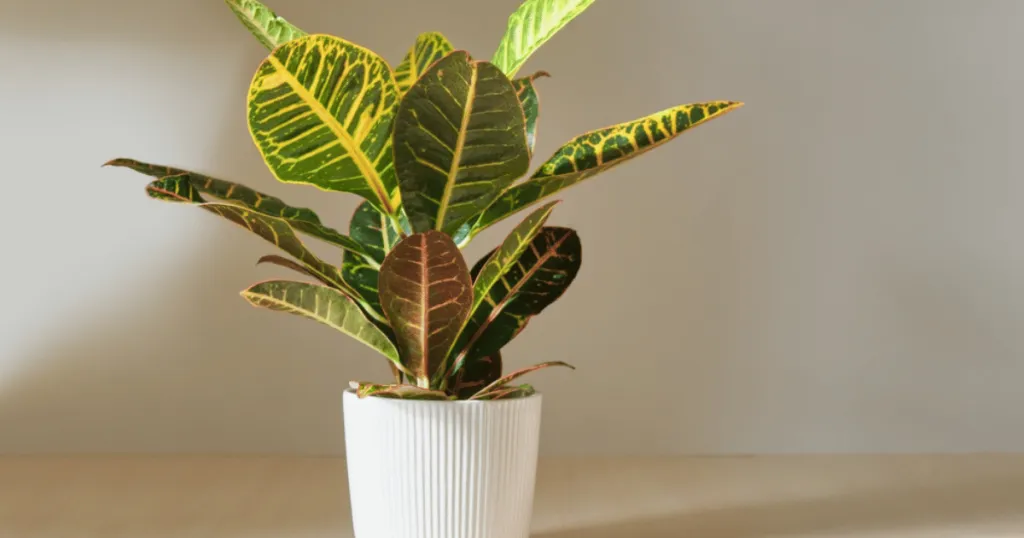
Symptom Diagnosis for Office Crotons
Identifying the root cause of plant distress requires looking at specific physical cues. Use this guide to match your plant’s symptoms with the most likely office-based causes.
| Symptom | Likely Cause | Primary Fix |
|---|---|---|
| Lower leaf drop | Insufficient light | Move to a brighter location |
| Sudden, widespread leaf drop | Drafts or temperature shock | Relocate away from vents |
| Crispy, brown leaf edges | Low humidity | Use a pebble tray or humidifier |
| Yellowing leaves | Overwatering | Improve soil drainage |
| Webbing or sticky residue | Spider mites or scale | Wipe leaves with neem oil |
Addressing Common Croton Problems
Managing Leaf Drop and Environmental Stress
Leaf drop is the most frequent complaint among office managers maintaining crotons. Because these plants thrive in high-light, high-humidity environments, the typical office climate often feels hostile. When a croton is placed in a corner with limited natural light, it will naturally shed its lower, older leaves to conserve energy. If you notice this happening, the plant is essentially telling you it is starving for light. Move it closer to a south or west-facing window, or ensure it is under a high-output LED grow light if natural light is unavailable.
Temperature fluctuations are equally damaging. If your croton is positioned near an HVAC vent, the constant cycle of hot or cold air hitting the foliage will cause the plant to go into shock. Even if the room temperature seems comfortable to you, the direct stream of air is too harsh for a croton. Moving the plant just a few feet away from the direct path of the vent is often enough to stop the leaf drop within a week or two.
Furthermore, consider the impact of weekend office shutdowns. If your building cuts off climate control on Friday evenings and restarts it on Monday mornings, the rapid shift in ambient temperature can trigger a stress response. While you cannot change the building’s infrastructure, placing the plant in a more interior, stable location away from windows that lose heat at night can help mitigate these swings.
Correcting Watering Habits
Crotons require soil that remains consistently moist but never waterlogged. In an office, the temptation is often to water on a strict calendar schedule, such as every Monday morning. However, if your office is particularly dry or warm, the soil may dry out faster than your schedule accounts for. Conversely, if the office is cool, the soil might stay wet for too long, leading to root rot. Before watering, always check the top two inches of soil. If it feels damp, wait. If it is dry to the touch, provide enough water to moisten the root ball, but ensure the pot has adequate drainage so the plant is not sitting in a pool of standing water.
When dealing with office plant maintenance, the type of water matters. Tap water in some office buildings contains high levels of chlorine or minerals that can build up in the soil over time, leading to leaf tip burn. If you notice brown, crispy edges despite adequate humidity, try using filtered water or letting your tap water sit out for 24 hours before applying it to the plant. This allows chlorine to dissipate and the water to reach room temperature, preventing thermal shock to the roots.
Advanced Troubleshooting and Pest Management
While environmental issues are the most common, pests can also cause significant damage. Spider mites are particularly fond of the dry, stagnant air often found in office buildings. These tiny pests thrive in low-humidity environments and can quickly sap the vitality from a croton. If you see fine, silk-like webbing between the stems or leaves, or if the foliage looks speckled and dull, you likely have a mite infestation.
To treat this, start by physically wiping the leaves with a damp cloth to remove as many mites as possible. Follow this with an application of horticultural oil or neem oil, ensuring you reach the undersides of the leaves where mites hide. Because these pests reproduce rapidly, you may need to repeat this process every seven to ten days until the infestation is completely gone. Always keep the plant away from other office greenery during treatment to prevent the pests from spreading.
Another common issue is scale, which appears as small, brown, bump-like protrusions on the stems or leaf undersides. Unlike mites, scale is stationary. You can remove these manually with a cotton swab dipped in rubbing alcohol. This is a labor-intensive but highly effective way to manage the problem without resorting to harsh chemical sprays in a shared workspace. If the scale infestation is severe, consider pruning the most heavily affected stems entirely, as this is often more effective than trying to clean every single leaf.
Prevention Habits for Long-Term Success
Preventing croton problems is significantly easier than fixing them. The most effective habit is consistency. Once you find a spot in the office where the plant is thriving, do not move it. Crotons dislike change, and even rotating the pot can sometimes trigger a minor stress response. If you must move the plant, do so gradually to allow it to acclimate to the new light levels. This process of acclimation is vital; moving a plant from a dark cubicle directly into a sun-drenched reception area will almost certainly cause leaf drop.
Humidity management is another critical prevention strategy. Office HVAC systems are notorious for stripping moisture from the air. Placing your croton on a tray filled with pebbles and a small amount of water creates a localized microclimate that increases humidity around the foliage without keeping the roots wet. This simple addition can prevent the crispy leaf edges that often plague office plants. Ensure the bottom of the pot is resting on the pebbles, not in the water, to avoid root rot.
Finally, be mindful of the plant’s toxicity. According to the ASPCA, crotons contain sap that can cause irritation if ingested or if it comes into contact with sensitive skin. In an office, this means keeping the plant in a location where it will not be accidentally brushed against or handled by coworkers. If you need to prune the plant, wear gloves to avoid skin contact with the milky sap. If a coworker or pet accidentally comes into contact with the sap, wash the area thoroughly with soap and water.
Understanding Light Requirements
The most common reason for a croton losing its signature variegation – the bright reds, yellows, and oranges – is a lack of light. In an office, light levels are often measured in foot-candles, and crotons generally require at least 200 to 500 foot-candles to maintain their color. If your plant is sitting in a cubicle with only ambient overhead lighting, it will eventually turn a dull, solid green. This is the plant’s way of maximizing its surface area for photosynthesis. To fix this, you must increase the light intensity. If you cannot move the plant to a window, consider a dedicated LED grow light that provides the full spectrum of light the plant needs to sustain its colorful foliage.
Managing Seasonal Transitions
Office environments change with the seasons, even if the building is climate-controlled. During the winter, the air becomes significantly drier as heating systems run constantly. This is when you will see the most croton problems related to humidity. During these months, you may need to increase the frequency of your pebble tray maintenance or introduce a small, quiet humidifier near the plant. Conversely, in the summer, the increased solar gain through windows can cause the plant to dry out much faster. Adjust your watering schedule to match the season, checking the soil moisture more frequently during the warmer months when the plant is actively growing.
Related Croton Guides
FAQ
Why are my croton leaves turning green instead of staying colorful?
Crotons require strong light to maintain their vibrant variegation. If your plant is turning solid green, it is not getting enough light and is compensating by producing more chlorophyll. Move the plant to a brighter location, preferably near a window, to restore its color.
Is it normal for a croton to lose leaves after I move it to a new office?
Yes, this is a common stress response. Crotons are sensitive to changes in light, temperature, and humidity. When moved, the plant may drop some leaves as it acclimates to the new environment. Keep it in a stable, bright spot and avoid overwatering while it recovers.
How can I tell if my croton is suffering from root rot?
Root rot often presents as yellowing leaves and a soft, mushy stem base. If the soil remains wet for days after watering and the plant seems to be wilting despite the soil being moist, carefully check the roots. Healthy roots are firm and light-colored, while rotting roots will be dark, mushy, and may have a foul odor.
Should I mist my office croton to increase humidity?
Misting provides only temporary relief and can sometimes encourage fungal issues if the leaves stay wet for too long. A better approach for an office setting is using a pebble tray with water or a small desktop humidifier to maintain consistent humidity levels around the plant.